
Tart Cherry Juice: Well-Supported for Soreness and Sleep

You’ve probably seen tart cherry juice showing up in gym bags and pre-bed routines at the same time, marketed as both a recovery drink and a sleep aid. That’s an unusual combination for a single food, and it’s fair to be skeptical of anything claiming to do two different jobs that well. In this case, though, there’s a real body of peer-reviewed research behind both claims, not just supplement-brand marketing copy.
This guide breaks down what tart cherry juice actually is, what the studies say about muscle recovery and sleep specifically, how much you actually need, and who should be cautious about adding it to their routine.
What Makes Tart Cherry Juice Different From Regular Cherry Juice
Most of the research on tart cherry juice is specifically about Montmorency tart cherries, a sour cherry variety grown mainly in Michigan and parts of Europe, not the sweet eating cherries you’d snack on from a bag at the grocery store. That distinction matters more than it sounds like it should, because tart cherries contain substantially higher concentrations of anthocyanins, the deep-red antioxidant pigments believed to drive the anti-inflammatory effects, along with naturally occurring melatonin and tryptophan that sweet cherries carry in much smaller amounts.
When you see “tart cherry juice” in a research study, it almost always means either 100% Montmorency tart cherry juice or a concentrate diluted back down to juice strength, not a cherry-flavored juice blend or a sweetened cherry drink. Reading the label matters here, since a lot of commercial “cherry juice” products are mostly apple or grape juice with a small percentage of actual cherry content, which won’t deliver anything close to the doses used in research.

How Tart Cherry Juice Supports Muscle Recovery
The proposed mechanism behind tart cherry juice and recovery centers on its unusually high concentration of anthocyanins, which appear to reduce the oxidative stress and inflammation that build up in muscle tissue after intense exercise. Hard training, especially anything involving eccentric muscle contractions like downhill running or heavy lowering phases in the gym, causes microscopic muscle damage and a localized inflammatory response, which is a big part of what you feel as delayed onset muscle soreness in the day or two afterward.
A 2016 review of the available research found that reduced muscle pain and soreness, along with better preservation of muscle strength, showed up in the large majority of controlled trials on athletes, spanning marathon runners, cyclists, and strength-trained lifters. More recent work has extended this to more explosive, sport-specific movement. A study published in Nutrients examining powdered tart cherry supplementation around repeated sprint exercise found measurable improvements in recovery markers compared to placebo, suggesting the effect isn’t limited to endurance-style training.
What’s notable is that the benefit isn’t just about feeling less sore. Several studies also track objective strength output in the days following exercise, like vertical jump height or isometric force, and find that participants taking tart cherry juice retain more of their strength during the recovery window compared to those on a placebo. That’s a harder outcome to fake with a placebo effect than a simple soreness rating.
What the Research Actually Shows About Sleep
The sleep research runs on a completely different mechanism, and it’s arguably even more directly supported than the recovery claims. Montmorency tart cherries are one of the few food sources that naturally contain measurable amounts of melatonin, the hormone your body produces to regulate the sleep-wake cycle, along with tryptophan, an amino acid your body uses to help produce both melatonin and serotonin.
A randomized, double-blind, placebo-controlled crossover study published in the European Journal of Nutrition had healthy adults drink tart cherry juice concentrate twice daily for seven days, then measured their sleep using actigraphy, a wrist-worn device that objectively tracks movement and sleep patterns rather than relying only on self-reported sleep quality. The tart cherry condition produced a roughly 15-16% increase in urinary melatonin, about 25 extra minutes of total sleep time, and a measurable increase in sleep efficiency compared to the placebo condition. That’s a real, physiologically grounded effect, not just people feeling like they slept better because they expected to.
A smaller pilot study looking specifically at older adults with existing insomnia found an even larger effect, with participants sleeping an extra 84 minutes on average after drinking tart cherry juice, though that trial only involved a handful of participants and should be read as a promising early signal rather than a settled number. Taken together, the sleep research is consistent in direction even if the exact minutes gained vary by study population and dose.

How Much to Drink and When to Drink It
Dosing is where a lot of the confusion around tart cherry juice comes from, mostly because commercial products vary wildly in concentration. For recovery purposes, most of the research protocols use roughly 8 to 12 ounces (240 to 355 milliliters) of tart cherry juice twice a day, typically one dose in the morning and a second dose within an hour or two after training, continued for several days surrounding a hard workout, race, or competition rather than just on the day itself.
For sleep, the timing shifts slightly. Most sleep-focused studies have participants drink a similar volume roughly an hour before bed, sometimes alongside a morning dose as well, for at least a week before meaningful changes in sleep time and efficiency show up. This isn’t a one-night fix. A single glass the night before an important event is unlikely to do much, since the melatonin boost from tart cherry juice is modest compared to a supplement pill, and the sleep benefits documented in research build up with consistent daily intake.
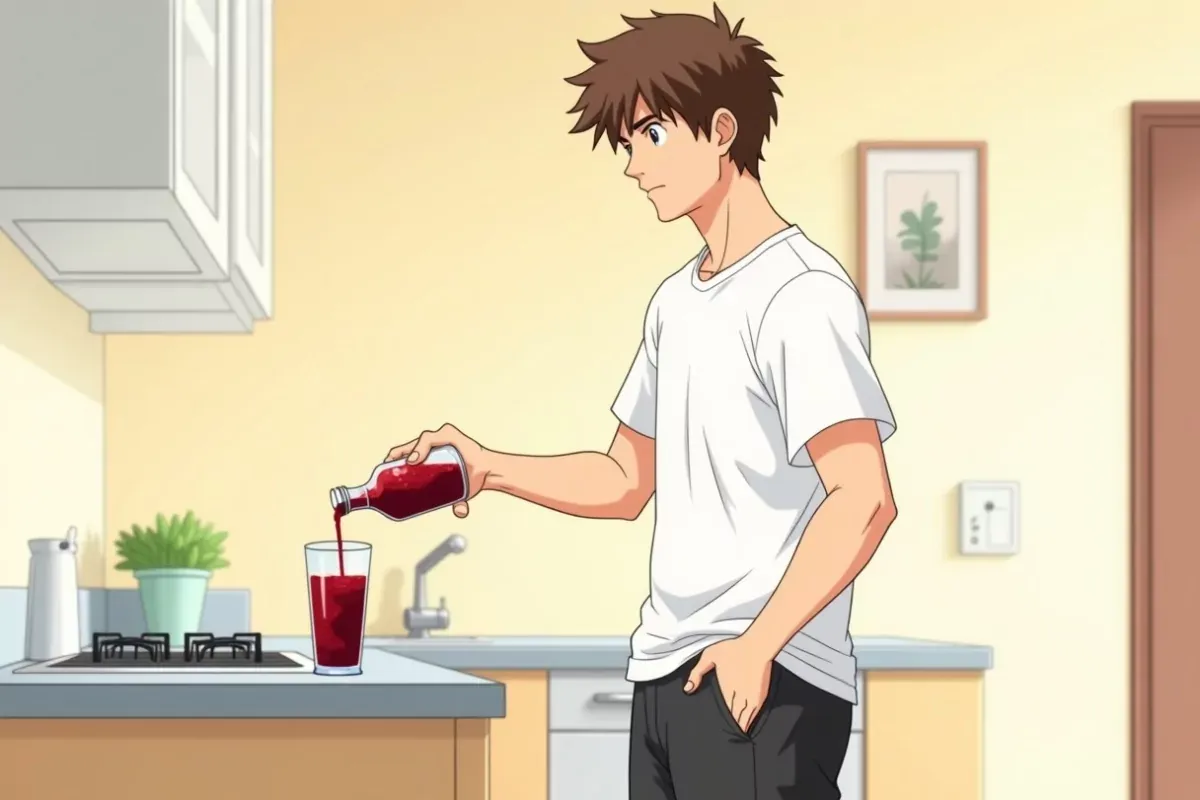
If you’re using a concentrate rather than ready-to-drink juice, check the label carefully. Concentrates are meant to be diluted, usually one to two tablespoons mixed into 8 ounces of water, and taking concentrate at full strength both wastes the product and can be unpleasantly tart and acidic on an empty stomach.
Juice, Concentrate, or Extract: Which Form Should You Use?
All three forms show up in the research, and the right choice mostly comes down to sugar tolerance, convenience, and budget. Bottled 100% tart cherry juice is the most direct way to match the doses used in studies, but it’s also the most calorie- and sugar-dense option, since a full recovery dose can run 20 to 30 grams of natural sugar per serving.
Concentrate offers the same active compounds in a smaller volume, which is more practical to travel with and store, but it still needs to be diluted properly to hit an equivalent dose, and it’s easy to under-dose by eyeballing the amount. Capsule or powder extracts, usually standardized to a specific milligram amount of tart cherry solids, are the most convenient option and avoid the sugar load almost entirely, which makes them a reasonable substitute for anyone managing blood sugar or simply not interested in drinking extra calories every day. The tradeoff is that fewer studies use extract specifically compared to juice, so the dosing evidence is slightly less direct.
Who Should Be Cautious With Tart Cherry Juice
Tart cherry juice is generally well tolerated, but it isn’t risk-free for everyone. The natural sorbitol content, a sugar alcohol also found in prunes and other stone fruits, can cause bloating, gas, or loose stools in some people, particularly at the higher doses used in recovery protocols. Starting with a smaller amount and working up is a reasonable way to check your tolerance before committing to a twice-daily habit.
People managing diabetes or watching blood sugar closely should pay attention to the sugar content of straight juice, since a full recovery dose can add up to a meaningful amount of natural sugar across two servings a day. Tart cherry juice can also interact with blood-thinning medications like warfarin because of its vitamin K and antioxidant compounds, so anyone on anticoagulant medication should talk to a doctor before adding it daily rather than assuming a food-based product is automatically safe to combine with prescriptions.
Common Mistakes People Make With Tart Cherry Juice
A handful of avoidable mistakes explain most of the disappointing results people report. Buying a “cherry juice blend” that’s mostly apple or grape juice with a small percentage of actual tart cherry is probably the single biggest one, since it simply doesn’t contain enough of the active compounds to match anything in the research.
Expecting a single dose to work like a sleep medication is another common miscalculation. The sleep studies that found real effects had participants drinking tart cherry juice consistently for a week or more, not using it as an occasional as-needed remedy the way you might use melatonin gummies. Similarly, drinking it only after a hard workout and skipping the morning dose cuts the protocol in half compared to what most recovery studies actually tested.
Finally, some people drink tart cherry juice as a general health habit but skip the two things that matter most for actual results, consistency and correct dosing, then conclude it “doesn’t work” after a few random tries. The research is fairly clear that the benefits, while real, are moderate and depend on hitting a reasonably specific dose over a sustained period, not a single glass here and there.
How Tart Cherry Juice Compares to Other Recovery Drinks
It helps to know where tart cherry juice actually fits next to the other recovery drinks people reach for, since it’s not solving the same problem as most of them. Electrolyte drinks replace sodium, potassium, and fluid lost through sweat, which matters most for hydration and cramp prevention during and right after a session, not for reducing next-day soreness. A protein shake is doing yet another job entirely, supplying the amino acids your muscles need to actually rebuild tissue, which tart cherry juice doesn’t provide in any meaningful amount since it’s essentially protein-free.
Tart cherry juice occupies a narrower, more specific lane: reducing the oxidative stress and inflammation that drive soreness and temporary strength loss, plus supporting sleep quality, which is when a large share of actual muscle repair happens. That makes it a reasonable addition alongside an electrolyte drink and a protein source rather than a replacement for either one. Our broader roundup of post-workout recovery drinks covers how to combine hydration, protein, and recovery-specific options like this one into a single practical routine instead of picking just one and hoping it covers everything.
Worth noting too: tart cherry juice isn’t a pre-workout energy drink. It contains no caffeine and won’t give you a performance boost during a session the way a pre-workout formula does. Its entire value proposition is what happens in the hours and days after training, which is a different, complementary role rather than a competing one.
The Bottom Line
Tart cherry juice is one of the more genuinely well-supported natural recovery and sleep aids on the market right now, which is unusual in a category full of products backed by little more than a marketing budget. The muscle recovery research consistently shows less soreness and better preserved strength after hard training, and the sleep research shows a measurable, mechanism-backed increase in total sleep time and sleep efficiency. Neither effect is dramatic, and neither will substitute for the basics of proper training load management or a solid sleep routine, but as an add-on to those fundamentals, tart cherry juice has more evidence behind it than most things sold next to it on the supplement shelf. If you’re going to try it, use Montmorency tart cherry specifically, hit the 8 to 12 ounce twice-daily dose used in research, and give it at least a week before judging whether it’s doing anything for you.
Frequently Asked Questions
Does tart cherry juice really help with muscle recovery? The evidence is genuinely encouraging, though not universal. Most controlled studies on runners, cyclists, and strength athletes report less muscle soreness, less strength loss, and lower markers of muscle damage when tart cherry juice or concentrate is consumed before and after hard exercise, compared to a placebo. The effect size is moderate, not dramatic, and a small number of studies find no measurable benefit, so it works for most people but isn’t guaranteed to work for everyone.
How much tart cherry juice should I drink for recovery or sleep? Most recovery studies use roughly 8 to 12 ounces (240 to 355 milliliters) twice a day, usually one dose in the morning and one within an hour or two of exercising, for several days surrounding intense training. For sleep specifically, studies typically use a similar volume taken about an hour before bed, sometimes combined with a morning dose as well. Concentrate versions are usually diluted to match these juice volumes rather than taken at full strength.
Is tart cherry juice better than sweet cherry juice or supplements? Tart (sour) cherries, specifically the Montmorency variety, are what nearly all the research is based on, not sweet eating cherries, which contain far less of the anthocyanins and melatonin responsible for the effects. Tart cherry extract capsules or powders can work similarly if they’re standardized to a comparable dose, and they’re a reasonable option for people who don’t want the sugar or calories that come with drinking juice daily.
Are there any risks or side effects to drinking tart cherry juice? It’s generally well tolerated, but a few things are worth knowing. The natural sorbitol content can cause bloating or loose stools in some people, especially at higher doses. Straight tart cherry juice is also fairly high in natural sugar, which matters if you’re managing blood sugar or watching total calorie intake. It can interact with blood-thinning medications because of its vitamin K and antioxidant content, so anyone on medications like warfarin should check with a doctor first.
Keep reading: if muscle soreness after training is what brought you here, our guide on DOMS muscle soreness causes and recovery covers the full picture of why it happens and what actually speeds it up. And if sleep is the bigger draw, check out our guide on how much sleep you need to build muscle for the full breakdown of why recovery sleep matters as much as anything you do in the gym. Tart cherry is also the headline ingredient in most commercial recovery shots, so if you’re weighing the bottled version against plain juice, our guide to recovery shots compares the two directly on dose and cost.
Follow us on Facebook, TikTok, YouTube, and Pinterest for more no-nonsense fitness tips.
Evandro
Evandro is the founder of The Fitness Road. He believes that without physical activity there is no real health, and without health, there is no lasting discipline in any other area of life.
Leave a Reply
Your email address will not be published. Required fields are marked *