DOMS Muscle Soreness: Causes and How to Actually Recover

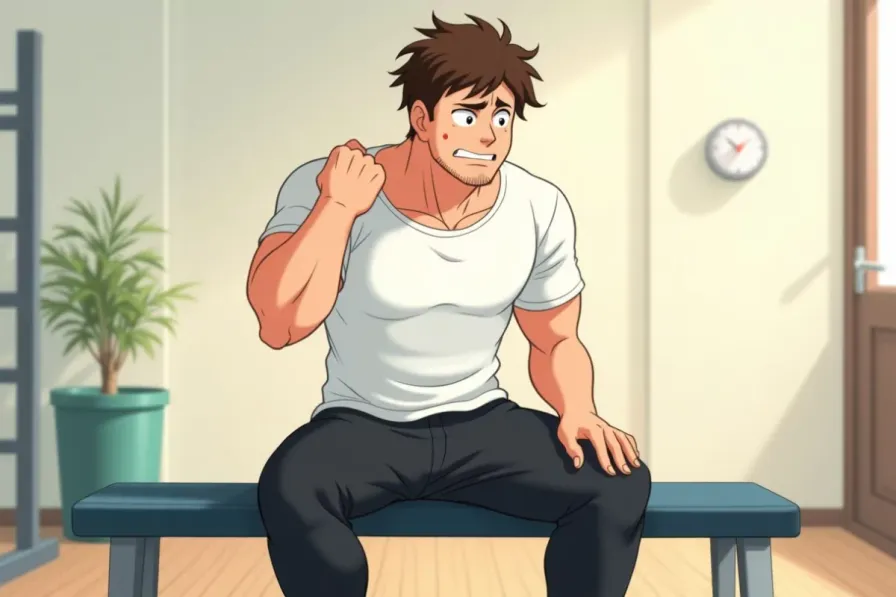
You tried a new leg day routine, felt fine walking out of the gym, and then woke up the next morning barely able to sit down on the toilet. Two days later it’s even worse. This is DOMS muscle soreness, delayed onset muscle soreness, and almost everyone who lifts weights has experienced it at some point, usually after trying something new or pushing harder than usual.
This guide breaks down what actually causes DOMS, how long it really lasts, whether it’s a sign of a good workout, and which recovery methods are actually backed by research versus just marketing.
What DOMS Actually Is
DOMS stands for delayed onset muscle soreness, the achy, stiff, tender feeling that shows up in your muscles a day or two after unfamiliar or unusually intense exercise. Unlike the sharp, immediate pain of an actual injury, DOMS builds gradually, typically starting 12 to 24 hours after your workout and peaking somewhere between 24 and 72 hours later.
The defining feature of DOMS is the delay. You can finish a hard leg workout and feel completely normal that evening, only to wake up the next day struggling to walk down stairs. That gap between the workout and the soreness is exactly why it’s called delayed onset, and it’s what separates DOMS from the sharper, more immediate pain of a genuine strain or tear.
What Actually Causes DOMS
For a long time, people assumed DOMS was caused by lactic acid buildup in the muscles. That theory has been thoroughly debunked. Lactic acid clears from your muscles within about an hour of finishing exercise, long before soreness even begins, so it simply cannot be the cause of pain that shows up a full day later.
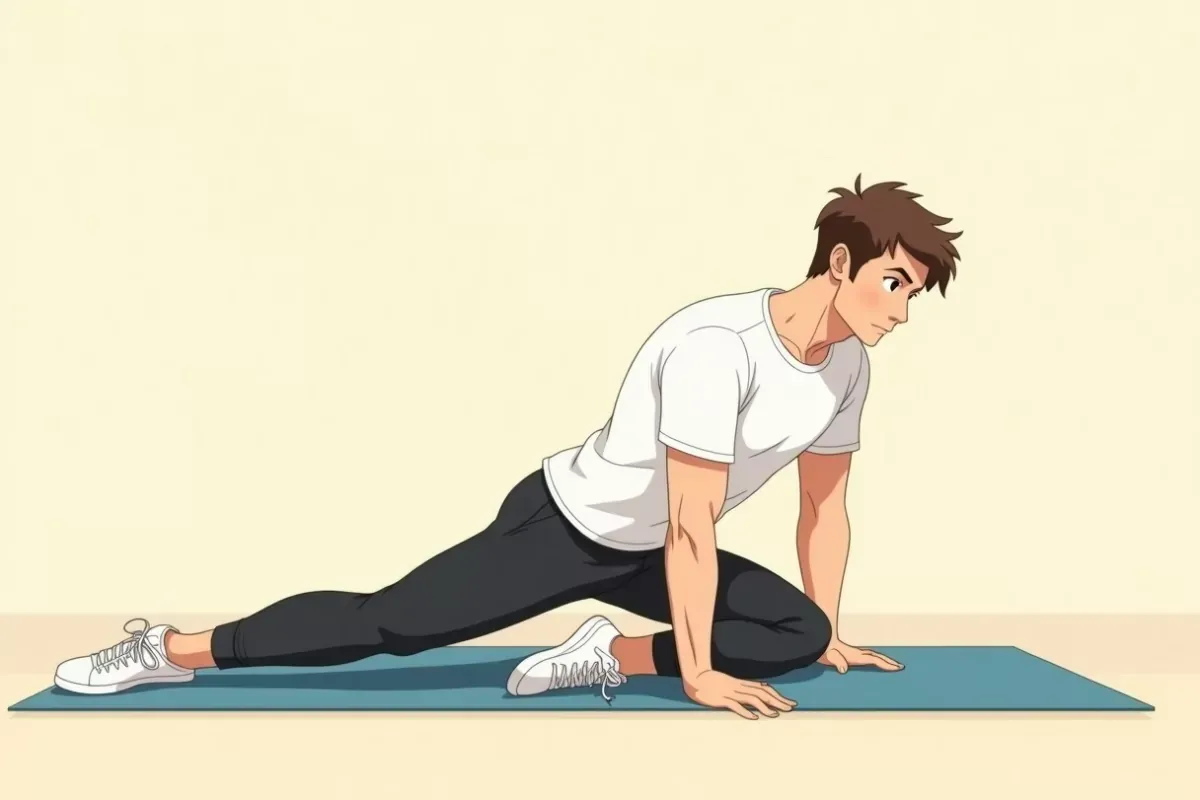
The actual cause is now understood to be microscopic damage to muscle fibers, along with the inflammatory response your body mounts to repair that damage. This micro-damage happens most from eccentric contractions, the lengthening phase of a muscle under load, like the lowering portion of a squat or the downward part of a bicep curl. Eccentric movements place more mechanical stress on individual muscle fibers than concentric, shortening contractions do, which is exactly why exercises with a heavy eccentric component, downhill running, slow negative reps, unfamiliar lifts, tend to produce the worst soreness.
This explains why DOMS hits hardest after trying something new. Your muscles adapt fairly quickly to a repeated stimulus, a phenomenon called the repeated bout effect, where the same exercise done again within a few weeks produces noticeably less soreness the second time. That’s why the soreness after your first leg day in months feels brutal, while your fifth leg day in a row of the same routine barely registers.
DOMS Timeline: What to Expect
| Timeframe | What’s happening |
|---|---|
| 0-12 hours after | Little to no soreness yet, this is the delay DOMS is named for |
| 12-24 hours after | Soreness starts to build, muscles feel stiff and tender |
| 24-72 hours after | Peak soreness, movement and stretching feel most uncomfortable |
| 3-5 days after | Soreness gradually fades as repair completes |
| 5-7 days after | Should be fully resolved for most people |
If soreness is still severe after a full week, or if it feels sharp and localized rather than a general dull ache across the whole muscle, that’s a signal to stop assuming it’s DOMS and get it checked out, since it could indicate an actual strain or tear.

Does DOMS Mean You Had a Good Workout?
This is one of the most persistent myths in the gym, and it’s worth clearing up directly. Soreness is not a reliable measure of how effective or productive a workout was. DOMS mostly reflects how unfamiliar or eccentric-heavy the exercise was for your muscles at that point in time, not how much muscle growth or strength adaptation actually happened.
As your body adapts to a training routine through the repeated bout effect, soreness naturally decreases even while the workout continues to be just as effective, sometimes more effective, as your technique and capacity improve. Plenty of experienced lifters do highly productive training sessions week after week with minimal soreness, simply because their muscles have adapted to the specific movements and loads involved.
Chasing soreness as a training goal is actually counterproductive. It often leads people to constantly switch up exercises purely to feel sore again, which sacrifices the consistency and progressive overload that actually drive long-term muscle growth and strength gains.
What Actually Helps DOMS Recover Faster
Light movement. Gentle activity, walking, easy cycling, or light stretching, increases blood flow to sore muscles without adding more damage, and is one of the more consistently supported ways to ease DOMS symptoms and speed the subjective feeling of recovery.
Adequate protein and calories. Your body needs raw materials, primarily protein, to repair the micro-damage causing the soreness. Under-eating during a period of soreness slows down the repair process and can prolong how long DOMS sticks around.
Quality sleep. The majority of muscle repair and recovery happens during deep sleep. Skimping on sleep after a tough workout is one of the most overlooked ways people accidentally extend their own recovery time.
Massage and foam rolling. Research on massage and self-myofascial release with a foam roller shows a meaningful reduction in the perceived intensity of soreness, even though it likely doesn’t change the underlying rate of tissue repair. If it makes you feel and move better, it’s a reasonable tool to use.
Heat therapy. Applying heat, a warm bath or heating pad, in the period shortly after exercise has shown some benefit for reducing soreness and stiffness, likely by improving blood flow to the affected area.
What Doesn’t Reliably Help
Ice baths and cold water immersion. Despite their popularity, research on cold water immersion for DOMS specifically shows mixed and often unimpressive results. It may modestly reduce perceived soreness for some people, but it is not clearly superior to simply resting, and some research suggests it may even blunt certain muscle adaptations if used too frequently right after training.
Stretching before or after the workout that caused it. While stretching feels good and is a reasonable part of a training routine, research does not support the idea that stretching before or after exercise meaningfully prevents or reduces DOMS.
Anti-inflammatory medication as a routine fix. Occasional use of over-the-counter anti-inflammatories can reduce the discomfort of DOMS, but regularly relying on them isn’t ideal, since some research suggests chronic use may interfere with the muscle adaptation process you’re actually trying to achieve through training.
DOMS vs. an Actual Injury: How to Tell the Difference
Knowing how to tell normal DOMS apart from a genuine muscle strain or tear matters, since treating an actual injury like ordinary soreness can turn a minor issue into a much longer setback.
Onset and timing. DOMS builds gradually over 12 to 24 hours and peaks a day or two later. An acute strain or tear typically causes pain immediately, or within minutes, during the exercise itself, not a day afterward.
Type of pain. DOMS feels like a dull, generalized ache and stiffness across the whole muscle, worse with stretching or first movement after rest. An injury tends to produce sharp, localized pain at a specific point, often accompanied by swelling, bruising, or a visible loss of strength in that specific spot.
Effect on movement. With DOMS, you can usually still move the muscle through a full range of motion, just with discomfort. With a real strain or tear, movement is often significantly limited, and putting weight through the area may not be possible at all.
Duration. DOMS reliably resolves within about a week. Pain that persists, worsens, or doesn’t improve with light activity and rest past that window is a signal to stop self-treating it as DOMS and get it evaluated.
If you experience a sudden pop or snap sensation during exercise, immediate sharp pain, significant swelling, or an inability to bear weight or use the muscle normally, these are red flags for an actual injury rather than DOMS, and are worth getting checked out rather than waiting it out.
Does Nutrition Timing Matter for DOMS?
Beyond simply eating enough protein and calories overall, some people wonder whether the timing of nutrition around a workout specifically affects how sore they get afterward.
The evidence here is more modest than total daily intake, but a few points are worth knowing. Consuming protein and carbohydrates in the hours after a hard training session supports the repair process that’s already happening, and going a long stretch afterward without eating, especially combined with an overall low-protein diet, can genuinely slow recovery and potentially prolong soreness. A simple post-workout recovery drink is one of the easiest ways to hit that protein-and-carb window without having to prepare a full meal right after training.
Some research has also looked at specific compounds, tart cherry juice, curcumin, and omega-3 fatty acids, for their potential anti-inflammatory effects on DOMS. The results are mixed and generally modest at best. These aren’t magic fixes, and none of them replace the fundamentals of eating enough, sleeping enough, and progressing your training sensibly. If you enjoy tart cherry juice anyway, there’s little downside to including it, but don’t expect it to meaningfully change your recovery timeline on its own.
Should You Train Through DOMS?
It depends on the severity, but light to moderate training through DOMS is generally safe and often reasonable. If a muscle group is sore but you can move it through a full range of motion without sharp pain, training that muscle again at reduced intensity, lighter weight, fewer sets, is unlikely to cause harm and may even support recovery through increased blood flow.
What’s worth avoiding is pushing through DOMS at full intensity, particularly with more eccentric-heavy work, since this can compound the existing muscle damage before it’s had a chance to repair. A practical approach many lifters use is training a different muscle group while a previous one recovers, which lets you stay consistent with your training schedule without working around severe soreness in the same area twice in a row.
If the soreness is severe enough to significantly limit your range of motion or genuinely affects your form, it’s reasonable to simply skip or scale back that specific training session and let the muscle finish recovering.
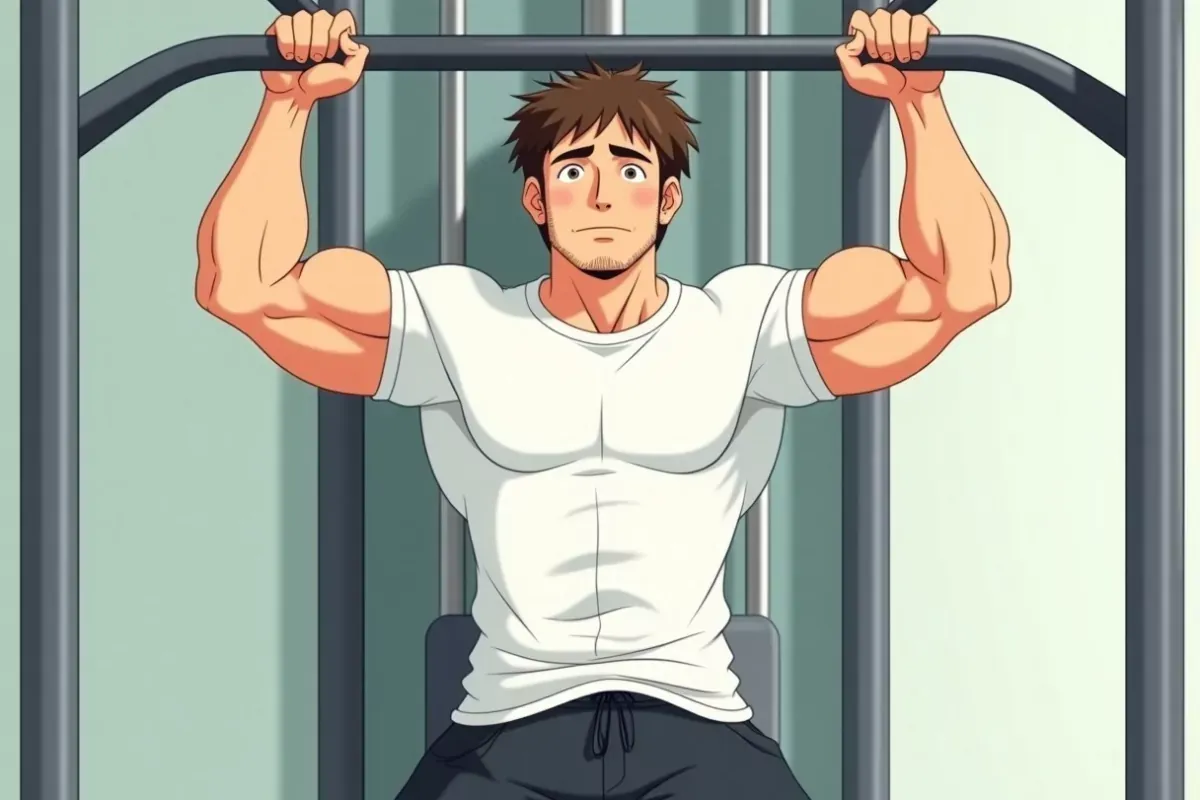
How to Reduce How Often You Get Slammed With DOMS
You can’t eliminate DOMS entirely, especially any time you introduce a genuinely new stimulus, but a few habits reduce how often and how severely it hits.
Progress gradually. Rather than jumping straight into a brand new program at full intensity, ease into new exercises and rep ranges over a couple of weeks. This gives your muscles a chance to adapt through the repeated bout effect before you push toward your full working weights.
Warm up properly. A proper warm-up, light cardio plus a few lighter warm-up sets of the actual exercise, prepares muscles for the working sets ahead and may modestly reduce the severity of subsequent soreness, even though it won’t prevent DOMS outright.
Stay consistent. The single best way to minimize DOMS long term is simply training regularly. Muscles that are used to a given stimulus produce far less soreness than muscles doing something for the first time in months, which is exactly why DOMS hits hardest after a long break from training.
Frequently Asked Questions
How long does DOMS muscle soreness usually last? DOMS typically starts 12 to 24 hours after a workout, peaks around 24 to 72 hours, and fully resolves within 5 to 7 days. If soreness lasts longer than a week or feels sharp rather than achy, it’s worth checking in with a doctor to rule out an actual injury.
Is it bad to work out again if you still have DOMS? Not necessarily. Light training on a sore muscle group is generally safe and can even help circulation and recovery, as long as you reduce the intensity and avoid pushing through sharp pain. Training a different muscle group entirely is also a completely reasonable option while you wait out the soreness.
Does DOMS mean you had a good workout? Not really. Soreness mostly reflects how unfamiliar or eccentric-heavy a workout was for your muscles, not how effective it was for building strength or muscle. Plenty of highly productive workouts produce little to no soreness once your body adapts to a given exercise.
What actually helps DOMS recover faster? Light movement, adequate protein and calories, and quality sleep have the most consistent research support. Massage and foam rolling can meaningfully reduce the perceived soreness even if they don’t speed up the underlying tissue repair. Ice baths show mixed results and are not clearly better than simply resting.
The Bottom Line
DOMS muscle soreness is a normal, temporary response to unfamiliar or unusually intense training, not a sign of damage to worry about and not a badge of honor to chase after every workout. It usually resolves within 5 to 7 days on its own, and the recovery tools that actually help, light movement, enough protein, and real sleep, are the same fundamentals that support recovery in general. Stay consistent with your training, progress gradually into new exercises, and let soreness fade on its own timeline instead of treating it as a measure of how hard you worked.
References
The training recommendations in this guide sit inside the official baseline for adults: muscle-strengthening work on at least 2 days a week covering all major muscle groups.
- U.S. Department of Health and Human Services. Physical Activity Guidelines for Americans, 2nd edition — adults need muscle-strengthening activity at least 2 days each week. health.gov
Keep reading: if soreness that never seems to fade is part of a bigger pattern, our guide on signs of overtraining breaks down when it’s more than just DOMS. And for the training fundamentals that actually drive results, check out our guide on reps and sets to build muscle.
Follow us on Facebook, TikTok, YouTube, and Pinterest for more no-nonsense fitness tips.
Evandro
Evandro is the founder of The Fitness Road. He believes that without physical activity there is no real health, and without health, there is no lasting discipline in any other area of life.
Leave a Reply
Your email address will not be published. Required fields are marked *