What Light During Sleep Does in a Single Night

Most advice about light during sleep stops at “it hurts your sleep quality.” There is a controlled study that went further and measured what happens to the body itself, and the result is more specific than the advice.
It took one night.
What a Single Lit Night Did
Researchers at Northwestern put 20 healthy adults through two nights in a sleep laboratory. Everyone slept the first night in near darkness, under 3 lux. On the second night, half of them slept with overhead room lighting on at 100 lux while the other half stayed in the dark.
The morning after, the lit group measured worse on every cardiometabolic outcome the study tracked:
| Measure | Room light | Dim light |
|---|---|---|
| HOMA-IR (insulin resistance) | +15% | −4% |
| Matsuda index (insulin sensitivity) | −16% | +3% |
| Nighttime heart rate | raised all night | unchanged |
The insulin resistance difference reached significance at p = 0.018, the insulin sensitivity measure at p = 0.048, and the heart rate elevation at p < 0.0001 — sustained across the whole night rather than a brief spike at lights-on.
The authors also found the balance of the autonomic nervous system shifted toward sympathetic activity, and that this shift tracked with the insulin numbers. Their proposed mechanism is that the light kept the nervous system partly switched on, and the glucose handling followed.
One detail of the design is worth noticing, because it is what makes the numbers above readable at all. Both groups slept the first night in the dark. That gives every participant a baseline measured on themselves, so the second-night change is a comparison against their own dim night rather than against the other group’s constitution. The control group, who stayed dark on both nights, drifted slightly in the favourable direction — which is roughly what you would expect from a second night of laboratory sleep, and is why the lit group’s 15% rise is reported against that −4% rather than against zero.
A third measure moved as well: the amount of insulin needed in the first 30 minutes after the morning glucose load was significantly higher after the lit night, at p = 0.030. Three different ways of asking the same question, all pointing the same direction.
How Bright Is 100 Lux, Really
This is where most coverage of this study overreaches, so it is worth being exact.
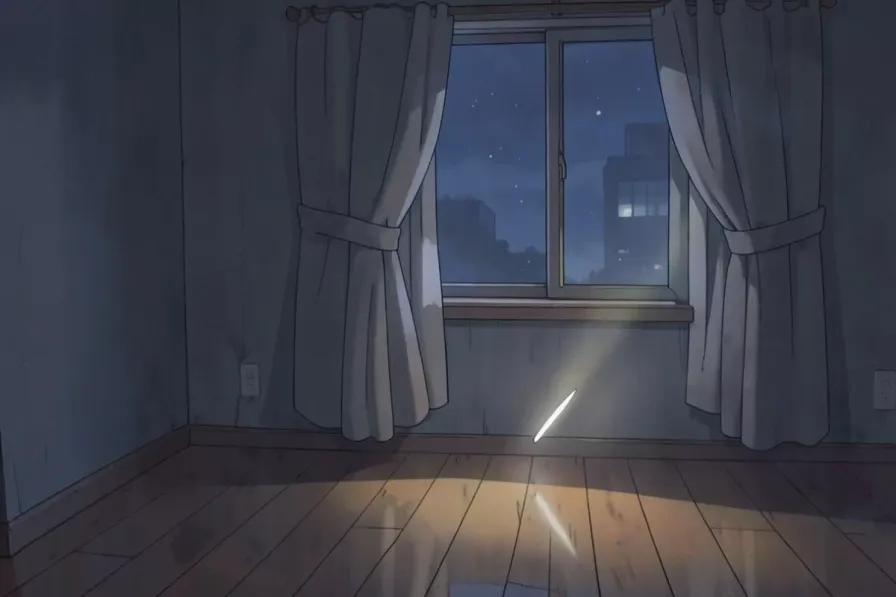
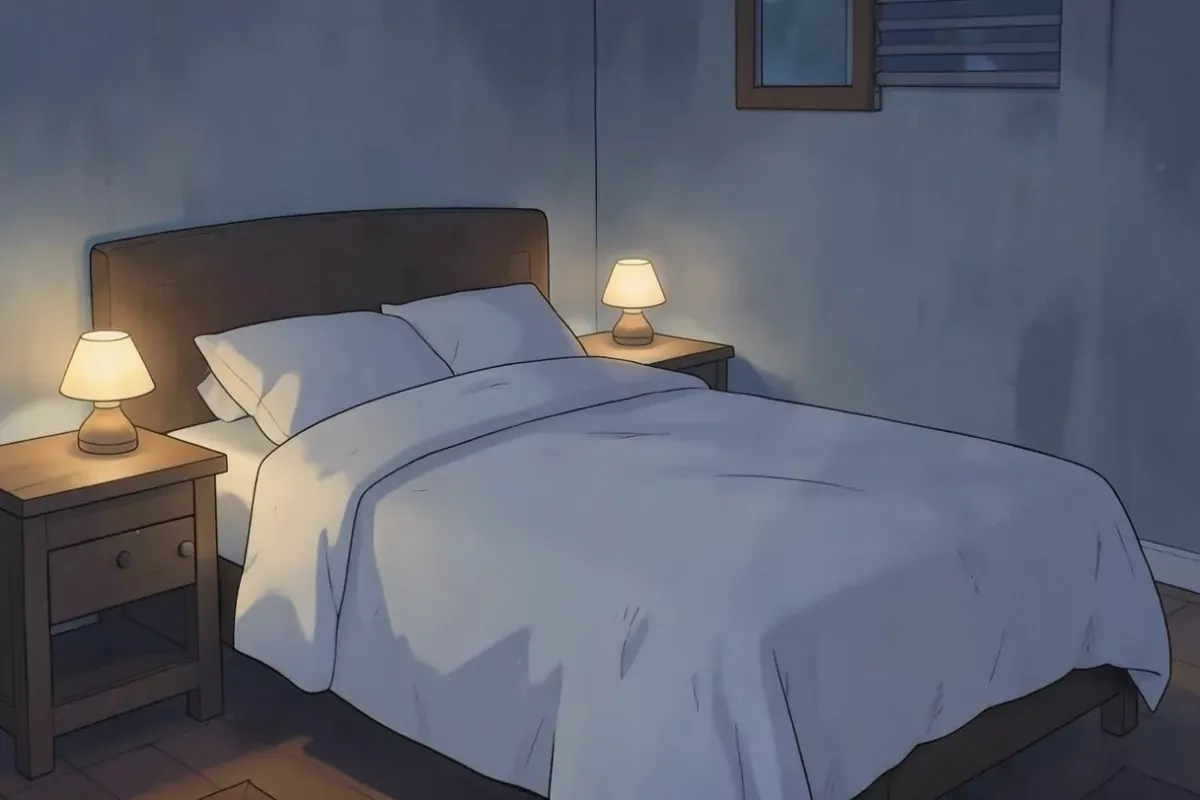
The lit condition was four 60-watt incandescent bulbs in the ceiling. That is a room with the light on. It is not a phone face-down on the nightstand, and it is not a gap at the edge of a curtain.
So the honest reading is not that any light ruins your metabolism. It is that sleeping in what most people would call a lit room measurably changed glucose handling overnight, in young healthy adults, after one exposure.
If your bedroom is genuinely dark and one thin blade of streetlight crosses the ceiling, this study does not tell you that you have a problem. If you fall asleep with the TV on or the overhead light burning, it is describing your situation quite closely.
What a Larger Cohort Adds
The laboratory study is small and short. A very different kind of study fills in the other side.
An analysis of 1,933 older adults in the Multi-Ethnic Study of Atherosclerosis measured actual bedroom light with wrist actigraphy rather than assigning it, and looked at sleep timing rather than metabolism.
Every 5-lux increase in light during sleep was associated with 7.8 minutes more variability in what time people fell asleep, and 32% higher odds of an irregular sleep onset (odds ratio 1.32, 95% CI 1.17 to 1.50). Within the same person, a brighter night was followed by a 2.2-minute larger deviation the next night.
The relationship also ran the other way: more irregular sleep predicted more light exposure later. The authors describe it as bidirectional, which is a fair description of a loop most people would recognise — you go to bed at odd hours, you end up with more light on when you do.
What Neither Study Shows
Three limits, and they matter more than the headline.
Twenty people, one night. The laboratory study is small and acute. It shows that a single lit night moves the numbers; it does not establish what months of it do, and it was not designed to.
Young and healthy. Mean age around 26 to 27, all healthy. Whether the same magnitude applies at 60, or with existing insulin resistance, is not answered here.
Association, not assignment, in the large study. The MESA analysis measured what people already did. It cannot rule out that whatever causes irregular sleep also causes more light exposure, which is precisely why the authors describe the relationship as bidirectional rather than causal.
What survives all three caveats is modest and still useful: darker is better, the effect is measurable rather than theoretical, and the intervention costs almost nothing.
What to Buy
As an Amazon Associate I earn from qualifying purchases.
For the room: the NICETOWN blackout curtain pair, at 4.7 stars across roughly 61,900 ratings at the time of writing.
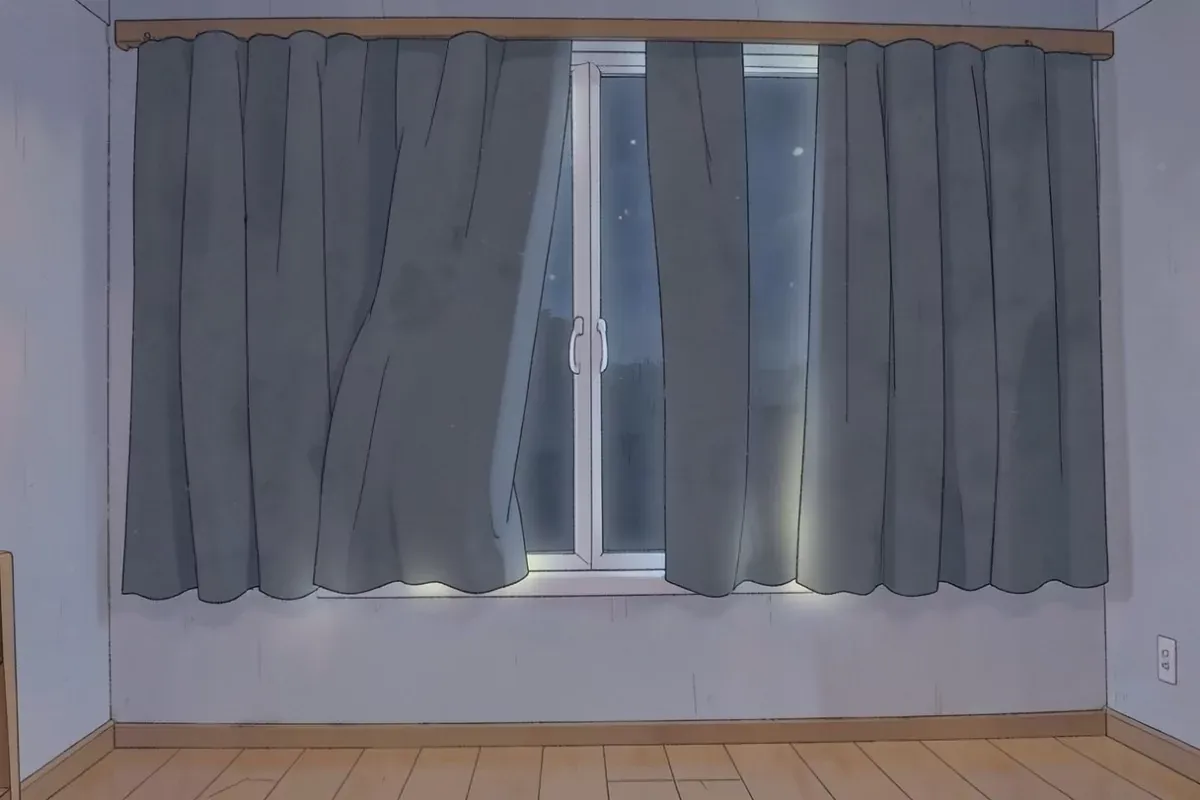
Read the product copy carefully, because it is unusually honest. It claims 85% to 99% light blocking, not 100%. That range is the important part, and it is true of the whole category: fabric stops light through the panel, but light comes around the edges, over the top, and under the hem. If you want the low end of the lux scale, the fabric is only part of the job — a wrap-around rod that returns to the wall does more than a thicker panel.
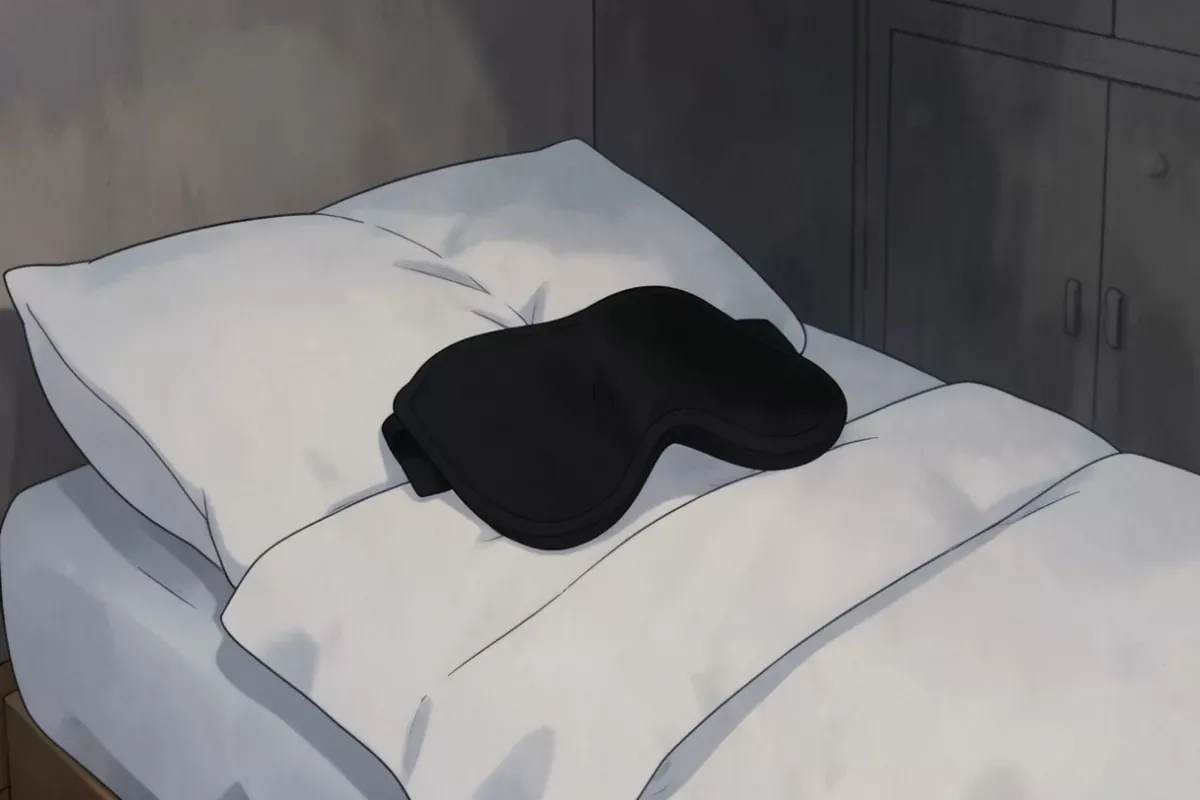
For the eyes, or for rooms you cannot fix: the MZOO contoured sleep mask, at 4.6 stars across about 100,900 ratings. A contoured mask sits off the eyelids rather than pressing on them, which is the difference between one you keep on all night and one you pull off at 3am.
The mask is the better buy in two situations that curtains cannot solve: rented rooms where you will not install anything, and partners who read while you sleep. It is also the cheaper experiment. Try a mask for a week before spending on window treatments, because it tells you whether darkness is actually the thing limiting your sleep.
And the honest exclusion: if your bedroom is already dark enough that you cannot see your hand at 3am, neither of these will do anything for you. Buy them to solve a light problem you have measured or noticed, not as a general upgrade.
Where This Fits
The duration side of the question — how many hours, and what happens when you cut them — is covered in sleep for muscle growth. Since the study above tracked nighttime heart rate and heart rate variability, it is worth knowing how reliable those measurements are on consumer devices, which is the subject of why your heart rate zones are probably wrong. And for recovery more broadly, DOMS and how to actually recover puts sleep in context against the other options.
If you are sleeping badly despite a dark, quiet room, that is a different problem from this one, and a persistent version of it is worth raising with a doctor rather than solving with soft furnishings.
Frequently Asked Questions
Does sleeping with a light on affect your health? In a controlled study of 20 healthy adults, one night under 100 lux of overhead room lighting raised next-morning insulin resistance by about 15%, against a 4% fall in the group who slept under 3 lux. Nighttime heart rate was also elevated across the whole night. That is a single night in a laboratory, not proof of long-term harm.
How dark should a bedroom be for sleep? Darker than the condition that caused the change is a reasonable floor. The comparison group in that study slept under 3 lux and showed no impairment, while the lit condition was four 60-watt ceiling bulbs. A room where you cannot make out your hand is already past the point the study was testing.
Is light from a phone or streetlight as bad as room light? The study does not say so. Its lit condition was overhead room lighting, which is far brighter than a screen face-down or a gap at a curtain edge. Applying this result to a thin blade of streetlight would be stretching it well beyond what was measured.
Do blackout curtains actually block all light? No, and the sellers generally do not claim it. The panels recommended here advertise 85% to 99% light blocking. Fabric stops light through the panel, but light still travels around the sides, over the top and under the hem, so how the curtain is mounted matters as much as the material.
Is a sleep mask as good as blackout curtains? For the eyes, often better, and it is the only option in a rented room or with a partner who reads at night. A contoured mask that sits off the eyelids is the type worth having. It is also the cheaper way to test whether darkness is what is limiting your sleep before spending on window treatments.
Does light during sleep affect sleep timing too? An analysis of 1,933 older adults found every 5-lux increase in light during sleep associated with 7.8 minutes more variability in sleep onset and 32% higher odds of irregular sleep timing. The relationship was bidirectional, so irregular sleep also predicted more light exposure later.
Evandro
Evandro is the founder of The Fitness Road. He believes that without physical activity there is no real health, and without health, there is no lasting discipline in any other area of life.
Leave a Reply
Your email address will not be published. Required fields are marked *