
Why Your Heart Rate Zones Are Probably Wrong

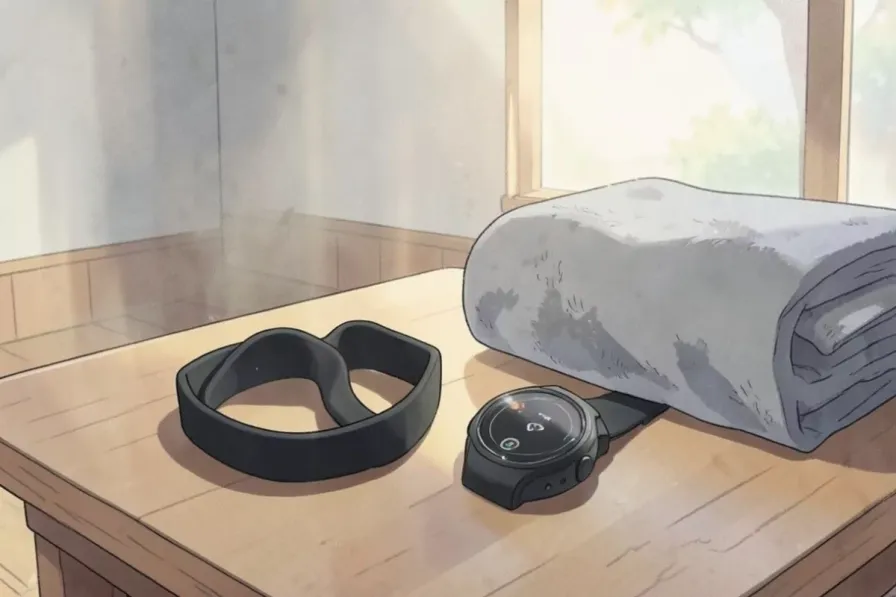
Every watch that shows you heart rate zones is doing two things you cannot see. It is estimating a number it has never measured, and it is reading your pulse with a sensor that struggles under exactly the conditions you use it in.
Both steps carry error, and they stack. That is the reason your heart rate zones may not be describing the effort you think they are.
Where the Zones Actually Come From
A zone is a percentage of your maximum heart rate. Zone 2 is roughly 60% to 70% of max, threshold work sits higher, and so on. All of it hangs on one number.
Almost no consumer device measures that number. It estimates it from your age, and the estimate it usually uses is 220 minus age.

The Formula Describes a Population, Not You
The best-known assessment of this is a study in the Journal of the American College of Cardiology that pooled 351 studies covering 18,712 subjects, then cross-validated the result in 514 people in a laboratory.
It produced a better equation: 208 − 0.7 × age, with the laboratory sample giving a virtually identical 209 − 0.7 × age. Maximum heart rate turned out to be predicted by age alone, with no meaningful difference between men and women.
But the finding that matters for anyone using zones is not the equation. It is the spread around it. In the authors’ words, there was substantial variation across the entire age range, with standard deviations ranging from 7 to 11 beats per minute.
A standard deviation of roughly 10 bpm means a large minority of people sit 10 beats away from their predicted maximum, and a smaller group sits 20 beats away. If your true maximum is 15 bpm higher than the formula says, every zone boundary your watch draws is 9 to 10 beats too low, and the effort you are calling zone 2 is something else.
220 Minus Age Is the Worse Version
The formula most devices still use fails in a specific, directional way rather than randomly.
Compared against the newer equation, 220 minus age overestimates maximum heart rate in young adults, crosses over at about age 40, and then increasingly underestimates it with age. At 70, the gap between the two equations is around 10 beats per minute.
Stack that on the individual spread and the paper is blunt about the consequence: the underestimation could exceed 20 beats per minute for some older adults.
The authors’ own recommendation is the part worth quoting, because it is stronger than anything a product page will tell you. Despite the convenience of age-predicted maximums, they write, direct measurements of maximum heart rate should be used as an indicator of physical stress whenever possible.
They also found training status shifts the equation — 212 − 0.7 × age for sedentary subjects against 205 − 0.6 × age for endurance-trained ones — which is one more reason a single age-based number is a starting point rather than an answer.

The Second Problem Is the Sensor
Even with a correct target, you still have to measure the beats. Here the gap is between the device on your wrist and the one across your chest.
The American College of Cardiology reported a comparison of four popular wrist devices — Apple Watch, Fitbit Blaze, Garmin Forerunner 235 and TomTom Spark Cardio — against ECG in 50 volunteers. The chest strap tracked ECG at a correlation of 0.996. The wrist devices ranged from 0.67 to 0.92, and the measurement errors ran from ±15 to ±34 beats per minute depending on the activity.
A more recent validation study in JMIR Cardio put numbers on where the wrist struggles. Using a chest strap as the reference, an arm-worn optical sensor came within a mean absolute percentage error of 1.35%, while a wrist-worn one sat at 6.82% and exceeded 10% during low-heart-rate activities.
That last detail is the practical one. The wrist is least accurate at low intensities, which is precisely where zone 2 training lives.
What Actually Fixes It
Two separate problems, two separate fixes, and you do not necessarily need both.
For the target: stop using the formula as if it were measured. If you train seriously by zones, a supervised maximal test gives you the real number. Short of that, 208 − 0.7 × age is a better starting estimate than 220 − age, and should be treated as a range rather than a line.
For the measurement: move the sensor off your wrist. The chest is where the accuracy is, and the upper arm is close behind it.
And the honest third option: if you train by feel, by pace, or by how many reps you have left, none of this applies to you. Zones are one way to regulate effort, not the only valid one, and an inaccurate zone is worse than no zone at all.
What Is Worth Buying
As an Amazon Associate I earn from qualifying purchases.
Both of these are the exact devices used in the validation research above, which is the reason they are named rather than something cheaper.
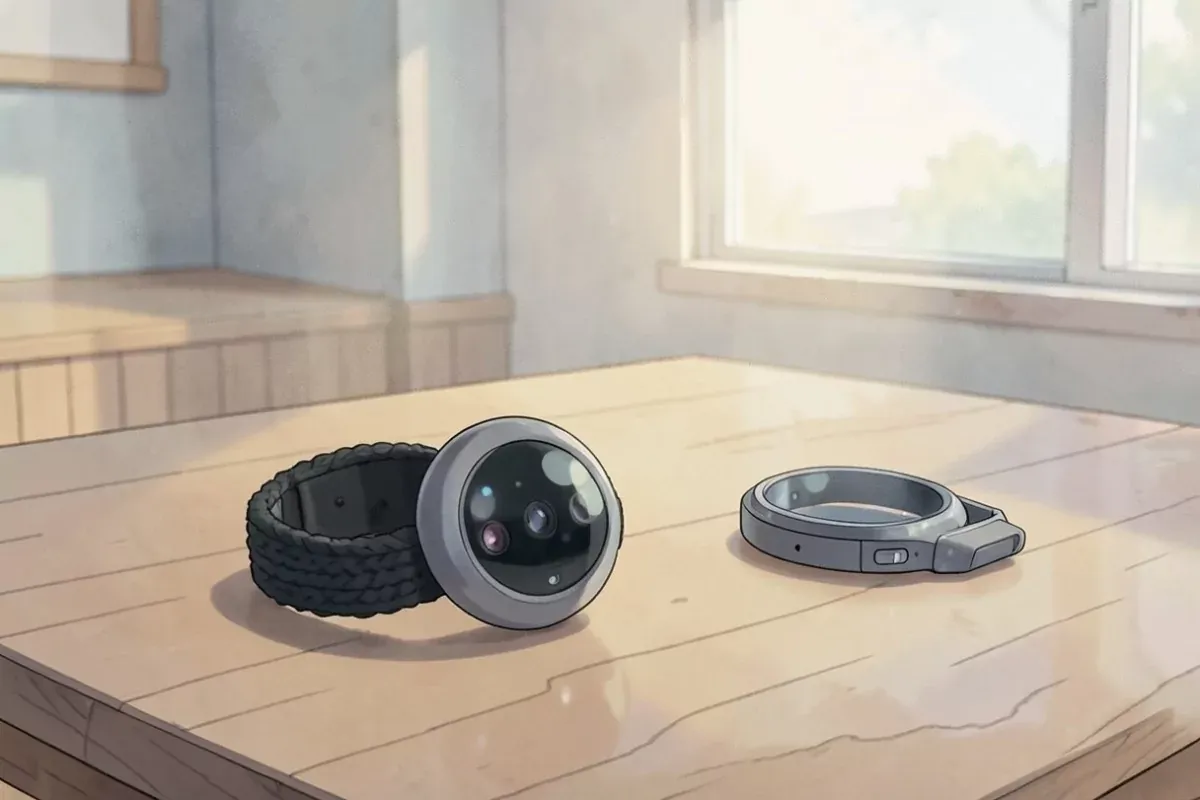
The Polar H10 chest strap is the chest strap that serves as the reference standard in published work — the JMIR study measured everything else against it. It holds 4.1 stars across roughly 27,000 ratings at the time of writing. The drawbacks are the obvious ones: it is a damp strap around your ribs, some people find it chafes under a heart rate that has climbed, and it needs to be wet to read properly at the start of a session.
The Polar Verity Sense armband is the arm-worn sensor that measured 1.35% mean error on the upper arm in that same study. It is the option for people who will not wear a chest strap, and worn on the arm rather than the wrist it gives up very little. Its rating is lower, at 3.9 stars across about 4,300 ratings, and it is worth reading recent reviews before buying rather than taking that as settled.
Both sit around the same price, which is not cheap for a sensor. If your watch is the only heart rate device you own and you use zones loosely, the honest advice is to keep the watch and stop treating its zone boundaries as precise. Spend the money only if the zones are actually driving your training.
Where This Fits
If you came to zones through fat loss, the training side is covered in tips to lose belly fat and the interval side in at-home HIIT workouts. For strength sessions, effort is regulated by rest and load rather than by heart rate, which is the subject of how long to rest between sets.
One limit worth stating plainly: a maximal heart rate test is a genuinely maximal effort. If you have a heart condition, high blood pressure, or you have been sedentary for a long time, that is a test to do with medical supervision rather than alone on a treadmill.
Frequently Asked Questions
How accurate are heart rate zones on a watch? Less than they look. The zone boundaries come from an estimated maximum heart rate, and published data show individual maximums scattering around any age formula with a standard deviation of 7 to 11 beats per minute. On top of that, wrist sensors measured against ECG in an American College of Cardiology comparison showed errors of 15 to 34 beats per minute depending on activity.
Is 220 minus age accurate? It is the weaker of the common formulas. Against the equation derived from 351 pooled studies, 220 minus age overestimates maximum heart rate in young adults, crosses over around age 40, and then increasingly underestimates it. At 70 the two differ by roughly 10 beats per minute, and for some older adults the underestimate can exceed 20.
What is a better formula than 220 minus age? 208 minus 0.7 times your age, from Tanaka and colleagues in the Journal of the American College of Cardiology. Their laboratory sample produced a virtually identical 209 minus 0.7 times age. It is still an estimate, so treat it as a range rather than a precise number.
Is a chest strap really more accurate than a smartwatch? Yes, and by a wide margin. Chest straps tracked ECG at a correlation of 0.996 in the ACC comparison while wrist devices ranged from 0.67 to 0.92. Chest straps read the heart’s electrical signal; wrist devices infer beats optically from blood flow, which movement, fit and sweat all disturb.
Where is a wrist heart rate monitor least accurate? At low intensities. A JMIR Cardio validation study found a wrist-worn sensor exceeding 10% mean absolute percentage error during low-heart-rate activities while an arm-worn sensor stayed at 1.35%. That is inconvenient, because low intensity is exactly where zone 2 training sits.
Do I need a heart rate monitor at all? Only if zones actually drive your training. If you regulate effort by pace, by feel, or by reps in reserve, an inaccurate zone adds nothing. The reasonable middle position is to keep the watch and stop treating its zone boundaries as precise numbers.
Evandro
Evandro is the founder of The Fitness Road. He believes that without physical activity there is no real health, and without health, there is no lasting discipline in any other area of life.
Leave a Reply
Your email address will not be published. Required fields are marked *