
Compound Exercises: The Best Lifts to Build Real Strength

Compound Exercises: The Handful of Lifts That Actually Build Strength
Watch the strongest person in any gym for ten minutes. They’re not bouncing between fifteen machines.
They pick up heavy things, put them down, and repeat.
While everyone else does tiny isolation moves for the mirror, the strong ones stick to a short list of big lifts. Those are compound exercises compound exercises and they’re the reason someone who looks completely ordinary can out-lift a room.
If you’ve been training a while and nothing’s moving, or you’re new and don’t want to waste your first year, this is where the real work happens. Below, we’ll cover what compound exercises are, why they beat machines for strength, the lifts that matter, and exactly how to start with the numbers backed by current exercise-science guidelines, not gym-bro folklore.
What are compound exercises?
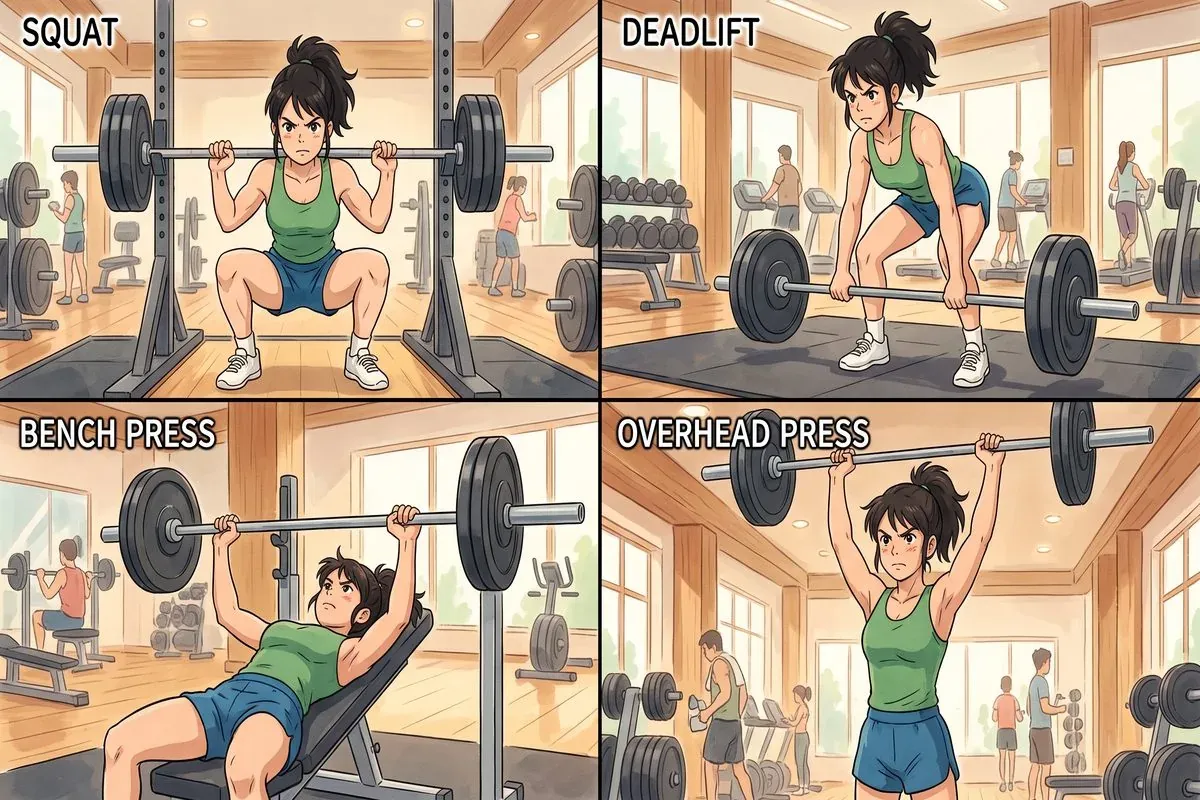
A compound exercise is any movement that uses more than one joint and works several muscle groups at the same time.
A squat bends at your hips, knees, and ankles and loads your quads, hamstrings, glutes, and core all at once. Compare that to a leg extension, which only bends the knee and hits the front of the thigh.
That second type one joint, one muscle is an isolation exercise.
Both have a place. But if your time is limited and you want to get stronger, compounds do far more per rep because they train your body to work as a unit, the way it actually moves when you carry groceries or pick up a kid.
Why compound exercises build strength faster
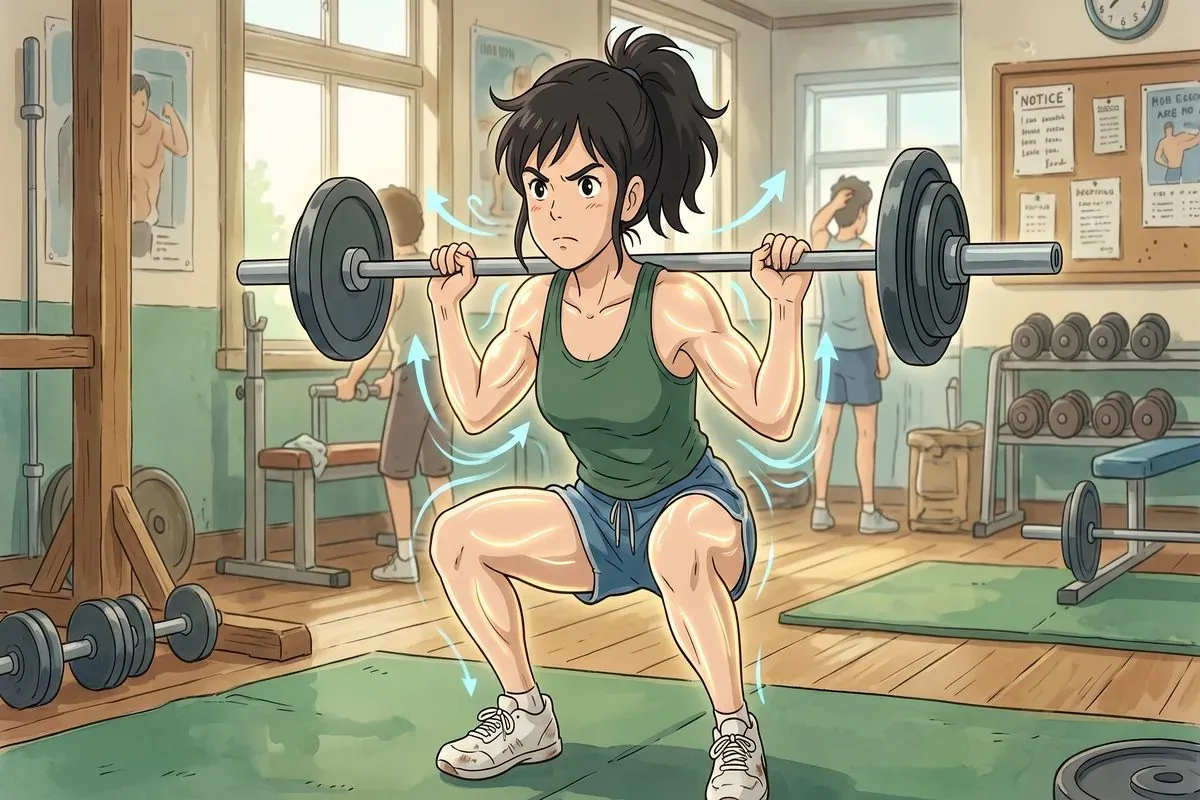
There are a few honest reasons compound exercises work, and none involve a supplement or a secret program.
None of this genuinely requires expensive equipment either, which is one more reason these lifts remain the default recommendation almost everywhere. A barbell, a rack, and a bench cover the core lifts, and even a pair of adjustable dumbbells at home can carry you a surprisingly long way before you need anything more elaborate.
They recruit more muscle. Because the load spreads across several muscle groups, you can move much more weight than on any isolation move. More load, done with good form over time, is the signal your body responds to.
They’re efficient. Three or four compound lifts can cover your whole body in one session. You don’t need two hours and a list of twenty exercises. For most people juggling work and life, that efficiency is the difference between training consistently and quitting over the following year.
They build strength you can actually use. Machines lock you into a fixed, predictable path that does the balancing work for you. Free-weight compounds force your stabilizers and core to keep you balanced and controlled. That real-world, everyday carryover is exactly what people mean when they talk about “functional” strength.
They also tend to build strength that keeps climbing for years rather than plateauing quickly, since there’s essentially no ceiling on how much weight a well-programmed squat or deadlift can eventually handle compared to most isolation movements. That long runway is part of why these lifts stay relevant whether you’ve been training for one month or ten years.
They train coordination. A heavy compound lift is a skill. Learning to brace, balance, and move a loaded bar teaches your nervous system to fire more muscle fibers at once. Part of getting stronger early on is simply your brain getting better at the movement.
The core compound lifts (and what each one trains)
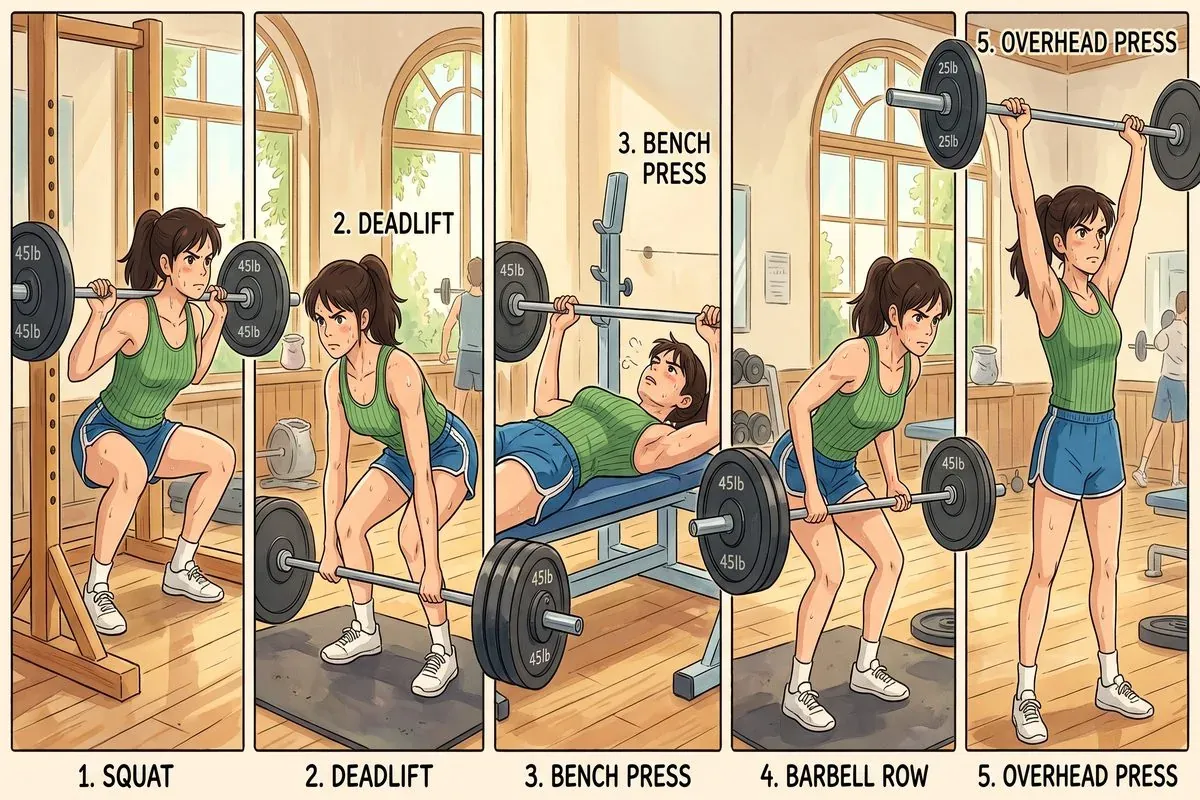
You don’t need all of these on day one. Think of this as the menu most solid programs are built from four or five.
Compound leg exercises
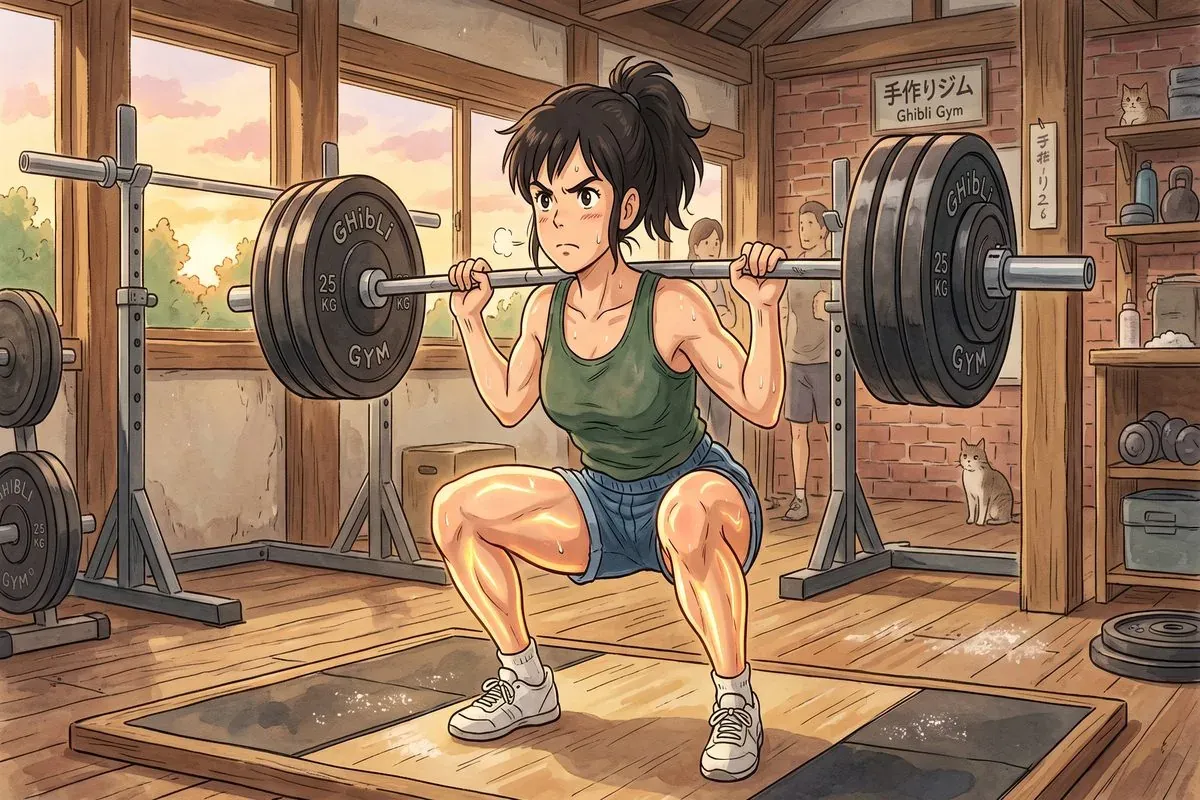
- Back squat quads, glutes, hamstrings, and core. The classic lower-body strength builder.
- Deadlift hamstrings, glutes, back, grip, and core. Technically full-body, but the king of posterior-chain strength.
- Lunge and split squat same muscles as the squat, one leg at a time, which also exposes and fixes left-to-right imbalances.
Compound back exercises

- Pull-up / lat pulldown lats, upper back, biceps. If you can’t do a pull-up yet, the pulldown builds you toward it.
- Bent-over row the whole back, rear shoulders, and biceps. Rows balance out all the pressing you’ll do.
Compound push exercises
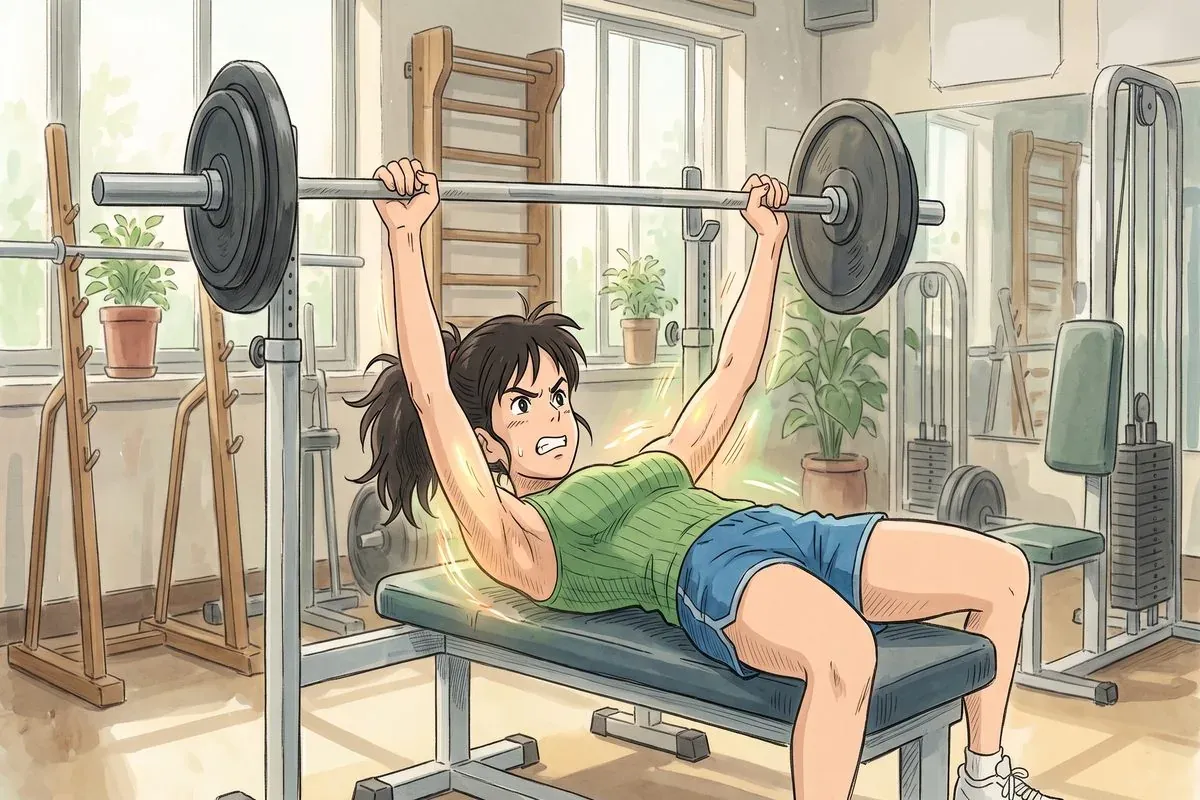
- Bench press chest, front shoulders, triceps. The most well-known upper-body lift for a reason.
- Overhead press shoulders, triceps, and a surprising amount of core to stay stable while pressing overhead.
Notice the pattern: legs, a pull, and a push. Cover those three compound exercise directions and you’ve trained nearly every major muscle with a handful of movements.
How to program compound exercises (what the guidelines actually say)
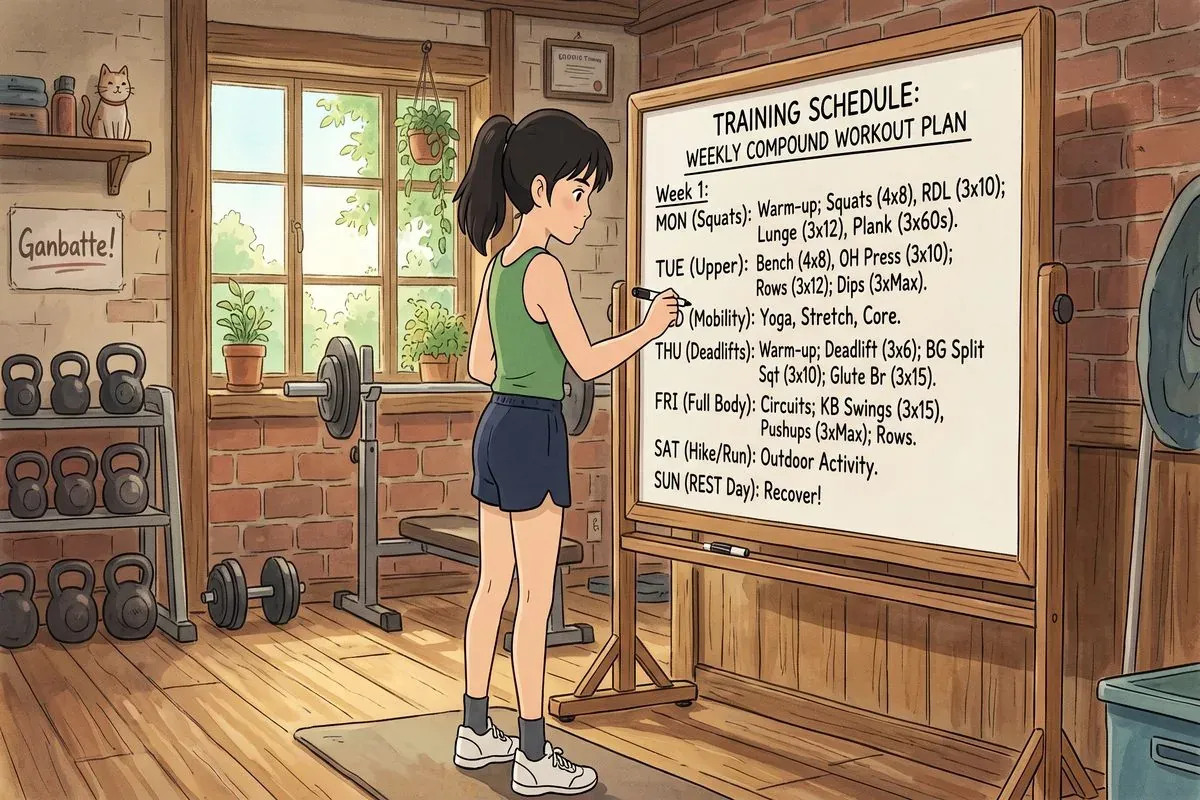
Here’s a simple structure that matches current evidence. In 2026 the American College of Sports Medicine released its first resistance-training position stand in 17 years, built from 137 systematic reviews and more than 30,000 participants — so we have unusually solid ground to stand on. [¹]
Frequency. Train each major muscle group about two to three times per week. The ACSM position stand names this range as optimal for both strength and size, [¹] and earlier meta-analysis work found twice-weekly beat once-weekly when everything else was equal. [²] A compound exercises full-body plan two or three days a week covers this nicely when you’re building your base.
Load and sets. For strength, the guidelines point to heavier loads (around 80% of the most you can lift once) for two to three sets per exercise. [¹] In practice, that’s a weight you could move for roughly five to eight clean reps. Beginners can start lighter to nail form and still progress.
Effort — and this one’s important. You do not have to grind every set to total failure. The ACSM review found that stopping about two to three reps short of failure produces the same strength and size gains as going all-out, with less fatigue and lower injury risk. [¹] Leave a little in the tank.
Rest. For heavy compound lifts, give yourself three to five minutes between sets. A systematic review in Sports Medicine found that longer rest periods produce greater strength gains on compound exercises, because you recover enough to keep the weight heavy; two to three minutes is fine for lighter or single-joint work. [³] You’re training strength here, not trying to be out of breath.
Form before weight, always. A clean lift with a lighter load beats a sloppy heavy one every time, and it keeps you off the injury list. If you’re unsure, film a set from the side and compare it to a coach’s demo, or work with a trainer for a few sessions.
Common compound-lift mistakes to avoid
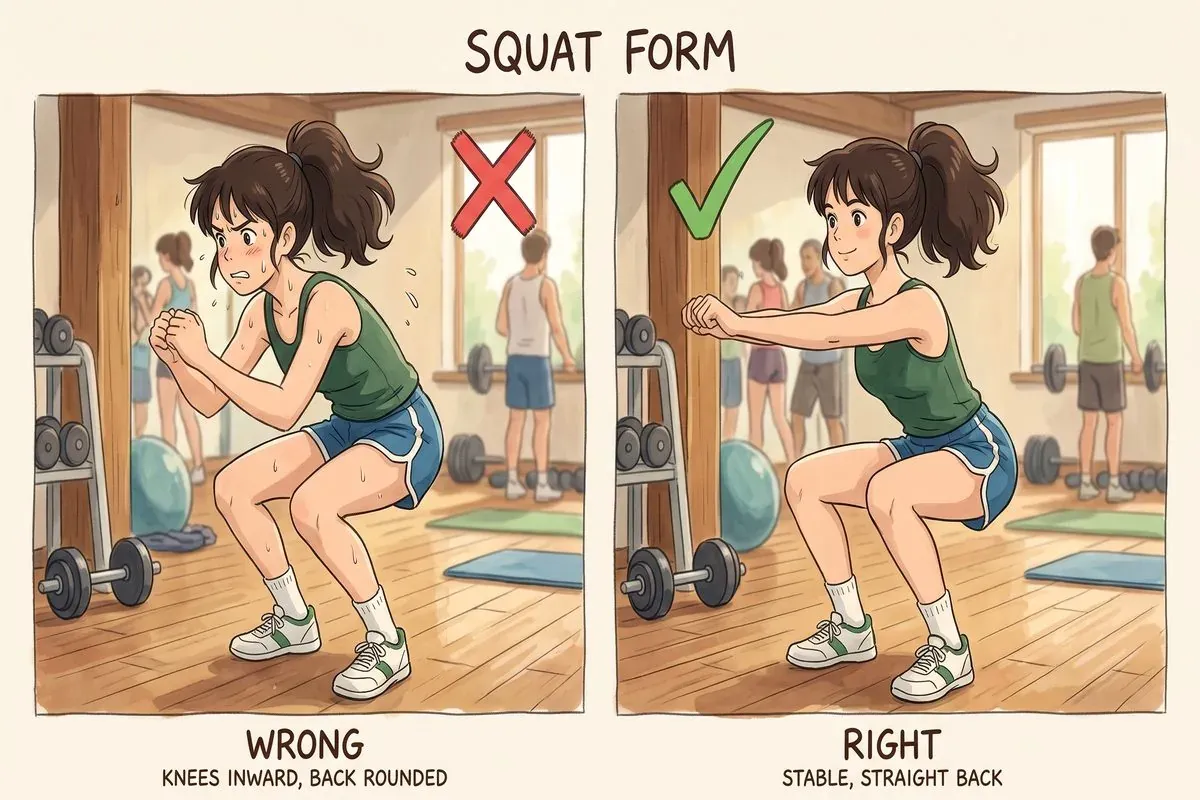
- Loading the bar before you own the movement. Ego lifting is the fastest route to a tweaked back. Earn the weight.
- Skipping the pull. Everyone loves to bench. Far fewer row or pull-up enough to balance it, and that imbalance shows up as cranky shoulders.
- Half reps. A squat to depth and a lockout on your press are where the strength is built. Cutting range to add plates is fooling only you.
- No plan for adding load. Turning up and lifting the same weight forever is the single most common reason people stall. Which brings us to the actual secret.
The real secret: progressive overload

Compound lifts work, but only if you slowly add difficulty over time — a little more weight, a rep, or a set as things get easier. The ACSM position stand is blunt about this: for most people, straightforward progressive overload does most of the work, and fancy periodization schemes don’t consistently beat it. [¹]
That’s the whole reason the unassuming person in the corner is so strong. Not genetics, not a trick. They picked a few compound lifts, learned to do them well, and added a little every few weeks for a long time.
- Keep reading: How progressive overload actually makes you stronger (update link once published)
- New to the gym? Start with your first beginner gym workout plan before loading up the bar.
- Don’t skip recovery: your strength is built while you sleep, not while you train.
Start with 3 Compound Exercises

Don’t try to master seven lifts this week.
Pick one leg movement, one push, and one pull. Learn them properly, keep the weight honest, leave a couple of reps in reserve, and add a little each time it feels easy.
Do that for a few months and you’ll quietly become the person other people watch for ten minutes, wondering how you got so strong.
References
- American College of Sports Medicine. Resistance Training Prescription for Muscle Function, Hypertrophy, and Physical Performance in Healthy Adults (2026 Position Stand). acsm.org · Science Spotlight summary
- Schoenfeld BJ, Ogborn D, Krieger JW. Effects of Resistance Training Frequency on Measures of Muscle Hypertrophy: A Systematic Review and Meta-Analysis. Sports Medicine, 2016. Springer · follow-up (2018)
- de Salles BF, et al. Rest Interval between Sets in Strength Training. Sports Medicine, 2009. PubMed
*The Fitness Road shares general fitness information, not medical or coaching advice.
We’re enthusiasts, not doctors or licensed trainers. Talk to a qualified professional before starting a new exercise program, especially if you have an injury or health condition, and stop any movement that causes pain.
Questions? contact@thefitnessroad.com*
Frequently Asked Questions
What counts as a compound exercise? A compound exercise uses more than one joint and hits several muscle groups at once. Squats, deadlifts, bench press, rows, and pull-ups are all classic examples.
Why are compound lifts better for building strength? They let you move heavier weight and train more muscle in less time. That combo is why they usually beat isolation moves when your main goal is getting stronger.
Can I build muscle with just compound exercises? Yep, for sure. Most people can build plenty of size and strength with the big lifts alone, especially early on, though some isolation work can help fill in gaps later.
How many compound exercises should I do in a workout? Most lifters do well with three to five big movements per session. A simple push, pull, and leg pattern covers a lot without turning your workout into a marathon.
Evandro
Evandro is the founder of The Fitness Road. He believes that without physical activity there is no real health, and without health, there is no lasting discipline in any other area of life.
Leave a Reply
Your email address will not be published. Required fields are marked *