
The Beginner Gym Workout: A Simple Plan That Actually Works

A good beginner gym workout is a full-body routine done two or three days a week, built around a few basic compound lifts, with a small increase in difficulty over time. You do not need fifteen machines, a complicated split, or two hours a day. You need a short plan you’ll actually repeat.
Every experienced lifter you’ll ever meet started exactly where you are now, unsure which machine to use first and worried about looking out of place. That feeling fades fast once you have a plan to follow instead of wandering the floor guessing. Walking into a gym for the first time is genuinely intimidating.
Everyone else looks like they know exactly what they’re doing, and you’re standing there wondering which machine won’t embarrass you. Here’s the secret nobody says out loud: most of those people are running some version of the simple plan below. Let’s give you the same thing, minus the years of trial and error.
How often should a beginner train?
 Two to three days a week is the sweet spot for beginners. That’s enough to build real strength without burning out or getting so sore you quit by week two. Any more than that in your first few weeks tends to backfire, since recovery hasn’t caught up yet with your enthusiasm.
A lot of beginners assume they need a split routine, hitting one or two body parts a day like the more experienced lifters around them. That’s a mistake early on.
Two to three days a week is the sweet spot for beginners. That’s enough to build real strength without burning out or getting so sore you quit by week two. Any more than that in your first few weeks tends to backfire, since recovery hasn’t caught up yet with your enthusiasm.
A lot of beginners assume they need a split routine, hitting one or two body parts a day like the more experienced lifters around them. That’s a mistake early on.
Full-body training two or three times a week means every muscle group gets stimulated multiple times weekly instead of once, and research consistently shows more frequent stimulation drives faster early progress. Splits make more sense later, once your training volume per session gets too long to fit everything in one workout. This isn’t a gym-bro opinion.
The U.S. Physical Activity Guidelines for Americans recommend that adults do muscle-strengthening activities working all major muscle groups on two or more days a week. [1] And the 2026 American College of Sports Medicine position stand — a review of 137 studies and over 30,000 people — points to training each muscle group about two to three times a week as optimal for strength and size. [2] A full-body workout done a few times a week hits both targets at once, which is exactly why it’s the smartest place to start.
The plan: a simple full-body beginner gym workout
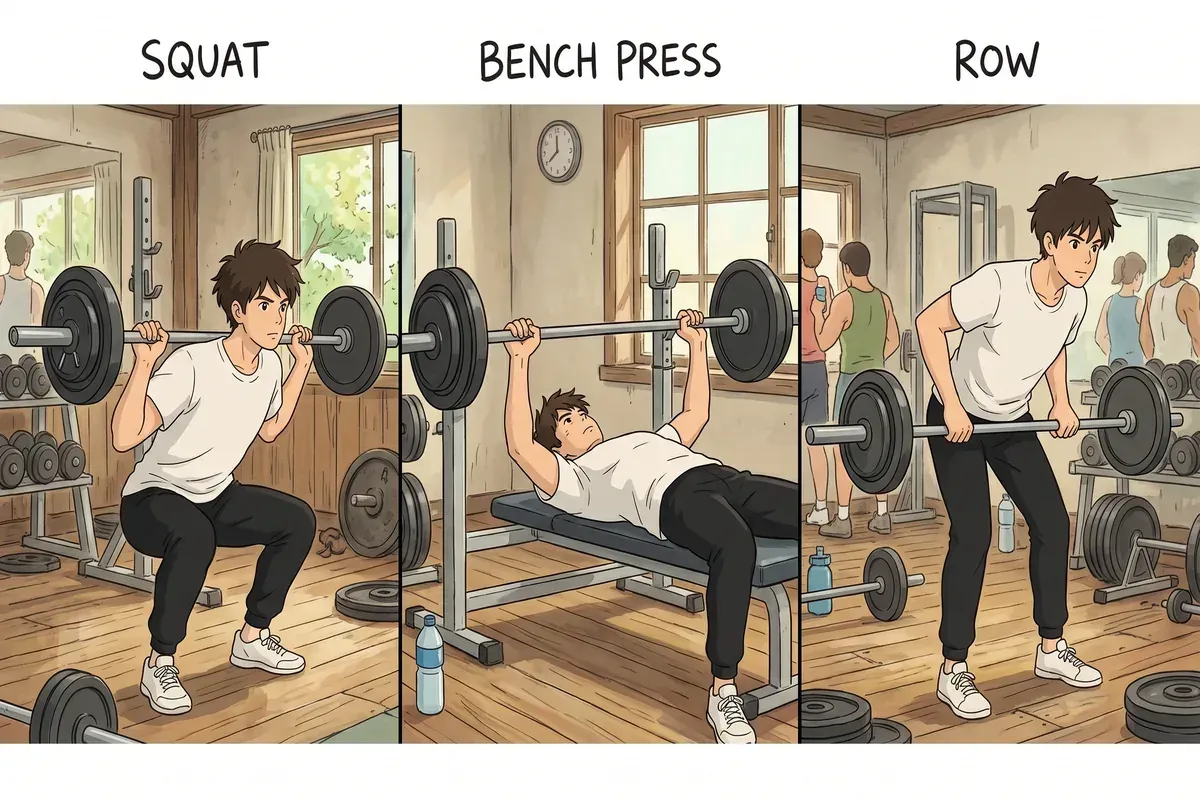 Do this workout 2—3 times a week, with at least one rest day between sessions. It covers your whole body with one movement from each major pattern.
| Exercise | Sets | Reps | Trains | | — | — | — | — | | Squat (or leg press) | 3 | 6—10 | Legs, glutes, core | | Bench press (or push-up) | 3 | 6—10 | Chest, shoulders, triceps | | Row (or lat pulldown) | 3 | 8—12 | Back, biceps | | Overhead press | 2 | 8—12 | Shoulders, triceps | | Deadlift (or hip hinge) | 2 | 5—8 | Hamstrings, glutes, back | | Plank | 2 | 30—45 sec | Core |
Every one of these except the plank is a compound lift — a movement that trains several muscles at once, which is why this short list covers your entire body. If you want to understand why these beat machines, read our guide to compound exercises.
Sets, reps, and rest for beginners
 Weight: start lighter than you think. Pick a weight you can control for all your reps with clean form. You are building the movement pattern first; the heavy stuff comes later.
Effort: you don’t need to train to failure. Stopping two to three reps short of failure gives the same results with less fatigue and lower injury risk, according to current ACSM guidance. [2] Leave a little in the tank.
Rest: take two to three minutes between your bigger lifts. A systematic review in Sports Medicine found that adequate rest between sets supports better strength gains, because you recover enough to keep quality high. [3] You’re not trying to be out of breath — you’re trying to lift well.
Weight: start lighter than you think. Pick a weight you can control for all your reps with clean form. You are building the movement pattern first; the heavy stuff comes later.
Effort: you don’t need to train to failure. Stopping two to three reps short of failure gives the same results with less fatigue and lower injury risk, according to current ACSM guidance. [2] Leave a little in the tank.
Rest: take two to three minutes between your bigger lifts. A systematic review in Sports Medicine found that adequate rest between sets supports better strength gains, because you recover enough to keep quality high. [3] You’re not trying to be out of breath — you’re trying to lift well.
Always warm up first
 Five to ten minutes of easy cardio to raise your body temperature, then a couple of light sets of your first exercise before you add weight. That’s it.
A proper warm-up lowers injury risk and makes your working sets feel better — skipping it is one of the most common beginner mistakes.
A simple version: 5 minutes on a bike or treadmill, then a couple of bodyweight squats, some arm circles, and a light empty-bar or no-weight set of whatever you’re starting with. That’s genuinely all it takes before jumping into your working sets.
How to keep getting stronger
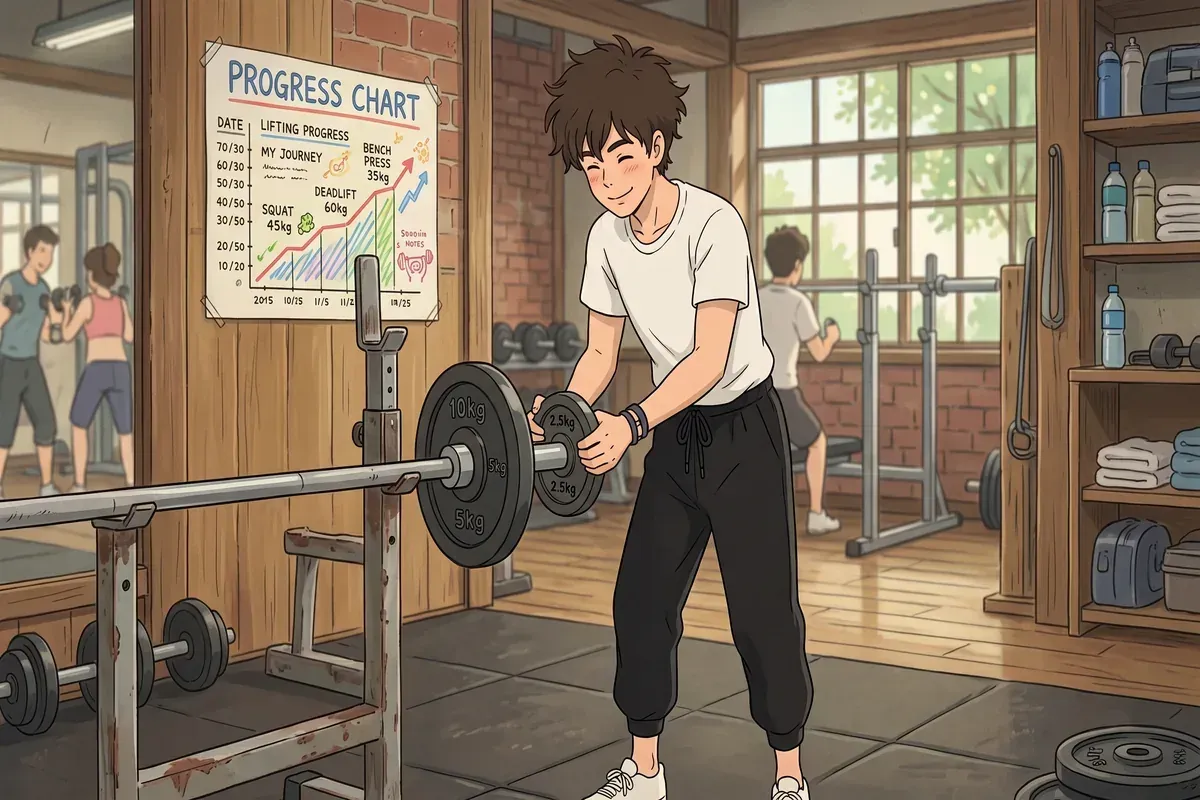 Doing the same workout with the same weights forever is the number one reason people stall.
The fix is progressive overload — adding a little weight or a rep whenever a set starts to feel easy. It’s the entire engine of getting stronger, and it’s simpler than it sounds.
We break it down step by step in our progressive overload guide.
Common beginner gym workout mistakes to avoid
- Program hopping. Switching plans every week resets your progress. Give this one at least 8—12 weeks.
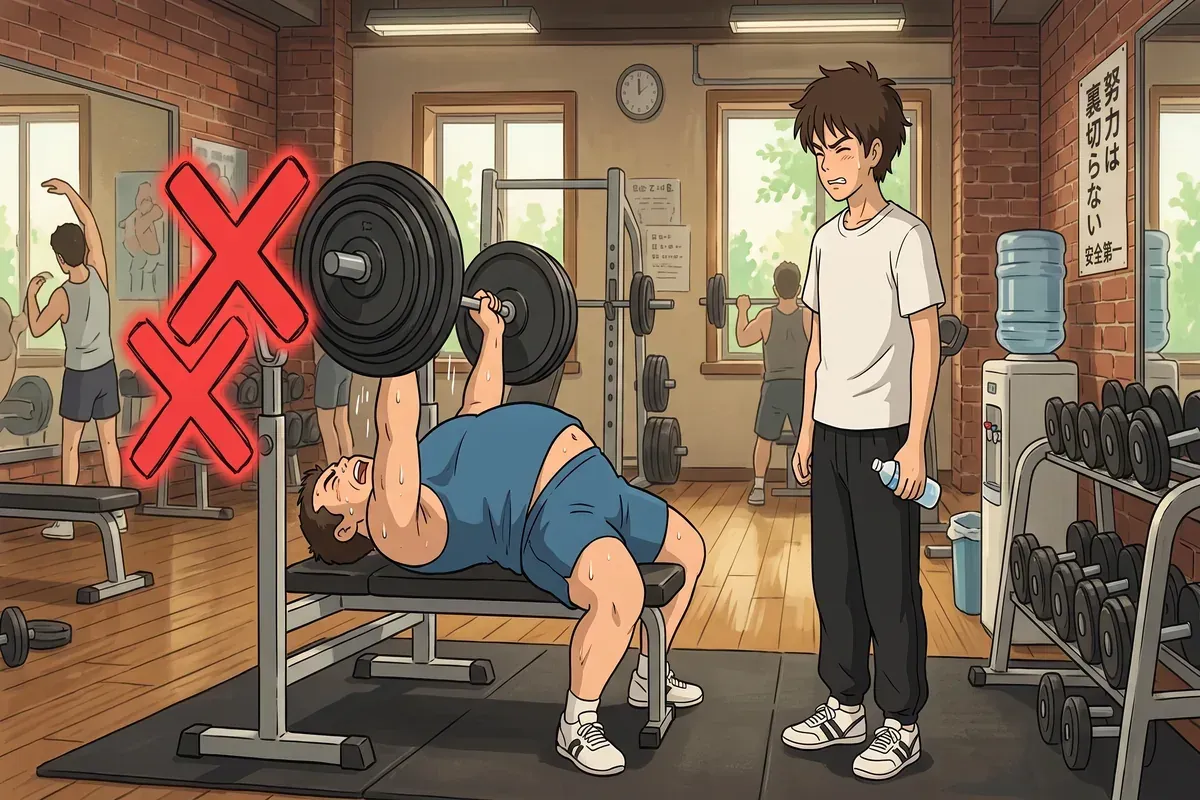
- Ego lifting. Loading weight you can’t control is how beginners get hurt. Earn it.
- Only training what you can see. Everyone loves chest and arms. Legs and back are where real strength lives — don’t skip them.
- Skipping rest days. Muscle is built during recovery, not during the workout. More is not always better.
- Chasing soreness. Being sore the next day doesn’t mean a workout “worked,” and not being sore doesn’t mean it didn’t. Soreness fades with experience even as strength keeps climbing.
What comes after this plan
Once this routine starts feeling easy, usually after 8 to 12 weeks of consistent progressive overload, it’s time to add a fourth training day or split the workout into an upper/lower split so each muscle group gets a bit more direct volume. There’s no rush to get here. Plenty of people run a version of this full-body plan for six months or longer and keep making progress the whole time, simply because they keep adding small amounts of weight or a rep here and there.
How long until you see results?
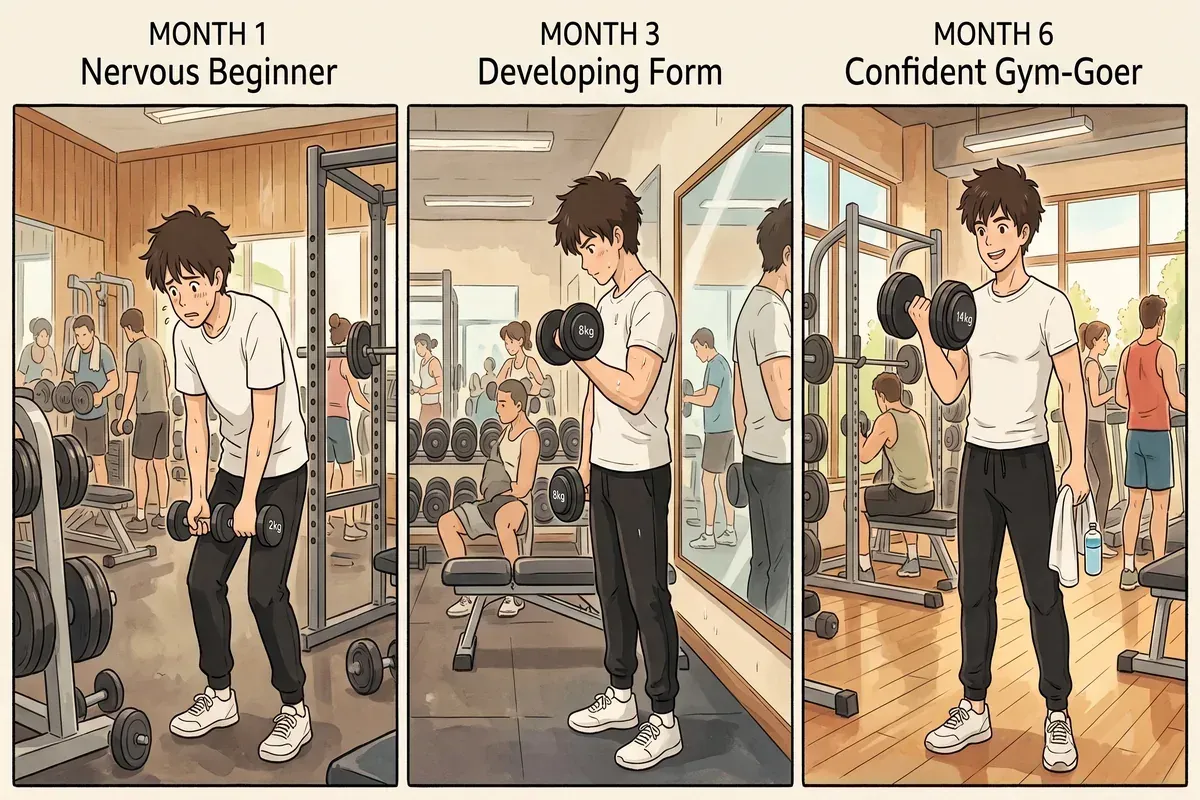 Expect to feel stronger and more coordinated within a few weeks — a lot of early progress is your nervous system learning the movements.
Visible changes take longer and depend heavily on sleep, food, and consistency. There’s no honest way to promise a specific timeline, and anyone guaranteeing one is selling something.
What we can promise is that this plan, repeated consistently with small increases, works for almost everyone who sticks with it.
Don’t forget nutrition
A good workout plan only gets you so far if your eating doesn’t back it up.
You don’t need a strict diet to start, but getting enough protein across the day, roughly a palm-sized portion at each meal, gives your body the raw material it needs to actually build the muscle this plan is asking for. Eating too little, especially while trying to train hard three times a week, is one of the quietest ways beginners stall out without realizing why.
Sleep matters just as much, since most of the actual repair and adaptation from training happens while you’re resting, not while you’re in the gym. If you want a bit of an energy boost before training sessions, our guide to pre-workout drinks at home covers simple options that don’t require a tub of powder.
Frequently asked questions

How many days a week should a beginner work out? Two to three full-body sessions a week, with rest days between them. That aligns with both the Physical Activity Guidelines and ACSM recommendations. [1][2]
How long should a beginner gym workout take? Around 45 to 60 minutes total, including your warm-up, which is plenty of time to hit every exercise on the list without rushing. If it’s taking two hours, you’re resting too long or doing too much.
Do I need cardio too? Some is good for your heart and recovery. The guidelines suggest about 150 minutes of moderate activity a week, but it doesn’t have to compete with your lifting — a few walks or easy sessions cover it. [1]
Do I need a personal trainer to start? Not required, but a few sessions to check your form on the squat, deadlift, and bench is money well spent and prevents bad habits early.
What if a machine or exercise on the list is taken? Swap in whatever hits the same muscle group while you wait, or ask to work in with whoever is using it. Nobody minds sharing between sets.
Should I train to failure to grow faster? No. Training to failure adds a lot of fatigue for little extra benefit, especially for beginners. Leaving a couple of reps in reserve lets you recover in time for your next session, which matters more than any single all-out set.
References
- U.S. Department of Health and Human Services. Physical Activity Guidelines for Americans, 2nd edition. CDC — Adult Activity
- American College of Sports Medicine. Resistance Training Prescription for Muscle Function, Hypertrophy, and Physical Performance in Healthy Adults (2026 Position Stand). acsm.org
- de Salles BF, et al. Rest Interval between Sets in Strength Training. Sports Medicine, 2009. PubMed
*The Fitness Road shares general fitness information, not medical or coaching advice.
We’re enthusiasts, not doctors or licensed trainers. Talk to a qualified professional before starting a new program, especially if you have an injury or health condition, and stop any movement that causes pain.
Questions? contact@thefitnessroad.com*
Evandro
Evandro is the founder of The Fitness Road. He believes that without physical activity there is no real health, and without health, there is no lasting discipline in any other area of life.
Leave a Reply
Your email address will not be published. Required fields are marked *