
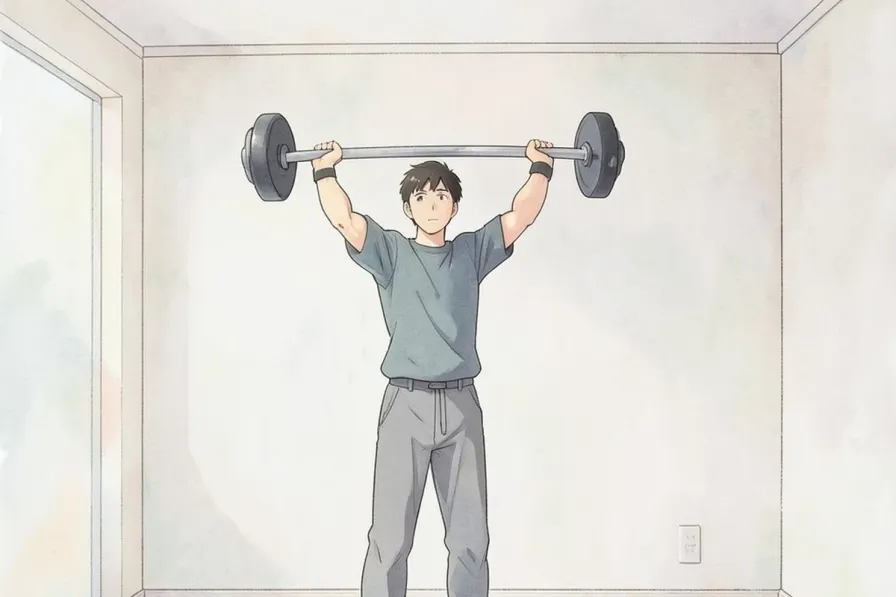
Complete Shoulder Workout: Build Bigger, Stronger Shoulders

Walk into any gym on a Monday and you’ll see a line for the bench press. Walk in on shoulder day and the room is half empty. Shoulders get treated as an afterthought, something to tack onto the end of a chest or back session with a few sets of lateral raises, when they actually deserve their own dedicated attention. The shoulder joint moves in more directions than almost any other joint in the body, which means it takes more than one or two exercises to develop it properly, and neglecting parts of it shows up eventually as both a visual imbalance and a nagging injury risk.
Let’s break down what actually builds bigger, stronger shoulders, why most routines miss part of the picture, and how to put together a session that works whether you’re in a fully equipped gym or training at home with a pair of dumbbells.
Why Shoulders Are Different From Other Muscle Groups
Most muscles you train have a single, fairly simple job. The shoulder isn’t one muscle at all, it’s three separate heads bundled under the same name: the anterior deltoid at the front, the lateral deltoid on the side, and the posterior deltoid at the back. Each one pulls the arm in a different direction, and each one responds best to a different type of exercise. A pressing movement lights up the front head hard. A raise out to the side is what actually builds the lateral head, the one most responsible for the width people are chasing when they say they want “boulder shoulders.” The rear head barely gets touched by pressing at all and needs its own dedicated pulling work.
Underneath those three heads sits the rotator cuff, a group of four small stabilizing muscles that don’t show up in the mirror but that keep the joint tracking correctly under load. Most shoulder injuries trace back to this group being undertrained relative to the pressing muscles around it. A shoulder routine that only presses and never pulls is building a joint that’s strong in one direction and vulnerable in the other.

The Exercises That Actually Move the Needle
A barbell or dumbbell overhead press is the closest thing shoulders have to a bench press, a heavy compound movement that lets you load real weight and drives growth across the front and side of the shoulder at once. It’s demanding on shoulder mobility and core stability, so most lifters are better off building up to it gradually rather than loading it heavy from week one.
Lateral raises are the single most important isolation exercise for shoulder width. The lateral head doesn’t get meaningfully stimulated by pressing movements the way the front head does, so if you skip raises entirely, that head stays underdeveloped no matter how much you bench and press. The exercise rewards lighter weight and strict control far more than it rewards ego lifting; swinging the dumbbells up using momentum turns the movement into a trap-and-shoulder shrug hybrid that barely touches the muscle you’re trying to grow.
The rear deltoid is the most commonly skipped part of the shoulder, and it’s usually the reason people end up with rounded, forward-hunched posture despite training regularly. A reverse pec deck machine, a cable reverse fly, or a bent-over dumbbell raise all target it directly. Cable face pulls do double duty here, hitting the rear deltoid while also strengthening the external rotators of the rotator cuff, which is part of why they show up in so many shoulder-health and injury-prevention programs even outside of bodybuilding contexts.
A machine shoulder press is a reasonable substitute or addition to the free-weight press, particularly for lifters who find the stabilization demands of a standing barbell press limit how much weight they can safely use. Because the machine handles the stabilization, you can often push closer to failure on the pressing muscles themselves without the same technical breakdown risk. Dumbbell shrugs round out a well-built session, targeting the upper traps that sit right alongside the shoulders and contribute to the same broad, capped look most lifters are training for.
None of these exercises need to be treated as mandatory in every single session. What matters more than hitting every movement every time is making sure that, across a week or two of training, all three deltoid heads and the rotator cuff are getting meaningful direct work. A lifter who rotates between two or three pressing variations and two or three raise variations over the course of a month is still covering the same fundamental bases as someone doing the exact same four exercises every time, and the variety can help keep a long-running program from going stale both physically and mentally.
It’s also worth being realistic about how much any single exercise can do on its own. A perfect overhead press performed in isolation, without any lateral or rear-delt work layered in around it, will build a strong front deltoid and not much else. The point of building a routine around several exercises rather than one or two isn’t redundancy, it’s making sure the entire joint, all three heads and the smaller stabilizers underneath them, gets a training stimulus proportional to how much work it’s actually capable of doing.
Building the Session in the Right Order
The order exercises are performed in matters more for shoulders than for almost any other muscle group, because the joint fatigues quickly and technical breakdown under fatigue is exactly when shoulder injuries tend to happen. Heavy compound pressing should come first, while the joint is fresh and stabilization is easiest to maintain. Isolation work for the lateral and rear heads comes after, when lighter loads and more forgiving movement patterns make working through some accumulated fatigue less risky.

A typical session might open with three or four sets of an overhead press, move into lateral raises for width, follow with rear-delt work like face pulls or a reverse fly, and finish with shrugs. That sequence trains the shoulder from front to back while respecting how fatigue accumulates through a session, saving the more forgiving isolation movements for when your stabilizers are already a little worn down.
How Much Volume and How Often
Most lifters see solid shoulder growth training the muscle group once or twice a week, accumulating somewhere between twelve and sixteen total working sets across the week when growth is the goal. Splitting that volume into two sessions, one built around pressing and one built around raises and rear-delt work, tends to produce better results than trying to cram everything into a single long session, since fresher muscle on the second day means better quality reps on the exercises that got shortchanged the first time around.
For hypertrophy specifically, a rep range of roughly six to fifteen reps per set covers most of the useful territory, with heavier compound pressing sitting toward the lower end of that range and isolation work like raises and rear-delt exercises sitting toward the higher end. Progressive overload still applies here the same way it does everywhere else: adding a small amount of weight, an extra rep, or an extra set every couple of weeks is what actually drives the muscle to adapt over months of training, not any single session in isolation.
Four Ways to Structure a Shoulder Day
A lifter just getting back into structured training benefits from keeping things simple: an overhead press, lateral raises, a machine press as a second pressing movement, and face pulls to round things out, done once a week while form on each movement is still being learned. Someone with more training experience can push volume and intensity further, adding a dedicated rear-delt exercise like the reverse pec deck and a set of shrugs, potentially splitting the work across two sessions in the week rather than one.
Training at home with nothing but a pair of dumbbells and a resistance band is entirely workable. A dumbbell shoulder press covers the pressing work, lateral raises cover width, band pull-aparts cover the rear deltoid and rotator cuff, and shrugs finish the session, all without needing a single piece of gym equipment. For lifters running a more advanced push-pull-legs split, shoulders often get trained as part of an upper push day alongside chest work, stacking heavier pressing early in the session with shoulder-specific isolation work layered in afterward.

Free Weights, Machines, or Both
There’s a long-running argument in gyms about whether free weights or machines build a better shoulder, and the honest answer is that the argument itself is a little misguided. Free weights, a barbell or a pair of dumbbells, force the small stabilizing muscles around the joint to work throughout the entire movement, since nothing is guiding the weight along a fixed path. That stabilization demand is part of what makes free-weight pressing so effective, but it’s also what limits how much weight can be used safely, particularly once fatigue sets in and control starts to slip.
Machines remove that stabilization demand by guiding the weight along a fixed track, which lets the pressing muscles themselves take on more of the load without the stabilizers becoming the limiting factor. That makes machines a genuinely useful tool for pushing closer to failure safely, especially later in a session when the smaller stabilizing muscles are already fatigued from earlier free-weight work. Neither approach is strictly better; a well-built shoulder routine tends to use free weights for the primary compound movement early in the session, when stabilization capacity is highest, and leans on machines or cables for isolation work later on, when a more controlled, joint-friendly option becomes the safer choice.
Cables deserve a specific mention here because they occupy a middle ground between free weights and machines. A cable provides constant tension throughout the entire range of motion, unlike a dumbbell, where the resistance curve changes depending on the angle of your arm relative to gravity. That constant tension is particularly valuable for lateral raises and rear-delt work, where a dumbbell’s resistance tends to drop off at the top and bottom of the movement, right where cables keep the muscle working hardest.
Shoulder Mobility and Why It Gets Overlooked
Mobility work rarely makes it into a shoulder routine, and that’s a mistake given how much range of motion the joint is expected to move through under load. A shoulder with restricted mobility compensates by recruiting other muscles and joints to complete a movement, which both reduces how effectively the deltoid gets trained and increases strain on the lower back, neck, and elbow as they take over work the shoulder should be doing on its own.
A simple mobility routine before training, arm circles, band pull-aparts, and a few minutes of dynamic stretching targeting the front and back of the shoulder, takes only a few minutes but pays off over months of consistent training. Lifters who skip this step entirely tend to see mobility slowly tighten up over time, particularly if the bulk of their training life is spent pressing weight forward and away from the body, which shortens the muscles at the front of the chest and shoulder relative to the muscles at the back.
Static stretching, the kind where a position is held for twenty to thirty seconds, fits better after training than before it. Stretching cold muscle before heavy pressing can temporarily reduce strength output, while the same stretch performed after a session, when the muscle is warm and blood flow is elevated, helps restore range of motion without that same performance cost. A few key stretches, a cross-body shoulder stretch, a doorway chest stretch, and an overhead triceps stretch that also pulls across the top of the shoulder, cover most of what a typical pressing-heavy routine tightens up over time.
Signs Your Shoulder Routine Needs to Change
Strength or size plateaus are the most obvious sign a routine needs adjusting, but they aren’t the only one worth paying attention to. Persistent tightness across the front of the chest and shoulders, even on days you haven’t trained, often points to an imbalance between how much pressing and how much pulling work is actually in your program. Shoulders that look developed from the front but flat or underdeveloped from behind are a visual signal of the same underlying issue, too much anterior deltoid work relative to lateral and posterior work.
A plateau that’s shown up specifically on pressing strength, while raises and rear-delt work continue progressing normally, often comes down to insufficient recovery between heavy pressing sessions rather than a programming issue with the exercises themselves. The shoulder gets indirect work from chest and triceps training too, which means total weekly pressing volume across every upper-body session, not just dedicated shoulder days, is worth considering when a specific lift stalls out. Reducing overall pressing frequency for a week or two, while keeping isolation work for the lateral and rear heads steady, often breaks a stubborn plateau that more direct volume hasn’t been able to fix.
A Full Session Walkthrough
Putting all of this together into an actual session makes the structure easier to picture. After a five to ten minute warm-up of band pull-aparts, arm circles, and a light pressing set, the session opens with three to four working sets of a barbell or dumbbell overhead press, the heaviest and most technically demanding movement of the day, performed while the joint and nervous system are freshest.
From there, the session shifts to lateral raises, three to four sets in the twelve-to-fifteen rep range, focused on slow, controlled reps rather than moving maximum weight. Rear-delt work comes next, either cable face pulls or a reverse pec deck, three sets in a similar rep range, targeting the part of the shoulder that pressing movements consistently miss. The session closes with dumbbell shrugs, two to three sets, picking up the upper traps that work alongside the shoulder throughout the rest of the session.
That entire sequence, four exercises and roughly twelve to fourteen total working sets, typically takes forty-five minutes to an hour depending on rest periods and how much time gets spent between exercises. It’s enough volume to drive meaningful growth without so much that recovery becomes a problem, and the order respects how fatigue builds across a session, saving the more forgiving isolation work for when the joint is already a little tired from the heavier pressing earlier on.
The Mistakes That Quietly Stall Progress
The single most common mistake is an imbalance between pressing and pulling. Because pressing movements are heavier, more visually satisfying, and easier to track progress on, they tend to dominate shoulder training at the expense of rear-delt work, which slowly builds a front-dominant, rounded-forward shoulder that looks and functions worse over time rather than better. Matching every pressing exercise with a rear-delt or pulling movement keeps that imbalance from developing in the first place.
Lateral raises get wrecked by too much weight more often than almost any other exercise in a shoulder routine. The moment momentum takes over, the lateral deltoid stops doing meaningful work and the traps and front deltoid quietly take over the movement instead. Dropping the weight by half and slowing the lowering phase down usually produces a far better training effect than the heavier, sloppier version of the same exercise.
Skipping a warm-up before heavy pressing is another common shortcut that catches up with people eventually. A few minutes of band pull-aparts, arm circles, and a light warm-up set before the real work begins goes a long way toward keeping the joint healthy over months and years of training, particularly for a joint as mobile, and therefore as exposed, as the shoulder.
Common Variations Worth Knowing
The standing barbell overhead press is often treated as the default, but it isn’t the only version worth learning. A seated version removes the need to stabilize through the hips and lower back, which lets some lifters push more weight through the shoulders specifically without worrying as much about maintaining a braced core through the whole lift. The tradeoff is losing some of the total-body stability training that the standing version provides, so both versions have a place depending on what a lifter is training toward.
The Arnold press, performed with dumbbells starting in front of the body with palms facing in and rotating outward as the weight goes overhead, adds a rotational component that hits the front deltoid through a slightly different path than a standard press. It’s a reasonable substitution for lifters looking to vary their pressing pattern periodically, though it isn’t a requirement for a well-built routine, more of an option for keeping a long-term program from feeling repetitive.
For lateral raises specifically, a cable version instead of dumbbells changes the resistance profile in a way many lifters find more effective for the lateral head, since the constant tension a cable provides doesn’t drop off at the top of the movement the way a dumbbell’s does. Leaning slightly away from the cable stack during the raise also increases the range of motion available at the bottom of the movement, giving the lateral deltoid a longer stretch than a standing dumbbell raise typically allows.
Who Gets the Most Out of Dedicated Shoulder Training
Lifters whose upper-body training has historically centered on chest and back, with shoulders only getting indirect work from pressing and pulling exercises for other muscle groups, tend to see the fastest visible improvement once dedicated shoulder work gets added. The lateral and rear deltoid heads in particular are rarely trained by accident, since almost no other common exercise stimulates them the way a lateral raise or rear-delt fly does, which means lifters who’ve never done isolation work for those heads usually have real room to grow there.
Lifters chasing a wider, more capped look specifically benefit from prioritizing lateral raises over additional pressing volume, since width comes overwhelmingly from the lateral head rather than from a bigger front deltoid. Someone whose shoulders already look reasonably developed from the front but flat from the side is a textbook case for shifting training emphasis toward raises rather than adding more pressing work that’s unlikely to address the actual gap.
Older lifters, or anyone coming back from a previous shoulder injury, benefit disproportionately from the rotator cuff and mobility components of a well-built routine, even if the visible size gains matter less to them than they might to a younger lifter chasing aesthetics. The shoulder is one of the more injury-prone joints in the body precisely because of how much range of motion it’s expected to move through, and the stabilizing work that often gets treated as optional is what keeps that mobility from becoming a liability over years of continued training.
Recovery Matters More Here Than It Gets Credit For
The shoulder is worked, directly or indirectly, in almost every upper-body pressing and pulling exercise, which means it accumulates fatigue faster than muscle groups that only get hit once or twice a week. A few minutes of stretching after a session, targeting the front of the shoulder and chest as well as the rear deltoid and upper back, helps offset some of that accumulated tightness. Adequate sleep and total training volume across the week both matter more for a joint this frequently used than they do for muscle groups that see less overall traffic.
Frequently Asked Questions
How often should shoulders be trained each week? Once per week is enough for most lifters when a session includes twelve to sixteen total sets across pressing and isolation work. Splitting that volume across two sessions in the week tends to work better for more experienced lifters chasing continued growth.
Can shoulders be built at home without gym equipment? Yes. A pair of dumbbells and a resistance band cover pressing, lateral raises, and rear-delt work effectively. The main thing missing without gym access is a barbell for heavy overhead pressing, though a dumbbell press covers similar ground.
How long does it take to see noticeable shoulder growth? Most lifters notice a strength increase within two to three weeks and visible size changes within six to eight weeks of consistent training with progressive overload. Shoulder muscle is relatively slow to grow compared to larger muscle groups, so patience matters here more than with legs or back.
What should I do if overhead pressing causes shoulder pain? Check technique first, since poor bar path and flared elbows are the most common cause of pressing pain. If form looks clean, reduce the weight and range of motion temporarily and add extra rotator cuff work like face pulls. Persistent pain that doesn’t improve is worth having looked at by a physical therapist rather than pushed through.
Is it better to train shoulders heavy or light? Both have a role. Heavy compound pressing in the four-to-eight rep range builds a strength base and drives loading on the front and side deltoid, while lighter, higher-rep isolation work in the twelve-to-fifteen range is what typically builds the lateral and rear heads most effectively. A well-built session uses both rather than picking one.
Why do my shoulders look developed from the front but flat from the side? This is almost always a training imbalance rather than a genetic limitation. Pressing movements build the front deltoid effectively but barely touch the lateral head, which is what actually creates width. Adding dedicated lateral raise volume, and being patient with lighter weight and stricter form, is the direct fix for this specific gap.
Should I train shoulders before or after chest and back? Training shoulders after chest or back, on the same day, works fine as long as the shoulder-specific work doesn’t get pushed so late in the session that fatigue compromises it. Training shoulders on a separate day, or first in a session dedicated to them, allows for more focused effort on the movements that are hardest to progress on, particularly the overhead press.
Do machines build shoulders as effectively as free weights? For isolation work like lateral raises and rear-delt exercises, machines and cables are often just as effective as free weights, and in some cases more effective due to the constant tension a cable provides. For the primary compound pressing movement, free weights offer additional stabilization benefits, but a machine press is still a legitimate and effective substitute, particularly for lifters managing an old injury or a mobility restriction.
Keep reading: for a step-by-step home shoulder routine you can follow along with, see our complete home shoulder workout guide. And if you’re still working out how much weight to add each week, our guide on progressive overload covers the fundamentals that apply to every muscle group, shoulders included.
Follow us on Facebook, TikTok, YouTube, and Pinterest for more no-nonsense fitness tips.
Evandro
Evandro is the founder of The Fitness Road. He believes that without physical activity there is no real health, and without health, there is no lasting discipline in any other area of life.
Leave a Reply
Your email address will not be published. Required fields are marked *