
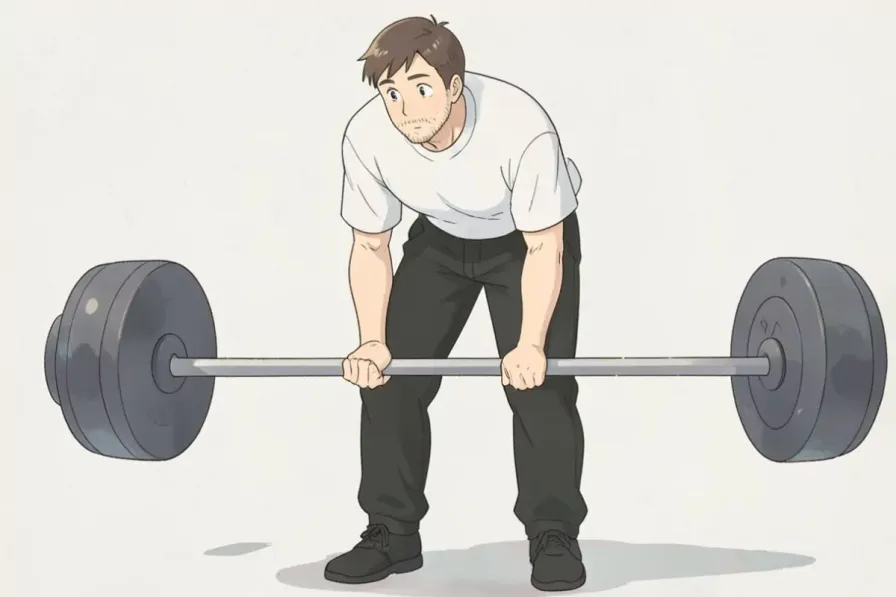
Cluster Sets: Holding Bar Speed Deeper Into the Set

You’re three reps into a heavy set of squats when your bar speed starts dying. You grind out the last two reps, rack the bar, and call it done, still short of where you wanted to be. Cluster sets are built to fix exactly that problem: instead of one continuous grind, you break the set into small bursts separated by a few seconds of rest, so you can keep moving weight at something close to your real strength for longer.
It’s a training method borrowed from sports performance and powerlifting circles that’s slowly made its way into general bodybuilding programming. This guide breaks down what cluster sets actually are, what the research says about whether they build more muscle than straight sets, and exactly how to set them up.
What Are Cluster Sets?
A cluster set takes a single set and splits it into smaller mini-sets, called clusters, separated by short intra-set rest periods, typically 10 to 30 seconds. Instead of doing 8 reps back to back until you grind out the last couple, you might do 3 reps, rest 20 seconds, do 3 more reps, rest 20 seconds, then finish with 2 more reps, for the same 8 total reps.
The point of that built-in micro-rest is recovery of ATP-PC energy stores, the fuel your muscles use for short, powerful efforts. A few seconds of rest lets that fuel partially replenish, so each mini-set starts closer to fresh instead of picking up where the last rep left off. That’s different from a traditional straight set, where fatigue accumulates continuously from the first rep to the last with zero recovery in between.

The Case For Cluster Sets
The core argument for cluster sets is bar speed and power output. In a normal straight set, velocity drops noticeably by the final reps as fatigue builds, even if you technically complete them. Research reviewing cluster set protocols has found they’re an effective strategy for reducing the loss of velocity, power, and peak force that normally happens across a set, essentially letting you train closer to your true capability for a larger share of your total reps.
That matters for two different groups of lifters. For strength and power athletes, more reps performed at higher velocity means more total high-quality work, which is a meaningful training stimulus in its own right. For lifters chasing muscle growth, cluster sets offer a practical workaround to a common problem: they let you use a heavier weight than you could otherwise manage for the same total rep count, since the intra-set rest stops fatigue from forcing the weight down.
There’s also a fatigue management angle. Because clusters spread the same volume out with brief recovery windows, many lifters report the sets feeling less brutally exhausting than an equivalent straight set taken close to failure, even though total mechanical work performed is similar.
What The Research Actually Shows
The performance side of cluster sets is well supported. A systematic review and meta-analysis pooling 25 studies concluded that cluster set structures are a useful strategy for maintaining velocity, power, and force output during a training session compared to traditional continuous sets. That’s a fairly consistent finding across the sports science literature.
The muscle growth question is newer territory, and the answer so far is less dramatic than cluster sets sometimes get marketed as. A controlled study in resistance-trained individuals compared cluster sets against traditional straight sets over an 8-week program, carefully matching total sets, reps, and effort level using repetitions in reserve. Both groups significantly increased muscle thickness and lean mass over the study period, and the cluster set group’s gains were statistically similar to the straight set group’s, not meaningfully better or worse.
A separate short review covering cluster sets specifically for hypertrophy reached a comparable conclusion: when training volume and effort are equated, cluster sets and traditional sets appear to drive similar muscle growth. The proposed advantage for hypertrophy isn’t a magic multiplier on muscle-building signal, it’s that cluster sets make it easier to sustain higher training volume or heavier loads at a given effort level, which can indirectly support growth over time if it lets you do more quality work than you’d otherwise manage.
So the honest summary: cluster sets have strong evidence behind their power and velocity benefits, and reasonable early evidence that they build muscle at least as well as straight sets when volume is matched, but not clearly better rep for rep, set for set.

How To Set Up Cluster Sets
Start with an exercise and a working weight, the same load you’d normally use for a straight set in your target rep range. Instead of performing all the reps consecutively, break the set into smaller clusters of 2 to 4 reps each, resting 10 to 30 seconds between clusters, and continue until you’ve completed your total target rep count for that set.
A simple example: if your normal working set is 8 reps, you might perform clusters of 3, 3, and 2 reps, resting 20 seconds between each cluster, for a total of 8 reps at a weight and bar speed that would have been much harder to sustain in one continuous set. Some lifters instead use the intra-set rest to add extra reps at the same weight, effectively getting more total volume out of a load they couldn’t normally handle for that many straight reps.
Rest 2 to 4 minutes between full cluster sets, similar to how you’d rest between straight sets on a heavy compound lift. The short intra-cluster rests are for maintaining bar speed within the set, not a substitute for full recovery between sets.
Cluster Sets vs Myo-Reps And Rest-Pause Training
Cluster sets get grouped with other intra-set rest techniques, but the goals and mechanics differ. Rest-pause training typically takes a set to or near failure, rests briefly, then squeezes out a few more forced reps past that failure point, using the short rest purely to extend a single set beyond what would otherwise be possible. Myo-reps work similarly, chasing extra reps past an initial near-failure set using very short rest periods and small rep clusters.
Cluster sets are structured differently and usually more deliberately. The mini-sets and rest periods are planned in advance, and the set typically isn’t taken to failure at all, the rest is used to sustain quality reps and bar speed throughout, not to push past a limit you’ve already hit. Rest-pause and myo-reps are fundamentally about extending fatigue past normal failure, while cluster sets are about avoiding excess fatigue accumulation in the first place.
Compared to drop sets, which reduce the weight partway through to keep a set going past failure, cluster sets keep the same weight throughout and use rest, not a lighter load, to sustain performance. All of these are valid intensity techniques, they’re just solving different problems.
Best Exercises For Cluster Sets
Cluster sets work best on movements where bar speed and technical precision under load actually matter, which makes heavy compound lifts the natural fit. Back squat, bench press, deadlift, overhead press, and barbell row are the standard choices, since maintaining velocity and form on these lifts has a direct payoff for both strength progression and injury risk management.
Olympic lift variations and other power-focused movements are where cluster sets originated, and they remain a strong application there too, since velocity loss is especially costly for explosive lifts. Isolation exercises can use cluster sets as well, though the benefit is smaller, since a slower rep on a leg extension doesn’t carry the same technical or safety cost that a slowing bar speed does on a heavy squat.

Strength Vs Hypertrophy Cluster Set Variants
For a strength and power focus, keep clusters small, 1 to 3 reps per mini-set, with a heavier load in the 80 to 90 percent of your max range, and rest 15 to 30 seconds between clusters. The goal is maximum bar speed on every single rep, so smaller clusters with more frequent brief rests work best.
For a hypertrophy-leaning version, use slightly larger clusters of 3 to 5 reps at a moderate-heavy load, resting 10 to 20 seconds between clusters, and aim for a higher total rep count across the full cluster set, in the 12 to 20 rep range overall. The priority shifts from pure velocity to accumulating more total quality reps at a challenging weight than a straight set would allow.
Neither version is more correct, they’re tools for different goals, and both are consistent with the research showing cluster sets support similar hypertrophy to straight sets while offering a clearer edge for power and velocity work.
Programming Cluster Sets Into Your Week
Cluster sets are demanding to coordinate and track, so most lifters use them on 1 to 2 key compound lifts per session rather than for an entire workout. A common approach is reserving cluster sets for your first exercise of the day, when technical precision and fresh energy stores matter most, then finishing the session with straight sets on secondary movements.
Because cluster sets let you sustain a heavier load or higher quality volume than a straight set would, they can accumulate meaningful fatigue despite feeling more manageable set to set. Treat total weekly hard sets on a muscle group the same way you would with straight sets, and don’t assume the reduced perceived effort means you can simply add cluster sets on top of your existing volume without adjusting anything else. If you’re still building your base programming habits, our guide to progressive overload covers how to structure weight and volume increases over time, cluster sets or not.
Common Mistakes
Resting too long between clusters, turning what should be a single set into what’s functionally several separate sets with full recovery, which changes the training effect and undermines the sustained-volume advantage. Resting too short, which defeats the purpose since you won’t get meaningful ATP-PC recovery and the set behaves like a straight set with awkward pauses.
Using cluster sets on every single exercise in a session, which makes workouts unnecessarily long and hard to track without adding much benefit on movements where bar speed was never the limiting factor. And expecting cluster sets to be a dramatic hypertrophy upgrade over straight sets, when the current evidence points to similar muscle growth at matched volume, not a clear superiority.

Bottom Line
Cluster sets break a set into short bursts with brief rest periods so you can sustain bar speed, power, and load quality further into the set than a straight set allows. The research on velocity and power is strong and consistent: cluster sets meaningfully reduce the drop-off you’d otherwise see across a set. The research on muscle growth is newer but reassuring, showing similar hypertrophy to straight sets when volume and effort are matched, rather than a clear advantage either way.
If you’re chasing strength, power, or a way to handle heavier loads for more total quality reps, cluster sets are a well-supported, evidence-backed tool. If pure muscle growth is your only goal and you’re already training hard with straight sets, cluster sets are unlikely to be a dramatic upgrade, but they’re a legitimate option for variety or for pushing past a stalled plateau on a specific lift.
References
The training recommendations in this guide sit inside the official baseline for adults: muscle-strengthening work on at least 2 days a week covering all major muscle groups.
- U.S. Department of Health and Human Services. Physical Activity Guidelines for Americans, 2nd edition — adults need muscle-strengthening activity at least 2 days each week. health.gov
Keep reading: for other evidence-backed ways to structure your sets, check out our breakdowns of rest-pause training, drop sets, and reverse pyramid training.
Frequently Asked Questions
What are cluster sets?
Cluster sets split a single set into smaller mini-sets of a few reps each, separated by short rest periods of roughly 10 to 30 seconds. Instead of performing all reps back to back, you rest briefly between small clusters, which allows partial recovery of the energy your muscles use for short powerful efforts and helps you sustain bar speed and load quality further into the set.
Do cluster sets build muscle faster than straight sets?
Not clearly. A controlled 8-week study matching total volume and effort between cluster sets and traditional straight sets found both approaches produced similar increases in muscle thickness and lean mass. Cluster sets aren’t proven to be superior for hypertrophy, but they are well supported for maintaining power and bar speed, which can make it easier to sustain heavier loads or higher quality volume over time.
How long should you rest between clusters?
Most cluster set protocols use 10 to 30 seconds of rest between mini-sets. Shorter rests, around 10 to 15 seconds, work well for hypertrophy-focused versions with slightly larger clusters, while longer rests, 20 to 30 seconds, suit strength and power-focused versions using smaller clusters at heavier loads.
What is the difference between cluster sets and rest-pause training?
Cluster sets are planned in advance and typically don’t take the set to failure, using rest to sustain bar speed and rep quality throughout. Rest-pause training usually takes a set to or near failure first, then uses a brief rest to squeeze out a few additional forced reps past that failure point. Cluster sets are about avoiding excess fatigue buildup, rest-pause is about extending a set past normal failure.
What exercises work best with cluster sets?
Heavy compound lifts where bar speed and technique matter most benefit the most, including the squat, bench press, deadlift, overhead press, and barbell row. Olympic lift variations and other explosive movements are also a strong fit, since velocity loss is especially costly on power-focused lifts. Isolation exercises can use cluster sets too, though the benefit is smaller.
Evandro
Evandro is the founder of The Fitness Road. He believes that without physical activity there is no real health, and without health, there is no lasting discipline in any other area of life.
Leave a Reply
Your email address will not be published. Required fields are marked *