
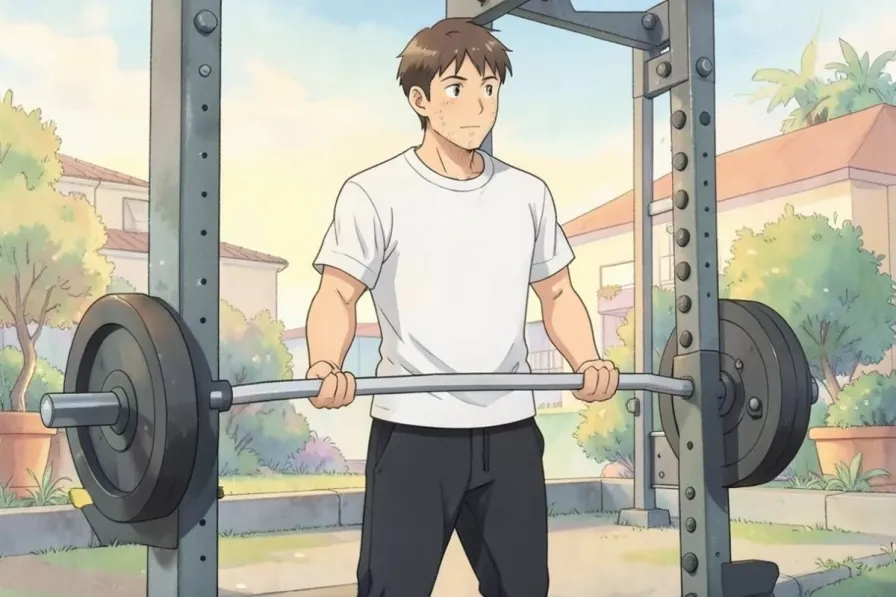
Rest-Pause Training Beat Traditional Sets on Squat Strength

You rack a heavy set of squats, catch your breath for 15 seconds, and go again for a few more reps before racking it for good. That’s rest-pause training, a technique that’s been part of serious strength training for decades, from old-school bodybuilders squeezing extra reps out of a heavy set to modern lifters using it to break through a stalled program. The pitch is straightforward: push a set further than a normal straight set would let you, using tiny rest breaks instead of stopping completely.
Whether that actually translates into more muscle or more strength than just doing regular sets is a more interesting question than the gym-floor reputation suggests. This guide breaks down what the controlled research actually found, how rest-pause compares to a close cousin, drop sets, and exactly how to use the technique if you decide it’s worth adding to your training.
What Rest-Pause Training Actually Is
Rest-pause training means taking a set to or near failure, resting for a short 10 to 20 seconds, roughly enough time for a couple of breaths, and then continuing with the same weight for a few more reps until you hit failure again. This gets repeated 2 to 3 times total, turning what would normally be a single set into a longer, more fatiguing sequence that still only uses one working weight.
The logic behind it is that those brief pauses allow just enough recovery in your muscles’ immediate energy stores to squeeze out extra reps you couldn’t otherwise get, without dropping the weight the way a drop set does. In practice, a full rest-pause sequence, initial reps plus 2 to 3 short bursts, usually takes somewhere around 60 to 90 seconds from the first rep to the last.

What the Research Shows About Strength
An 8-week controlled study split 28 resistance-trained men into three groups, rest-pause, drop-set, and traditional straight-set training, all matched for total training volume, then tracked their barbell back squat strength and thigh muscle thickness. The rest-pause group ended up with significantly higher 1-rep max squat strength than the traditional training group. The drop-set group didn’t show a significant strength advantage over traditional training in this particular study.
That’s a meaningful finding on its own: when everything else about the training is held equal, the extra effort rest-pause squeezes into each set appears to translate into a real strength advantage over conventional straight sets, at least for a compound lift like the squat over an 8-week block.
What the Research Shows About Muscle Growth
This is where things get more nuanced, and it’s worth being upfront about the mixed picture rather than picking whichever study supports the tidier story. In the 8-week squat study just described, there was no meaningful difference in muscle thickness between rest-pause, drop-set, and traditional training. All three groups built comparable muscle when volume was equalized.
A separate, earlier 6-week study comparing rest-pause to traditional multiple-set training in trained lifters found something different. Strength gains were similar between the two groups across bench press, leg press, and biceps curl. But for hypertrophy specifically, the rest-pause group showed significantly greater thigh muscle thickness, 11 percent growth versus 1 percent in the traditional group, though this hypertrophy advantage didn’t show up in the other muscle groups tested.
Put together, the honest summary is this: rest-pause training sometimes outperforms traditional sets for muscle growth and sometimes doesn’t, depending on the study, the muscle group, and the training block length. It has never been shown to build meaningfully less muscle than straight sets, but a consistent, guaranteed hypertrophy edge isn’t well established either.

So Does Rest-Pause Actually Build Muscle Faster?
The most accurate answer is: it can match or modestly exceed traditional training for muscle growth, and it has shown a real strength advantage in at least one solid controlled study, all while taking meaningfully less total training time than doing enough straight sets to match that same effort level. That time efficiency is the same core advantage that shows up in the drop-set research, since both techniques pack more effective work into a shorter window by cutting or shortening rest between bouts of reps.
What the evidence doesn’t support is treating rest-pause as a guaranteed hypertrophy multiplier that will outperform well-executed traditional training every time. If your current straight-set program is working, rest-pause isn’t a required upgrade. If you’re short on training time or want to add variety to how you push a set to its limit, it’s a genuinely evidence-backed option, not just gym folklore.
How to Actually Do Rest-Pause Training
Pick an exercise and a weight you can lift for roughly 8 to 12 reps with good form, taking that first portion close to or all the way to failure. Rack the weight or set it down, rest for 10 to 20 seconds, counting it out rather than guessing, and then pick the weight back up for as many more clean reps as you can get, usually somewhere between 2 and 5. Repeat that short rest and mini-burst pattern 2 to 3 total times, then treat the whole sequence as one completed set.
Isolation exercises and machines make this easiest to execute safely, since there’s no risk of losing control of a loaded bar as fatigue builds. On free-weight compound lifts like the squat or bench press, the same technique works, and has been used successfully in research, but pay closer attention to form breakdown and consider a spotter or safety pins given how much closer to true failure you’re training compared to a normal straight set.

Rest-Pause Training vs. Drop Sets
These two techniques get grouped together constantly, and it’s easy to see why: both compress more training effort into less time than straight sets, and both were tested against traditional training in the same 8-week squat study referenced above. But they manage fatigue in opposite ways. Drop sets keep you moving with zero rest between segments, instead reducing the weight by 20 to 30 percent each time you hit failure. Rest-pause keeps the weight exactly the same the entire time and instead inserts short 10 to 20 second breaks to let you continue.
In the head-to-head research, rest-pause showed the clearer strength advantage over traditional training, while drop sets didn’t reach the same significance for strength in that particular study, and neither technique showed a consistent hypertrophy edge over the other. Practically, which one you reach for often comes down to the exercise and equipment: drop sets are simple on a machine or dumbbells where changing weight takes seconds, while rest-pause works on virtually anything, including a barbell you don’t want to keep re-loading.
Where Rest-Pause Fits Into a Training Program
Most of the research and coaching guidance treats rest-pause as a tool for the last set of one or two exercises per session, not something to apply across an entire workout. Because it pushes each working set noticeably closer to true failure and adds real fatigue on top of that, using it everywhere tends to accumulate more overall stress than most lifters can consistently recover from between sessions.
A common approach is cycling it in for a focused block of several weeks, particularly when a lift has stalled on straight sets alone, then returning to more standard training afterward. This mirrors how the controlled studies were actually structured, running for defined 6 to 8 week windows rather than being used as a permanent, everyday default.

Who Should Use Rest-Pause Training
Lifters with a reasonable base of training experience who want to add strength or break through a stalled lift are the best fit, especially if gym time is limited and a shorter, harder set appeals more than a longer session of straight sets. It’s also a reasonable substitute on days when you want the intensity of a heavy straight set but don’t have the recovery capacity or willingness to grind out several full sets at that same weight.
Beginners generally don’t need it. Straight sets with a gradually increasing weight already drive strong progress early in a training career, and adding rest-pause’s extra fatigue on top of a body still learning the basic lifts tends to cost more in recovery than it adds in results. Anyone managing an injury, working around joint pain, or already running a demanding overall training volume should also be cautious, for the same reason drop sets carry that caution: this is added stress on top of your baseline training, not a free upgrade.
Common Mistakes With Rest-Pause Training
Resting too long between the mini-bursts. Once you’re resting 30, 45, or 60 seconds instead of 10 to 20, you’re no longer doing rest-pause, you’re just doing extra straight sets with a slightly odd structure, and the entire point of the technique gets lost.
Not actually reaching failure or near-failure on the first portion. If you leave several reps in reserve before taking your first short break, the rest of the sequence won’t create the extra fatigue and stimulus the technique depends on.
Using it on every set of every exercise. Like drop sets, rest-pause is meant as a finishing tool for a couple of key lifts, not a template for an entire workout, and using it everywhere burns through recovery capacity fast.
Choosing a weight that’s too light. If you can easily crank out 20-plus reps before your first pause, you’re not training close enough to failure for the technique to do what it’s supposed to. Stick closer to your normal 8 to 12 rep working weight.
Ignoring the fatigue cost when planning the rest of your week. Rest-pause sets are genuinely harder to recover from than straight sets on the same exercise. Programming it right before a heavy session on the same muscle group the next day is a common way to show up under-recovered.
The Bottom Line
Rest-pause training holds up better under research scrutiny than a lot of gym-floor intensity techniques. An 8-week controlled study found it produced greater squat strength gains than traditional training, and a separate 6-week study found it built more thigh muscle specifically, though neither advantage shows up consistently across every study, muscle group, or outcome measured. What is consistent is the time efficiency: rest-pause lets you push a set meaningfully further than a straight set without the extended rest periods traditional training relies on. Used for a set or two on the exercises where you actually want to push harder, cycled in for a focused training block rather than every session forever, it’s a genuinely evidence-backed way to add intensity to your training, not just another gym myth.
Frequently Asked Questions
Does rest-pause training actually build muscle faster than regular sets? The research is genuinely mixed, and the honest answer is it depends what you’re measuring. A 6-week study found rest-pause training produced significantly greater thigh muscle thickness than traditional sets (11% versus 1%), but no advantage in other muscle groups. A separate 8-week study found rest-pause improved squat strength more than traditional training, but showed no hypertrophy advantage at all. Rest-pause isn’t a guaranteed hypertrophy shortcut, but it does seem to reliably match or exceed traditional training in less total time.
How do you actually perform a rest-pause set? Pick a weight you can lift for about 8 to 12 reps to or near failure. Do that first portion of the set, rest 10 to 20 seconds, then continue for a few more reps to failure again. Repeat this rest-and-continue pattern 2 to 3 times total. The whole sequence, initial reps plus 2 to 3 short bursts, usually takes 60 to 90 seconds from start to finish.
Is rest-pause training the same thing as a drop set? No, though people mix them up. In a rest-pause set, the weight stays the same the entire time, you just take short 10 to 20 second breaks between mini-bursts of reps. In a drop set, you keep going with no rest at all, but reduce the weight by 20 to 30 percent each time you hit failure. Rest-pause manages fatigue with brief rest; drop sets manage it by making the weight lighter.
How often should you use rest-pause training? Most guidance treats it as an advanced technique for one or two exercises per workout, not a replacement for your entire training session, and best cycled in for a period of several weeks at a time rather than used indefinitely. Because it’s genuinely more fatiguing than straight sets, using it on every exercise, every session, tends to accumulate more fatigue than most lifters can recover from well.
Is rest-pause training safe for exercises like squats and deadlifts? It can be, and it has been used in barbell squat research specifically, but it requires more caution than doing it on a machine or isolation exercise. Because you’re pushing close to failure multiple times in the same set, form is more likely to break down as fatigue builds, which matters more on a loaded barbell than a cable machine. Using a spotter or safety pins, and sticking to weights you can control with good technique even when fatigued, matters more here than with most other intensity techniques.
References
The training recommendations in this guide sit inside the official baseline for adults: muscle-strengthening work on at least 2 days a week covering all major muscle groups.
- U.S. Department of Health and Human Services. Physical Activity Guidelines for Americans, 2nd edition — adults need muscle-strengthening activity at least 2 days each week. health.gov
Keep reading: if you’re deciding between different intensity techniques, our breakdown of drop sets covers how they compare for building muscle. And if you want the fundamentals of standard rest periods before adding techniques like this one, check out our guide on how long to rest between sets.
Follow us on Facebook, TikTok, YouTube, and Pinterest for more no-nonsense fitness tips.
Evandro
Evandro is the founder of The Fitness Road. He believes that without physical activity there is no real health, and without health, there is no lasting discipline in any other area of life.
Leave a Reply
Your email address will not be published. Required fields are marked *