

You’ve seen the videos. Some weak looking guy walks into the gym like he just clocked out of a double shift, moving slow, nothing about him looks like it belongs in a gym. Then he steps up to the bar and puts up numbers that make the tank top crowd go dead quiet.
That’s not just a bit for the camera. That weak looking guy is real, and it happens way more often than people think.
Why the Weak Looking Guy at the Gym Is Usually the Strongest One There
Here’s the thing nobody tells you at your average gym: muscle size and actual strength aren’t the same skill. A guy can build a big, showy physique training for the mirror, and a completely different guy can build serious raw strength without ever looking like it from the outside.
Strength comes down to a few things that don’t photograph well, and the National Institute on Aging breaks down why strength training builds capability that has little to do with how a muscle looks. How efficiently your nervous system fires your muscles. How much practice you’ve put into a specific lift. How thick and adapted your tendons and connective tissue are after years of consistent work. None of that shows up as a six pack. Think about it like this: two guys can lift the exact same weight, but one has spent five years grooving that exact movement pattern while the other is still figuring out where to put his feet. The guy with more practice usually wins, no matter what either of them looks like standing next to each other.
Tendons and joints also adapt on their own timeline, usually slower than muscle does. That’s part of why someone who’s trained consistently for years tends to handle heavy weight so easily. Their whole system has had time to catch up, not just the muscle you can see.
So when that weak looking guy pulls a heavy deadlift like it’s nothing, it’s usually because he’s been quietly doing the work for years, not because he got lucky. Looks lie. Reps don’t.
A lot of the strongest people you’ll ever meet built that strength doing work nobody clapped for. Years of manual labor, moving furniture, carrying equipment, lifting things that had to get lifted whether there was a camera around or not. That kind of strength doesn’t come with a six pack as a receipt. It just shows up when the bar gets loaded.
That’s the whole joke behind the weak looking guy videos, and it’s also just true in real gyms everywhere. The guy in work boots who never posts a single lifting video is often stronger than half the people filming themselves.
How to Actually Get Stronger Training at Home
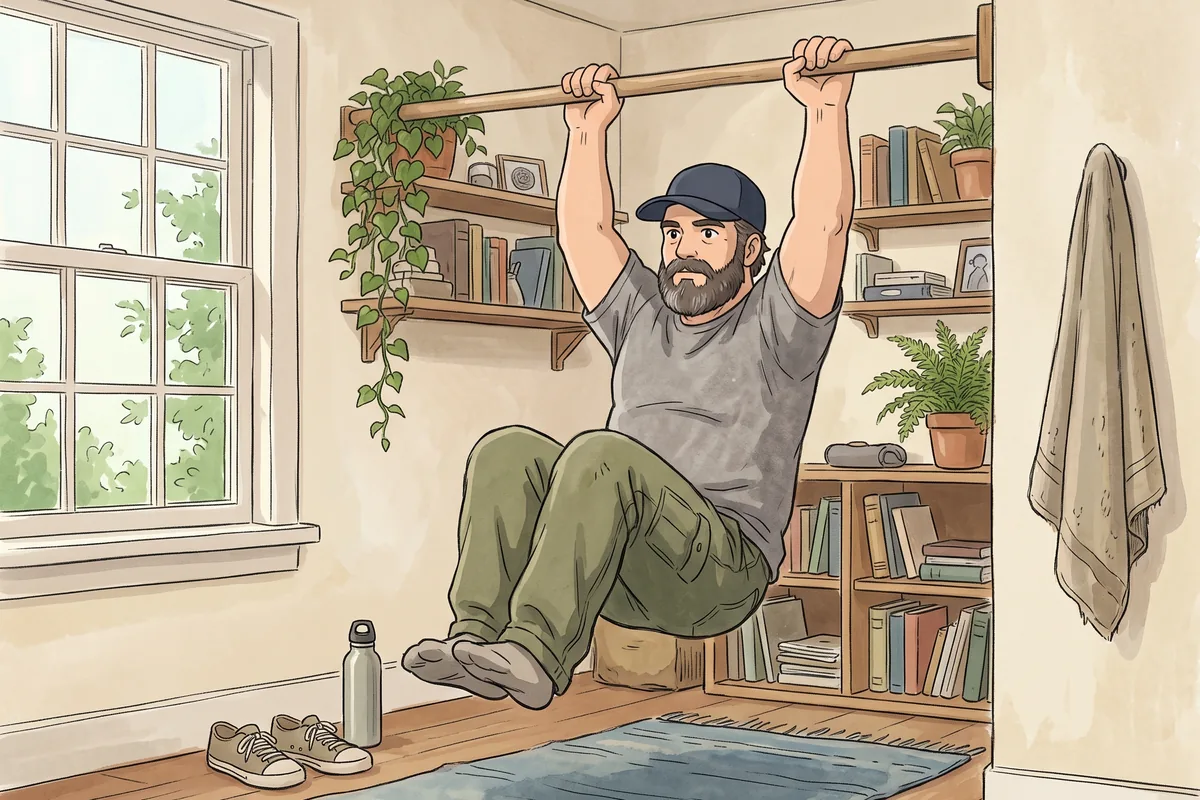
Good news: you don’t need a fancy gym membership to build that kind of strength. A lot of it comes down to consistency with the basics, and plenty of people build real strength training at home with just their bodyweight and a little floor space. No fancy setup, no monthly fee, just showing up in the same corner of your living room a few times a week.
A quick warm-up before any of this goes a long way too. A few minutes of light movement to get blood flowing, some bodyweight squats or arm circles, makes the actual workout feel easier and lowers your chances of tweaking something. It’s not the exciting part, but skipping it is how people talk themselves out of training altogether after one bad tweak.
If you’re starting from scratch, calisthenics exercises at home are one of the easiest ways in. No equipment, no excuses, just your bodyweight and a plan that actually progresses over time.
From there, you’ll want to hit the major muscle groups on a rotation. Leg workouts at home build the kind of lower body strength that carries over into everything else you do, and chest workouts at home round things out on the push side. If you want to go a step further, compound exercises like squats, deadlifts and presses are what actually build the strength that shows up when it counts, not just the strength that looks good in the mirror.
The principle underneath all of it is progressive overload, which is a fancy way of saying you slowly ask your body to do a little more over time. That might mean one extra rep, a few more seconds holding a plank, or a slightly heavier dumbbell. It doesn’t need to be dramatic week to week. It just needs to keep happening.
Three to four training days a week is enough for most people getting started. Training every single day without rest usually backfires, since muscle actually gets stronger during recovery, not during the workout itself. Give yourself at least one full rest day between hard sessions on the same muscle group.
What You Eat Matters Just as Much as How You Train
You can train hard three times a week and still spin your wheels if your diet isn’t backing that up. Strength training breaks muscle down, and your body needs the raw materials to rebuild it stronger.
That doesn’t mean you need a cabinet full of supplements. Getting enough high protein foods in your regular meals does most of the heavy lifting here. A shake here and there is fine if it’s convenient, but it’s not magic. Real food, consistently, beats a fancy tub of powder every time.
Spreading protein across your meals instead of loading it all at dinner tends to work better too. A few eggs at breakfast, chicken or beans at lunch, and something like fish or Greek yogurt later on adds up fast without needing a single shake. Consistency across weeks matters a lot more than any one perfect meal.
A Simple Way to Start This Week

You don’t need to overhaul your whole life to start seeing progress. Three days a week is plenty to begin with:
Day 1: Push focused, chest and shoulders.
Day 2: Rest or a light walk.
Day 3: Legs, since this is where a lot of your total strength comes from.
Day 4: Rest.
Day 5: Full body, hitting the basics again with a little more effort than last time.
That last part matters more than people realize. Doing a little more than you did last week, even just one more rep, is basically the entire secret. It’s not glamorous, but neither is the guy who quietly out-lifts everyone in a hoodie.
The first couple of weeks are usually the hardest, mostly because your body is still adapting and soreness can make it tempting to quit early. That’s normal, not a sign something’s wrong. Most people start noticing they feel stronger in everyday tasks, like carrying groceries or climbing stairs, before they see any real change in the mirror. That everyday strength shows up first for a reason: it’s the same real strength the weak looking guy already had the whole time.
Frequently asked questions
Do I really need a gym to get stronger? No. A gym gives you more variety and heavier weights eventually, but plenty of real strength gets built at home first with bodyweight training and basic equipment like dumbbells.
How long before I actually see results? Most people notice they feel stronger in daily life within a few weeks, and visible changes usually follow a couple months of showing up consistently. It’s slower than social media makes it look, and that’s normal. Progress that happens over months tends to stick around a lot longer than anything that shows up overnight, which is exactly why the slow route is usually the one worth taking.
Is bodyweight training actually enough to build real strength, or do I need weights eventually? Bodyweight training can take you surprisingly far, especially if you’re just getting started. Adding weights later helps you keep progressing once bodyweight movements start feeling easy.
I don’t have any equipment at all. Can I still start? Yes. Bodyweight exercises like push-ups, squats, lunges and planks build real strength on their own, especially in the first few months of training. Equipment just gives you more ways to keep progressing later.
Do women need a different plan than this? Not really. The same principles apply, strength training at home works the same way regardless of gender. The main difference is usually starting weight and pace, not the approach itself.
How much protein do I actually need? There’s no single magic number, but most active adults do well aiming for a source of protein at every meal rather than trying to hit an exact target. Consistency matters more here than precision.
Nobody who’s actually strong got there by looking the part first. They just kept showing up. If you’re ready to start, browse more workouts you can do at home and pick one to start with today.
The discipline that builds this kind of strength has a way of spilling into everything else too, showing up more, following through, trusting the process even when nobody’s watching. That part usually matters more than the lifting itself.