How Much Protein in Beans, and Why Slow Cookers Are Out

If you are trying to hit a protein target without buying powder, beans are the cheapest whole food that will do it. The question of how much protein in beans you actually get has a precise answer, and it is smaller per spoonful than most people assume and larger per meal than they expect.
There is also a safety instruction attached to dried beans that almost no recipe repeats, and it contradicts a piece of standard healthy-cooking advice.
What a Real Portion Gives You
These are USDA values for legumes cooked and boiled without salt, per 100 grams:
| Cooked, per 100 g | Protein | Fibre | Calories |
|---|---|---|---|
| Lentils | 9.0 g | 7.9 g | 116 |
| Pinto beans | 9.0 g | 9.0 g | 143 |
| Black beans | 8.9 g | 8.7 g | 132 |
| Red kidney beans | 8.7 g | 7.4 g | 127 |
| Split peas | 8.3 g | 8.3 g | 118 |
Nine grams per 100 g sounds unimpressive next to a scoop of powder. The number that matters is per portion. A 400 g serving of lentils, which is a normal dinner-sized amount rather than a heroic one, is around 36 g of protein and roughly 30 g of fibre for about 460 calories.
That is the honest case for beans. Not that they are protein-dense by weight, but that the portions people actually eat are large, and the protein arrives with fibre rather than instead of it.
The Instruction That Never Reaches the Recipe
Dried kidney beans contain phytohaemagglutinin, a lectin that is genuinely toxic in the raw bean. The FDA’s Bad Bug Book puts numbers on it: raw kidney beans carry 20,000 to 70,000 hemagglutinating units, while fully cooked beans carry 200 to 400.
That is not a small margin. It is the difference between a food and an emetic.
The same chapter notes that white kidney beans hold about a third of what the red variety does, and broad beans only 5% to 10%. Red kidney beans are the worst case, which is exactly why they are the ones the guidance names.
One thing to say immediately, because otherwise this reads as alarmism: canned beans have already been cooked at the factory. None of this applies to them. The warning is about dried beans you cook yourself, which is precisely what someone batch-cooking cheap protein is doing.
Why the Slow Cooker Is Specifically the Problem
This is where the advice breaks with common sense. A slow cooker feels like the safest, gentlest appliance in the kitchen. For dried kidney beans it is the wrong one, and the Bad Bug Book says so directly: slow cookers should not be used to cook these beans or dishes that contain them.
The reason is temperature. Studies of casseroles cooked in slow cookers found the food often reached internal temperatures of only 75 °C or less, which is not enough to destroy the lectin. Several outbreaks have been traced to beans cooked this way.
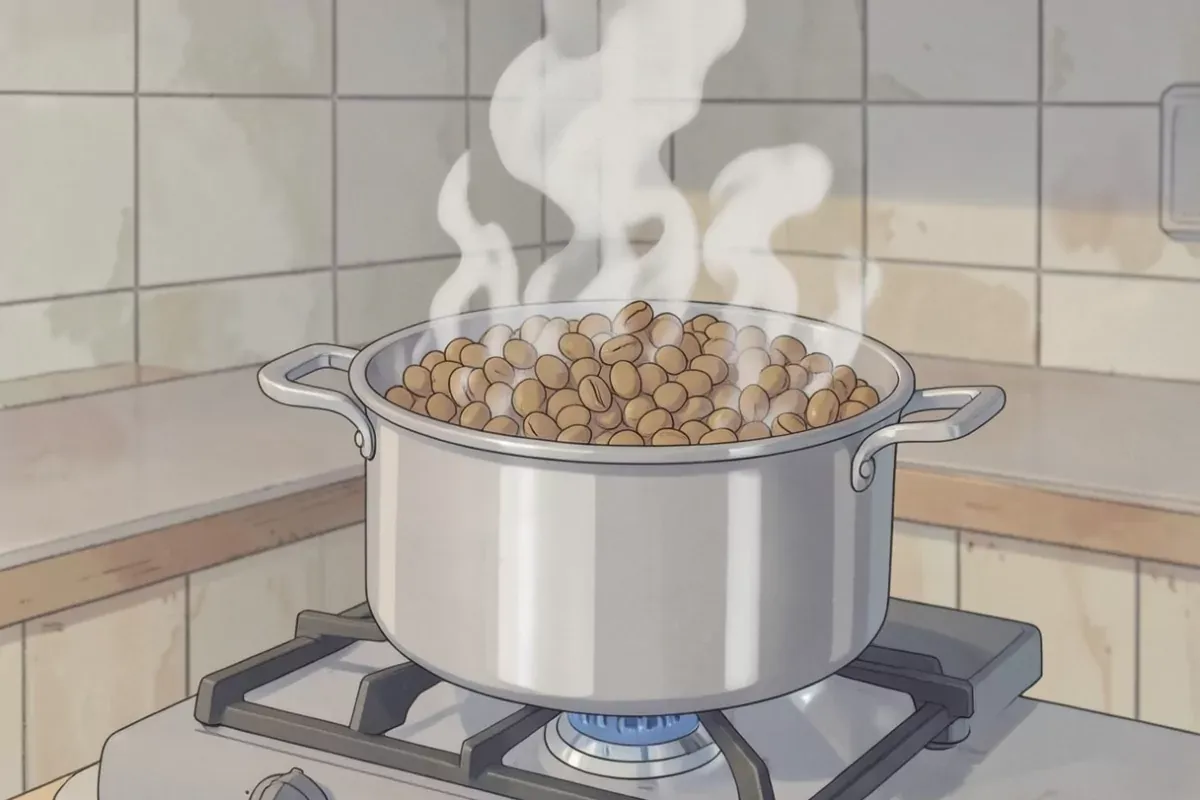
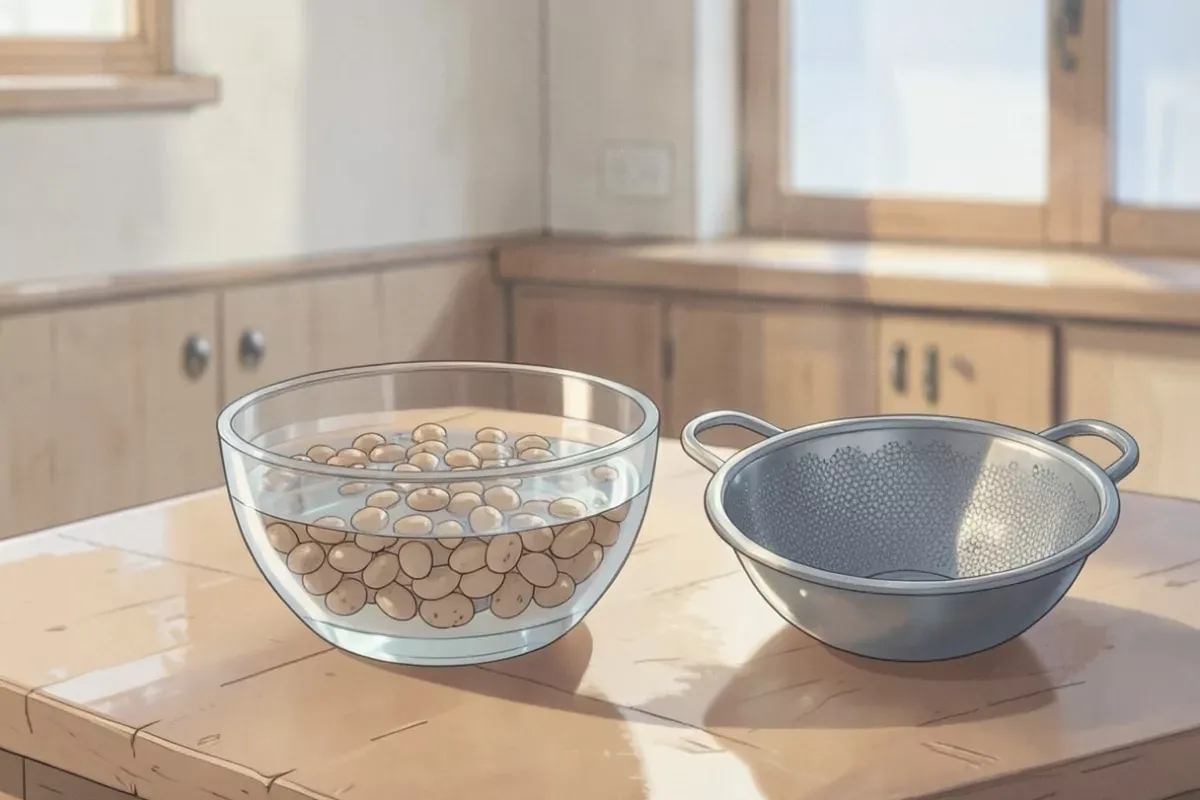
Boiling for 10 minutes at 100 °C destroyed the toxin in testing. The FDA’s consumer guidance is more conservative than that, and worth following as written: soak the beans for at least five hours, pour that soaking water away, then boil in fresh water for at least 30 minutes.
Low and slow, the instruction that makes almost everything else in the kitchen better, is the one thing you cannot do here.
The Cheap Method Also Wins on the Numbers
It would be convenient to conclude that you should buy a pressure cooker. The research does not say that.
A study of three dry bean varieties compared pressure cooking against soaking followed by ordinary boiling and measured both antinutrients and protein digestibility. Soaking and boiling came out ahead on both counts.
| Measure | Pressure cooked | Soaked and boiled |
|---|---|---|
| Phytic acid reduction | 50.9% to 51.3% | 57.2% to 58.4% |
| In vitro protein digestibility | 79.2% | 81.3% |
Raw beans measured 69.0% to 72.2% digestibility, so both methods are a large improvement over nothing. But the pot beat the appliance, and the gap is consistent across all three varieties.
Phytic acid matters here because it binds minerals like iron and zinc, which is the standard argument against relying on legumes. Soaking and discarding the water addresses that directly, and it happens to be the same step the safety guidance already requires.
So What Is Worth Buying
As an Amazon Associate I earn from qualifying purchases.
If you are buying one thing, buy the pot. The Cooks Standard 8-quart stock pot is uncoated 18/10 stainless with a three-ply base and a stainless lid, at 4.7 stars across roughly 3,200 ratings at the time of writing. Eight quarts is enough to soak and boil a large batch, and the method it enables is the one that measured best on both digestibility and phytate.
If your obstacle is time rather than money, the Instant Pot Duo 6-quart is the reason people cook dried beans at all instead of buying cans. It holds 4.7 stars across roughly 180,000 ratings, which is about as much consumer evidence as any kitchen appliance carries.
Now the caveat that matters more than either recommendation, and which applies to the pressure cooker specifically. Its own feature list includes a slow cook function. Do not use that function for dried kidney beans. The appliance is being recommended here for one mode, pressure, which passes 100 °C comfortably. Its slow-cook mode is the exact scenario the FDA warns against, sold inside the same box.
If you already own a large pot, you do not need either of these. Beans have been made safely in ordinary saucepans for several thousand years, and nothing in the research above requires a purchase.
Fitting It Into a Week
Cook a batch, portion it, and treat the storage clock the way you would for any cooked food — that side is covered in how long meal prep lasts. If the goal is a protein target without supplements, beans pair naturally with the approach in high-protein shakes without protein powder, since one covers the meal and the other covers the gap between meals.
The practical week looks like this: soak overnight, discard the water, boil hard for at least 30 minutes, then simmer to the texture you want. Portion while it is still hot rather than cooling the whole pot.
If you have chronic kidney disease or are on a potassium-restricted diet, legumes are high in potassium and the portion advice above is not aimed at you. That is a conversation with your doctor rather than a blog.
Frequently Asked Questions
How much protein is in a serving of beans? USDA values for legumes cooked without salt run about 8.3 to 9.0 grams of protein per 100 grams. Lentils and pinto beans are at the top of that range at roughly 9.0 grams. A 400 gram dinner portion of lentils is therefore around 36 grams of protein, alongside about 30 grams of fibre for roughly 460 calories.
Are dried kidney beans really dangerous? Raw ones are. The FDA’s Bad Bug Book records 20,000 to 70,000 hemagglutinating units of phytohaemagglutinin in raw kidney beans against 200 to 400 in fully cooked ones. Cooking properly removes the problem entirely, and canned beans are already cooked, so the warning applies only to dried beans you prepare yourself.
Can I cook dried beans in a slow cooker? Not kidney beans. The FDA states plainly that slow cookers should not be used for these beans or dishes containing them, because studies found slow-cooked food often reaching only 75 degrees Celsius or less, which does not destroy the lectin. Several outbreaks have been traced to exactly this.
How long do I need to boil dried beans? Boiling for 10 minutes at 100 degrees Celsius destroyed the toxin in testing, but the FDA’s consumer guidance is more conservative and worth following as written: soak for at least five hours, pour the soaking water away, then boil in fresh water for at least 30 minutes before simmering to texture.
Is a pressure cooker better than boiling for beans? Not nutritionally. A study of three dry bean varieties found soaking and boiling reduced phytic acid by 57 to 58 percent against 51 percent for pressure cooking, and reached 81.3 percent protein digestibility against 79.2 percent. A pressure cooker buys time, not better numbers.
Why should I throw away the soaking water? Because the compounds you are trying to reduce end up in it. Discarding the soak water is part of both the safety guidance and the reason soaking and boiling outperforms other methods on phytic acid, which binds minerals such as iron and zinc.
Evandro
Evandro is the founder of The Fitness Road. He believes that without physical activity there is no real health, and without health, there is no lasting discipline in any other area of life.
Leave a Reply
Your email address will not be published. Required fields are marked *