
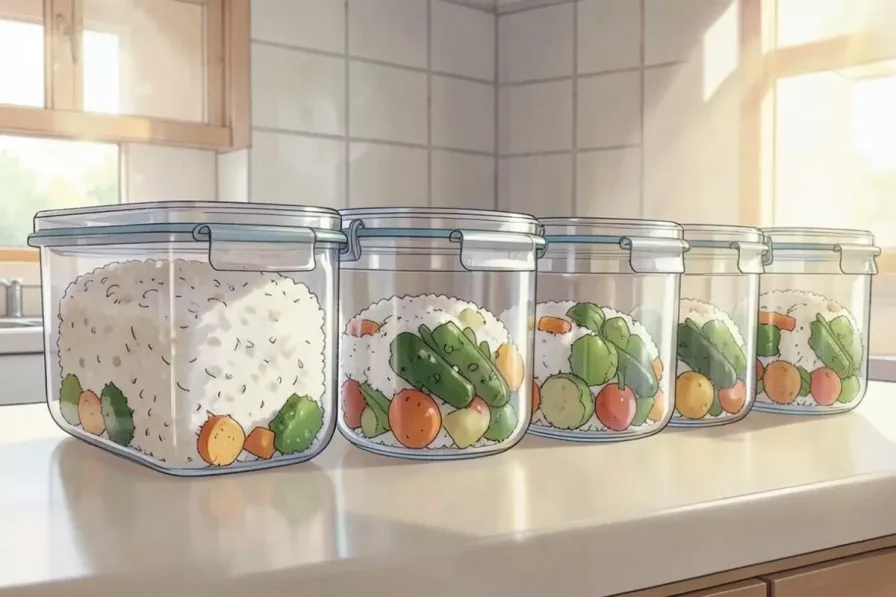
How Long Does Meal Prep Last? The Rice Is the Limit

Ask how long does meal prep last and the answer comes back instantly: three to four days. It is the right number, it comes from a real source, and most people are applying it to the wrong food under the wrong conditions.
Both of those gaps matter more than the number itself.
Where the Three-to-Four-Day Rule Actually Comes From
The figure is not folklore. It sits in the Cold Food Storage Chart published on FoodSafety.gov, and the relevant lines read:
| Food | Refrigerator | Freezer |
|---|---|---|
| Leftovers, cooked meat or poultry | 3 to 4 days | 2 to 6 months |
| Soups and stews | 3 to 4 days | 2 to 3 months |
| Casseroles with eggs, after baking | 3 to 4 days | 2 to 3 months |
| Pizza | 3 to 4 days | 1 to 2 months |
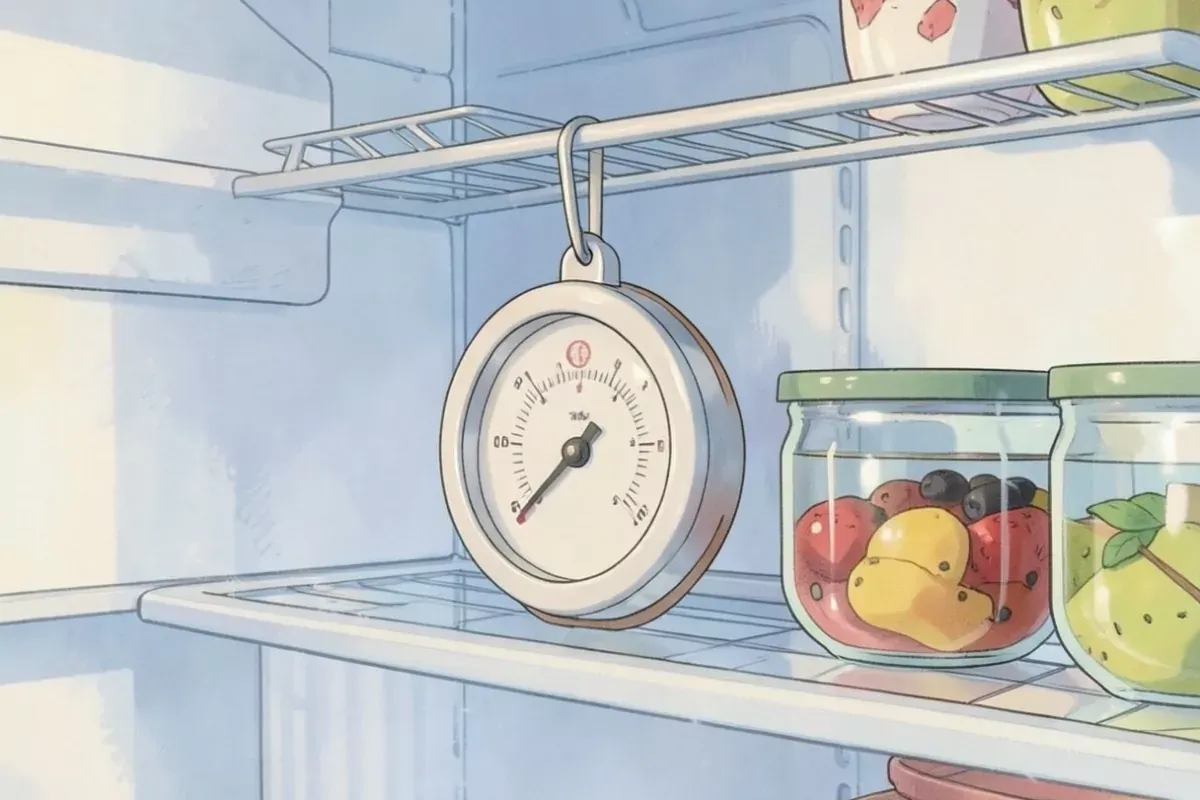
Read the column heading, though, because that is the part that gets dropped. It does not say “refrigerator”. It says Refrigerator [40°F (4°C) or below]. The three-to-four-day figure is not a property of the chicken. It is a property of chicken held at or under 40°F, and it stops being true the moment your fridge is not.
The Chart Has 54 Rows and None of Them Is Rice
Here is the gap nobody mentions. That chart runs to 54 rows covering everything from hot dogs to country ham. Not one of them is rice, pasta, grains or noodles. The only starch that appears at all is macaroni salad, filed under salads.
So the food most likely to be sitting in a meal prep container — a bed of rice under the chicken — has no official storage line at all, and people apply the meat’s number to it by default.
That would be a harmless gap if rice behaved like chicken. It does not.
Why the Rice Is the Limiting Ingredient
Cooked rice is the classic vehicle for Bacillus cereus. Its spores survive cooking, and if the rice then sits warm, they germinate and produce cereulide, the toxin behind what the literature actually calls fried rice syndrome.
The reason this matters for meal prep rather than for restaurants is documented in a case series in Toxins, in which several people developed acute liver failure after eating fried rice balls. The rice had been boiled three days earlier and refrigerated at 8 to 9 °C. Investigators measured 37 micrograms of cereulide per gram of food.
Look at that temperature. Eight to nine degrees Celsius is 46 to 48 °F. The fridge was running, the rice was cold to the touch, and it was still six to eight degrees above the threshold the storage chart assumes. The authors’ conclusion is blunt: the hazard is in rice meals that are not freshly prepared.

Reheating Does Not Undo It
This is the part that overturns the usual reassurance. Heating leftovers until they steam kills bacteria, so people assume a hot enough microwave resets the clock.
It does not, because the problem is no longer the bacteria. Cereulide is a toxin already formed in the food, and the Toxins authors describe it as notably resistant to heat and acid. The organism dies and the toxin stays. Reheating a container of four-day-old rice that spent those days at 47 °F gives you hot rice with the toxin intact.
That is why the storage rule is worth taking literally rather than approximately. There is no step later in the process that rescues food that was stored too warm or too long.
The Two Things That Actually Change the Outcome
Neither is complicated, and neither is about buying better food.
Know your fridge temperature instead of assuming it. A fridge dial marked 1 to 5 tells you nothing in degrees, door shelves run warmer than the back, and a fridge opened constantly during meal prep sits warm for a while. The entire three-to-four-day guarantee is conditional on a number most kitchens have never measured.
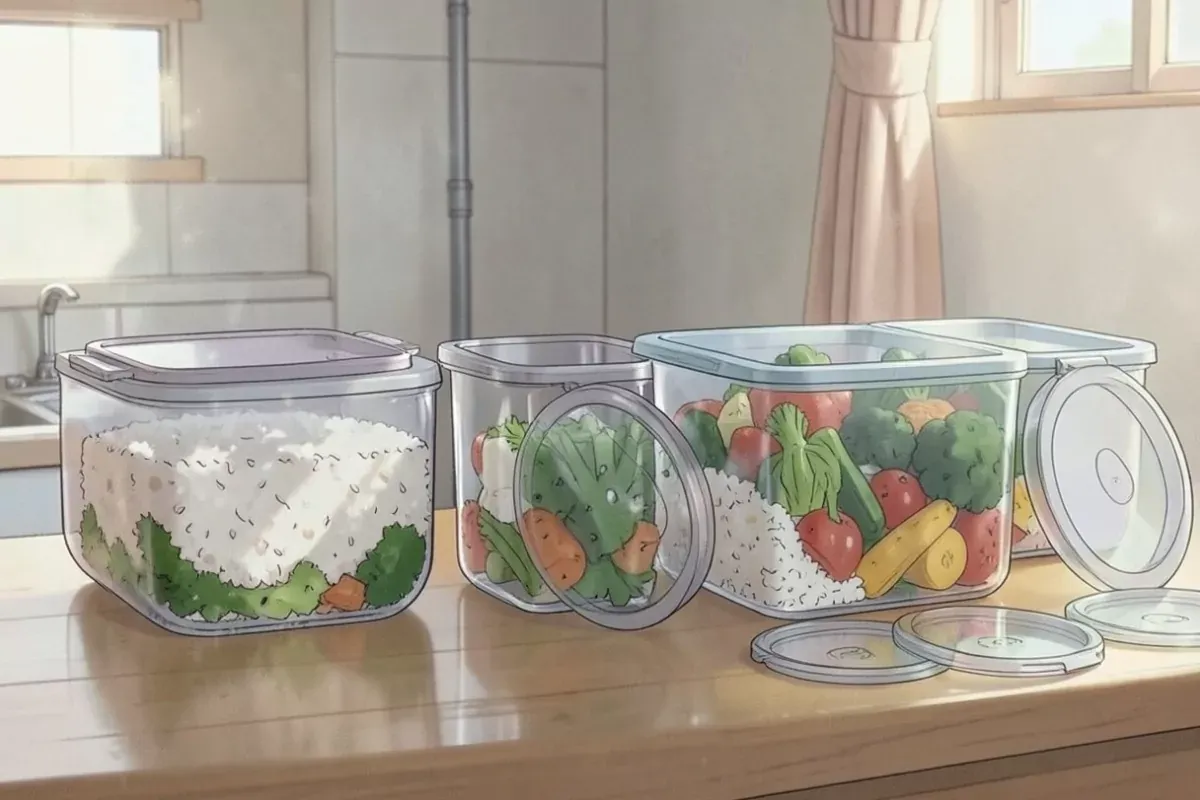
Cool in portions, not in a batch. A single deep container of hot rice holds heat in the middle for hours, and those hours are spent in the range where spores germinate. The same food split across individual portions passes through that range far faster. Portioning is not just tidy — it is the cooling step.
What Is Worth Buying
As an Amazon Associate I earn from qualifying purchases.
A fridge thermometer, which is the cheapest useful thing in this entire article. The 2-pack refrigerator thermometer is an analog dial that hangs on a shelf, needs no battery, and holds 4.6 stars across roughly 31,500 ratings at the time of writing. It comes as a pair, which is the right quantity: one for the fridge and one for the freezer.
Be realistic about what it is. An analog dial is not laboratory equipment and you are reading it to the nearest couple of degrees. That is entirely adequate for the question being asked, which is not “is it 38 or 39” but “am I at 38 or at 47”. If it reads warm, turn the dial down and check again the next day before buying anything else.
Individual portion containers. The KOMUEE 10-pack glass meal prep container set is borosilicate glass with snap-locking lids and silicone seals, at 4.6 stars across about 5,000 ratings. Ten containers of 30 oz is the useful configuration here, because ten separate portions is what makes the cooling work.
Two honest caveats. Glass is heavy and it breaks, so if you carry lunch in a bag every day, plastic is the more practical material and nothing about the food safety argument requires glass. And the lids are plastic, so they come off before the microwave or oven regardless of what the glass can take.
If you already own enough containers to portion a batch, you do not need these. Buy the thermometer, which costs a fraction as much and is the item actually addressing the risk.
How This Changes a Meal Prep Week
Nothing here argues against meal prep. It argues for treating the starch as the clock rather than the meat.
In practice: cook, portion immediately into individual containers rather than one tray, get them into a fridge you have verified is at or below 40°F, and eat the rice-based meals first. If the week runs to five days, freeze from day one for the later meals rather than gambling on the fridge, since the chart gives cooked meat and poultry two to six months frozen.
The recipes themselves are the easy part — there are plenty in the weight loss dinner ideas and the high-protein breakfast recipes if you need somewhere to start. The storage is where the week is quietly won or lost.
One limit worth stating plainly: this covers healthy adults doing ordinary batch cooking. If you are pregnant, immunocompromised, or cooking for someone who is, the margins are thinner and the conservative end of every number above is the one to use.
Frequently Asked Questions
How long does meal prep last in the fridge? FoodSafety.gov gives cooked meat or poultry leftovers 3 to 4 days, and the same for soups, stews and baked casseroles. That figure assumes the fridge is at 40 degrees Fahrenheit or below, which is stated in the chart’s own column heading and is the condition most people never verify.
Does meal prep with rice last as long as meal prep with just meat? Treat it as shorter. The official cold storage chart has 54 rows and none covers rice, pasta or grains, so people apply the meat’s number to the starch by default. Cooked rice is the classic vehicle for Bacillus cereus, which is why the rice-based portions are the ones to eat first.
Does reheating leftovers make them safe again? Not in this case. Reheating kills bacteria, but the illness associated with stored rice comes from cereulide, a toxin already formed in the food. Researchers describe it as notably resistant to heat and acid, so the organism dies and the toxin remains. There is no reheating step that rescues food stored too warm or too long.
What temperature should my fridge be for meal prep? At or below 40 degrees Fahrenheit, which is 4 degrees Celsius. A documented poisoning case involved rice refrigerated at 8 to 9 degrees Celsius, roughly 46 to 48 Fahrenheit, which felt cold but sat well above the threshold the storage guidance assumes. A dial marked 1 to 5 does not tell you where you are.
Should I cool meal prep before refrigerating it? Portion it rather than cooling it on the counter. A single deep container of hot rice holds heat in the middle for hours, and that is the range where spores germinate. Splitting the batch into individual portions moves it through that range much faster, which is the practical reason to portion immediately.
Is it better to freeze meal prep instead? For anything you will not eat within a few days, yes. The same chart that gives cooked meat and poultry 3 to 4 days in the fridge gives it 2 to 6 months in the freezer at 0 degrees Fahrenheit. Freeze the later meals on day one rather than deciding on day four whether they are still good.
Evandro
Evandro is the founder of The Fitness Road. He believes that without physical activity there is no real health, and without health, there is no lasting discipline in any other area of life.
Leave a Reply
Your email address will not be published. Required fields are marked *