Gym Workout Plan for Beginners: Your First Month

Walking into a gym for the first time without a plan is how most people end up wandering between machines for twenty minutes, doing whatever looks familiar, and leaving more confused than when they started. A real beginner plan solves that problem before it happens. It tells you exactly what to do, in what order, on which days, so the only decision left to make is showing up.
This guide walks through a complete first month in the gym: what to do in week one while you’re still learning the equipment, how the plan progresses over the following three weeks, and the mistakes that quietly stall people out before they ever build momentum.
What a Beginner Actually Needs From a Gym Plan
Most beginner advice online either overcomplicates things with advanced programming concepts, or oversimplifies to the point of being useless, a list of ten random exercises with no structure connecting them. What actually works is simpler than either extreme: a small number of compound exercises, trained consistently, with the weight and difficulty increasing gradually as your body adapts.
The first month isn’t about maximizing muscle growth or strength gains. It’s about building the habit, learning correct form on the exercises that matter most, and giving your joints and connective tissue time to adapt to new stress before you start pushing hard. Lifters who skip this adaptation phase and load up heavy in week one are the ones who show up sore and discouraged in week two, then quietly stop coming.
Week One: Learning the Movements
The first week uses lighter weight than you’ll eventually be capable of, on purpose. The goal isn’t to feel wrecked after every session, it’s to leave the gym feeling like you could have done a bit more, while your nervous system and joints adjust to lifting regularly.
Three sessions in the first week is enough. Each one covers the whole body rather than splitting muscle groups into separate days, since a full-body session lets you practice each core movement pattern multiple times across the week, which speeds up how quickly your form improves.

A first-week full-body session looks like this: a squat or leg press for the lower body, a chest press movement, a seated row or lat pulldown for the back, an overhead or shoulder press, and a plank or similar core exercise to finish. Two to three sets of ten to twelve reps per exercise, stopping two or three reps before you’d have to fight for the last one. That’s the entire session, no more than forty-five minutes including a short warm-up.
Rest a full day between each of the three sessions. A Monday, Wednesday, Friday pattern works well for most schedules and gives your body two rest days built into the week without any planning required.
Weeks Two Through Four: Building the Split
Once the movements feel familiar, usually by the start of week two, the plan shifts from full-body sessions to an upper body and lower body split. This allows more focused volume on each muscle group per session without extending workout length, and it sets up a natural progression toward more advanced splits later without requiring a complete restart.
A four-day week works well here: upper body, lower body, rest, upper body, lower body, with the remaining two days free. The upper body session includes a horizontal press like a bench or machine chest press, a vertical pull like a lat pulldown, a horizontal row, and a shoulder press, with a couple of sets of curls or triceps work added once you’re comfortable with the main lifts. The lower body session centers on a squat pattern, a hip hinge like a Romanian deadlift or hip thrust machine, a single-leg or lunge variation, and calf raises to finish.
| Day | Session | Key Exercises |
|---|---|---|
| Monday | Upper Body | Chest press, lat pulldown, row, shoulder press |
| Tuesday | Lower Body | Squat, hip hinge, lunge variation, calf raises |
| Wednesday | Rest | — |
| Thursday | Upper Body | Chest press, lat pulldown, row, shoulder press |
| Friday | Lower Body | Squat, hip hinge, lunge variation, calf raises |
| Saturday | Rest | — |
| Sunday | Rest | — |
Sets increase slightly during this phase, moving from two or three sets per exercise up to three or four, and rep ranges can drop a bit on the main lifts, into the eight-to-ten range, once your form is solid enough to handle a bit more weight per set. The goal across these three weeks is steady, small increases: a little more weight, or one or two more reps, roughly every session or two, not a dramatic jump week to week.
How to Actually Progress the Weight
Progressive overload sounds more complicated than it is. In practice, it means adding a small amount of weight or a rep or two once the current weight starts feeling manageable for all your prescribed sets. If you did three sets of ten reps at a given weight and the last set still felt like you had three or four reps left in the tank, that’s your signal to add weight next time, not to keep repeating the same number indefinitely.
For a true beginner, this progression happens faster than it will later in your training. Nervous system adaptation, learning to recruit muscle fibers efficiently, drives a lot of the early strength gains, which is why many beginners can add weight almost every session for the first several weeks before progress naturally slows to something more gradual.
Warming Up Before Each Session
A five to ten minute warm-up before lifting matters more in the first month than almost any other time in your training, since your joints and connective tissue haven’t yet adapted to regular loading. Five minutes of light cardio, a bike or brisk walk, followed by a couple of light warm-up sets on the first exercise of the day using a fraction of your working weight, is enough to prepare the joints without adding meaningful fatigue before the real work starts.
Dynamic stretches, arm circles, leg swings, and bodyweight squats, are more useful before training than static stretches, which are better saved for after your session when the muscle is already warm.
Nutrition and Recovery Basics
A beginner plan is only as effective as the recovery behind it. Getting enough protein, roughly a gram per pound of body weight is a reasonable starting target for most people, gives your body the raw material it needs to repair and build muscle tissue after each session. Sleep matters just as much; most of the actual muscle-building adaptation happens during rest, not during the workout itself, which is why consistent sleep of seven to nine hours has a bigger impact on beginner progress than almost any supplement or advanced technique.

Water intake is easy to overlook but affects performance more than most beginners realize, especially in a session where dehydration can show up as unexplained fatigue or a weaker-than-expected set partway through a workout.
Machines Versus Free Weights When You’re Starting Out
Walking past a rack of barbells on your first visit and heading straight for the machines instead is a completely reasonable instinct, and for the first few weeks, it’s often the smarter choice. Machines guide the weight along a fixed path, which removes a lot of the balance and coordination demands that make free weights genuinely difficult to learn correctly under time pressure in a busy gym.
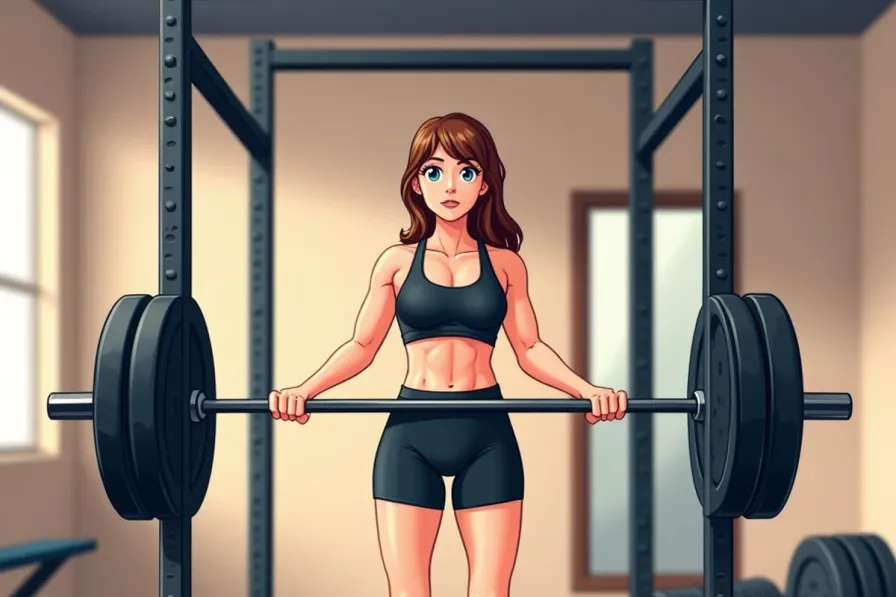
That said, free weights aren’t something to avoid indefinitely. Movements like the squat, the deadlift pattern, and the bench press build stabilizing strength that machines simply don’t train, since those smaller supporting muscles have to work to keep the weight balanced and under control throughout the entire range of motion. The practical approach for a beginner is a blend: start with machine versions of the main patterns where good form is hardest to self-correct, like the leg press instead of a barbell squat in the very first week, and introduce free-weight versions of each pattern gradually as your comfort and confidence with the movement grows.
By the second or third week, most beginners are ready to start incorporating dumbbells for pressing and rowing movements, since dumbbells sit in a useful middle ground, offering more stability than a barbell while still requiring genuine coordination between both sides of the body. Save the barbell versions of squats, deadlifts, and bench presses for once the dumbbell and machine versions feel completely comfortable, typically somewhere around week three or four of consistent training.
What Equipment You Actually Need
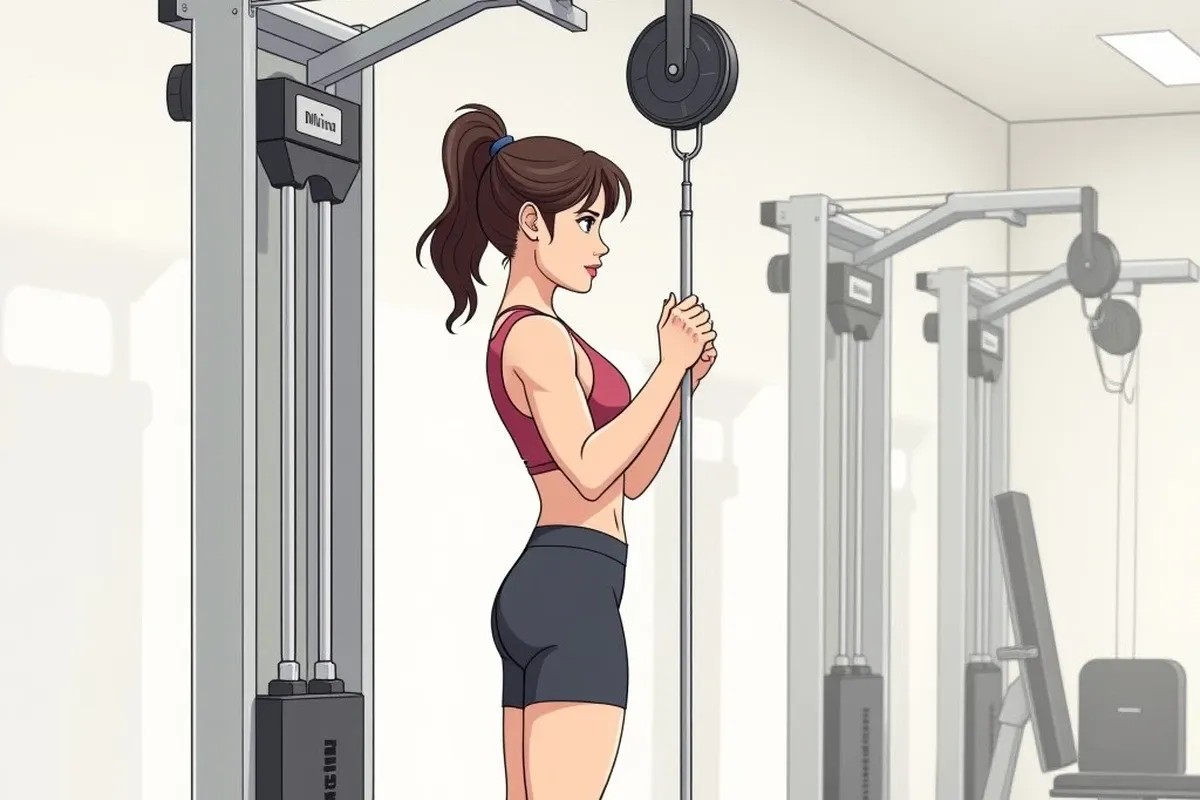
A common misconception among beginners is that a good workout requires access to dozens of machines and a fully stocked free-weight section. In reality, a productive beginner session can be built around a much smaller set of tools: a squat rack or leg press machine, a bench, a cable machine or set of resistance bands, and a pair of adjustable dumbbells cover the vast majority of what this plan calls for.
Most commercial gyms have all of this as standard equipment, which means the plan outlined here works in nearly any gym environment without needing to hunt for specialized machines. If you’re training at home instead, a pair of adjustable dumbbells and a bench cover most of the upper body work, while bodyweight squats, lunges, and a resistance band for hip hinge movements can substitute reasonably well for the lower body exercises until you have access to heavier equipment.
Wrist wraps, lifting belts, and other accessories that show up frequently in gym marketing aren’t necessary for a beginner plan and, in some cases, can actually interfere with learning proper bracing and grip strength if introduced too early. Skip the extras for the first few months and focus on the core lifts instead.
Footwear is one piece of equipment worth getting right from day one, even though it’s easy to overlook. Running shoes, with their soft, cushioned soles, are actually a poor choice for squatting and pressing movements, since the cushioning compresses unevenly under load and makes it harder to stay balanced. A flat-soled training shoe, or simply lifting in socks on a squat rack platform where that’s allowed, gives you a far more stable base to push from.
A Full Session Walkthrough
Seeing an entire session laid out start to finish makes the structure easier to follow than a list of exercises alone. Take a week-two upper body day as an example. The session opens with five minutes of light cardio and a couple of warm-up sets on the first exercise, then moves into the main work: three sets of chest press, resting sixty to ninety seconds between sets, followed by three sets of lat pulldowns targeting the same rest period.
From there, the session continues with three sets of seated rows, then three sets of shoulder press, finishing with two sets of a bicep and triceps exercise each if time and energy allow. The entire session, including warm-up, runs somewhere between forty-five minutes and an hour depending on how busy the gym is and how much rest you take between sets.
That same structure applies to the lower body day, just with squats, hip hinges, lunges, and calf raises in place of the upper body movements. Once this rhythm feels familiar, running through either session takes very little mental effort, which is exactly the point: a plan you don’t have to think hard about is a plan you’re far more likely to stick with.
Tracking Your Progress
Writing down what you did each session, the exercise, the weight, and the reps completed, takes less than a minute per exercise but makes an enormous difference in how consistently you progress. Without a record, it’s easy to unconsciously repeat the same weight for weeks without realizing it, since memory of exactly how much you lifted three sessions ago is far less reliable than most people assume.
A simple notes app or a small notebook kept in your gym bag is enough. The specific tracking method matters far less than the habit of doing it every session, since the entire value comes from being able to look back at your last session for a given exercise and know exactly what to beat this time.
Signs You’re Ready to Move Beyond This Plan
This four-week structure is designed to get you through the adaptation phase, not to be followed indefinitely. Once you’re consistently completing all prescribed sets and reps with good form, and adding weight has started to feel harder to come by session to session rather than happening almost automatically, that’s a sign your body has adapted to the current stimulus and it’s time for a more structured intermediate program.
Most beginners reach this point somewhere between eight and twelve weeks in, though the exact timeline varies quite a bit based on training age, consistency, and individual recovery capacity. At that stage, a push-pull-legs split or a more targeted upper/lower program with higher overall volume tends to be the next logical step, building directly on the movement patterns and work capacity this plan has already established.
Common Mistakes That Slow Down Beginners
Jumping straight into a split routine designed for intermediate lifters, before the fundamentals of each movement are solid, is one of the most common early mistakes. It leads to poor form on exercises that haven’t been practiced enough yet, which increases injury risk and slows down the very strength gains the split is supposed to accelerate.
Skipping the warm-up to save time is another frequent shortcut that catches up with people, usually in the form of a nagging joint issue that shows up a few weeks in rather than an acute injury on day one. A third common mistake is chasing soreness as a measure of a good workout; feeling wrecked the next day isn’t actually necessary for progress, and constantly training to that level of fatigue in the first month makes it harder to recover and stay consistent with the schedule.
Comparing your week-one numbers to what more experienced lifters around you are doing is a mistake that has nothing to do with programming and everything to do with mindset, but it derails just as many beginners as any technical error. Everyone’s starting point is different, and the plan above is built around your own progression, not anyone else’s current numbers.
How Long Until You See Results
Strength gains show up first, often within the first two to three weeks, since a large part of early progress comes from your nervous system getting more efficient at the movements rather than from actual muscle growth. Visible physical changes take longer, generally six to eight weeks of consistent training before most people notice a real difference in the mirror, and closer to twelve weeks before it’s obvious to people who see you regularly.
Patience matters here more than intensity. A beginner who trains consistently at a moderate effort level for three months will typically outperform someone who trains extremely hard for two weeks and then burns out or gets injured and stops entirely.
Frequently Asked Questions
How many days a week should a beginner go to the gym? Three days a week is enough to build real progress in the first month, using full-body sessions in week one and transitioning to a four-day upper/lower split by week two. More frequent training doesn’t add much benefit at this stage and increases the risk of burning out before the habit is established.
Do I need a personal trainer as a complete beginner? It helps but isn’t required. A few sessions with a trainer to check your form on the main compound lifts, squat, deadlift pattern, and pressing movements, can prevent bad habits from forming early. After that, a structured plan like this one covers most of what a trainer would otherwise guide you through.
What if I can’t complete all the reps in a session? Reduce the weight rather than skipping the exercise entirely. It’s more valuable to complete all your sets with a lighter weight and good form than to struggle through a few reps at a weight that breaks down your technique.
Is it normal to be sore after every workout in the first month? Some soreness is normal, particularly in the first one to two weeks as your muscles adapt to new stress. Soreness that lingers for more than three or four days, or that shows up as sharp joint pain rather than general muscle fatigue, is worth paying attention to and adjusting your weight or volume accordingly.
Should I do cardio during this beginner plan? Light cardio, two or three sessions of twenty to thirty minutes, fits well alongside this plan and supports recovery between lifting days. Save more intense cardio for after the first month, once your body has adapted to the new demands of regular strength training.
Can women follow the same beginner plan as men? Yes. The underlying principles, progressive overload, compound movements, adequate recovery, apply the same way regardless of gender. Individual starting strength and pace of progression will vary from person to person, but the structure of the plan itself doesn’t need to change.
What should I do if a machine or exercise isn’t available? Substitute a similar movement pattern rather than skipping the muscle group entirely. A cable row can replace a lat pulldown, a goblet squat can replace a leg press, and a dumbbell press can replace a barbell bench press without meaningfully changing the training effect.
How much weight should I start with? Start lighter than you think you need. A weight that lets you complete all prescribed reps with a couple left in reserve on the first set is the right starting point; you can always add weight the following session once the movement feels comfortable.
What if I miss a session in the middle of the plan? Simply pick up where you left off rather than trying to make up the missed workout by doubling a future session. Missing one day out of a four-day week has minimal impact on overall progress, and cramming extra volume into the next session tends to increase injury risk more than it accelerates results.
Is it okay to feel intimidated the first few times? Almost everyone does, and it fades faster than expected once you have a specific plan to follow rather than wandering the floor deciding what to do next. Sticking to the exercises and order laid out in this guide removes most of the guesswork that causes that initial intimidation in the first place.
Keep reading: if you’re deciding what to focus on once this first month is done, our guide on progressive overload covers how to keep making gains over the following months. And if you want a deeper look at gym etiquette before your first session, see our guide on gym etiquette.
Follow us on Facebook, TikTok, YouTube, and Pinterest for more no-nonsense fitness tips.
Evandro
Evandro is the founder of The Fitness Road. He believes that without physical activity there is no real health, and without health, there is no lasting discipline in any other area of life.
Leave a Reply
Your email address will not be published. Required fields are marked *