Shaker Bottle vs Blender: Let the Ingredients Decide

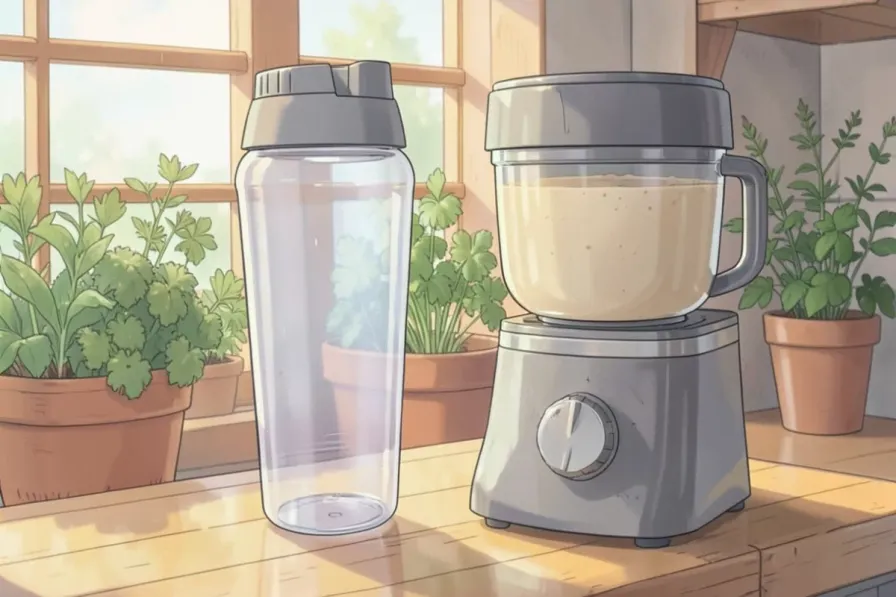
Shaker bottle vs blender usually gets framed as which one is better, and that framing is the reason people end up buying the wrong thing. The two are not competing at the same job. One dissolves powder into liquid. The other breaks solids apart. Which one you need is decided by what goes into the cup, not by which is objectively superior — and for a lot of people the honest answer is that they need the cheap one.
What Each One Actually Does
A shaker bottle is a container with a wire whisk or a plastic ball inside. Shaking it drives that object through the mix, breaking apart the dry clumps that form when powder meets liquid. That is the entire mechanism. It dissolves — it does not cut.
A blender spins a blade fast enough to physically tear solids apart. It does everything a shaker does, plus the thing a shaker cannot do at all: turn something solid into something drinkable.
That difference is the whole decision. Everything below is just working out which side of it your drink falls on.

The Rule: Look at What Is Going In
Powder plus liquid → shaker bottle. Protein and water, protein and milk, an electrolyte mix, a pre-workout. There is nothing solid to break down, so the blade has no work to do. A shaker handles this in thirty seconds and rinses clean immediately.
Anything solid → blender. Frozen fruit, ice, oats, nut butter, fresh banana, spinach. No amount of shaking breaks a frozen strawberry apart. Oats stay gritty. Peanut butter forms a lump at the bottom and stays there. These need a blade, and there is no technique that gets around it.
The practical version: most people who train are making the first kind on weekday mornings and the second kind on weekends or when they want something more like a meal. That is why owning both is so common, and why it is not really a contradiction.
If You Are Getting Lumps in a Shaker, It Is Probably the Order
This is the single most common complaint about shaker bottles, and it is usually fixable without buying anything.
Liquid first, powder second. Powder into an empty bottle packs into the bottom corners, where the whisk cannot reach it. It comes out as a dense lump at the end no matter how hard you shake. Liquid first gives the powder somewhere to disperse from the moment it lands.
Shake for a full thirty seconds. Longer than it feels. Most people stop around ten because the outside looks mixed while the centre is still dry.
A wire whisk beats a plastic ball. The whisk has more edges and more surface, so it cuts through clumps rather than pushing them around.
Room-temperature liquid mixes easier than very cold. Cold thickens the liquid slightly and makes powder more likely to stick to itself. If you want it cold, mix first and add ice after.
If you have done all four and it still clumps, the powder itself may be the problem — some formulations, particularly casein and certain plant blends, are simply harder to dissolve than whey and genuinely do mix better with a blade.

Does Blending Ruin the Protein?
This question comes up constantly and the worry is misplaced, but it is worth explaining rather than just dismissing.
The fear comes from the word denatured. It sounds like damage. What it actually describes is a protein’s folded shape unravelling — and whey denatures above roughly 65 °C, which is hot liquid territory, not blender territory. The friction from a household blender running for thirty seconds with cold or room-temperature liquid does not come near that.
More importantly, even when protein does denature, it is not destroyed. What your body absorbs is the amino acid sequence, and that sequence stays intact through denaturation. Your stomach acid unfolds protein anyway as a normal part of digestion — that is the point of digestion.
The only realistic way to affect protein through heat is mixing powder into genuinely hot liquid, like stirring it into coffee straight from the pot. Even then the effect on absorption is small. Blending is a non-issue.
What Neither of Them Fixes
Worth saying plainly, because equipment gets sold as a solution to things it does not solve.
Neither tool changes how much protein you get. That is the powder and the portion. A shake blended for two minutes and a shake shaken for thirty seconds deliver the same amount.
Neither makes a badly formulated shake taste good. If the powder is chalky, a blender makes it smooth and chalky.
And neither one is the reason a routine sticks or falls apart. The bottle that gets used is the one that is clean and within reach, which is an argument for the simpler tool more often than people expect.

If You Are Buying One
As an Amazon Associate I earn from qualifying purchases.
If your shakes are powder and liquid, get a shaker bottle with a wire whisk and stop there. Two-packs run under fifteen dollars. There is no meaningful performance difference between a cheap one that seals properly and an expensive one — you are buying a lid that does not leak and a whisk that does not rust.
If you make anything with frozen fruit, oats or ice, you need a blade, and a personal blender is enough. The one we point people to is the Ninja Nutri-Plus BN301 — 900 peak watts, and it ships with three 20 oz cups that double as the drinking vessel, so there is no separate jar to wash. Three cups matters more than it sounds: it is the difference between rinsing one mid-week and having a clean one ready. It holds 4.6 stars across roughly 5,900 reviews at the time of writing.
What it will not do: there is no speed control, only push-to-blend, so anything needing a gentle fold is out. And it is the wrong purchase if you also want soup or nut butter from the same machine — that is a countertop blender’s job, and buying one appliance for both usually means doing neither well.
What we would not recommend is buying a large countertop blender for shakes alone. A shake is not a demanding job, and that capacity goes unused.
Frequently Asked Questions
Is a shaker bottle or a blender better for protein shakes? Neither is better in general — it depends entirely on what you put in. If your shake is protein powder plus a liquid, a shaker bottle mixes it fine and cleans up in seconds. The moment you add frozen fruit, oats, ice, or nut butter, a shaker stops working and you need a blade. Most people who train are making the first kind on weekdays and the second kind occasionally, which is why owning both is common.
Why does my protein powder still clump in a shaker bottle? Almost always the order. Liquid goes in first, powder second — powder first means it packs into the bottom corners where the whisk cannot reach it. Then shake for a full 30 seconds, which is longer than it feels. A wire whisk breaks clumps better than a plastic ball, and cold liquid clumps slightly more than room temperature.
Does blending ruin protein powder? No. The concern comes from the word denatured, which sounds like damage but is not. Whey denatures above roughly 65 °C, and the friction from a household blender does not come close to that with cold or room-temperature liquid. Even when protein does denature, the amino acid sequence stays intact, which is what your body absorbs. Hot liquid is the only realistic way to affect it, and even then the effect on absorption is small.
Do I need an expensive blender for protein shakes? No. A shake is liquid, fruit and powder — it is not a demanding job. Personal blenders in the 700 to 900 watt range handle frozen fruit and ice without complaint. The large countertop machines are built for tasks like nut butter, hot soup and grain milling, none of which a shake asks for. Paying for that capacity to make smoothies is paying for a feature you will not use.
Can you use a shaker bottle for smoothies? Not really. A smoothie by definition has whole fruit, ice, or both, and a whisk cannot break those down. You can shake pre-blended smoothie or a powdered mix in a shaker, but you cannot turn solid ingredients into a smoothie by shaking them. That is the one job that genuinely requires a blade.
Is a shaker bottle worth it if I already own a blender? For most people, yes, and it is a small purchase. The reason is friction, not capability: a blender means assembling it, blending, then washing a jar, a lid and a blade. On a weekday morning that gap is often the difference between having the shake and skipping it. A shaker is rinse-and-done, which is why plenty of people who own a good blender still reach for the bottle on ordinary days.
The Short Version
Do not settle shaker bottle vs blender in the abstract. Look at what you actually put in the cup. Powder and liquid means a shaker, and spending more than fifteen dollars on that is spending for nothing. Frozen fruit, oats or ice means a blade, and a personal blender covers it — the large machines are built for jobs a shake never asks of them. If you are getting lumps, fix the order before you fix the equipment: liquid first, powder second, thirty full seconds.
Keep reading: for shakes that hit real protein numbers without a scoop of powder, see our high protein shakes without protein powder. And if you are mixing for after training specifically, our homemade recovery drink recipes size the carbs and protein to the session.
Follow us on Facebook, TikTok, YouTube, and Pinterest for more no-nonsense fitness tips.
Evandro
Evandro is the founder of The Fitness Road. He believes that without physical activity there is no real health, and without health, there is no lasting discipline in any other area of life.
Leave a Reply
Your email address will not be published. Required fields are marked *