
You ran out of whey mid-week, or maybe you just never wanted a massive, ugly plastic tub of mystery powder cluttering your kitchen counters in the first place.
Either way, let’s get one thing straight: you can absolutely crush your macro targets without touching a supplement.
Honestly? Some of these real-food creations hit way harder than the chalky powder versions ever could.
Let’s be real for a second. There are plenty of reasons you might end up looking for an alternative.
Maybe your stomach absolutely hates whey concentrate and turns your gut into a certified disaster zone. Maybe you’re trying to clean up your diet, and highly processed isolates just feel like an artificial shortcut. Or maybe you simply forgot to reorder your supplements, and leg day is tomorrow morning.
Whatever your reason is, building a high protein shake recipe with no powder is totally doable.
Even better? It usually tastes vastly superior. You’re working with actual, vibrant ingredients instead of a dry mix that needs three different artificial flavorings just to mask its weird chemical aftertaste.
Plus, there’s a huge perk nobody talks about: real-food shakes come packed with natural fiber, healthy fats, and essential micronutrients. Powdered isolates strip all of that away. With whole foods, you aren’t just drinking isolated macros—you’re getting an actual, nutrient-dense meal in liquid form.
Before you throw random items into your blender and pray for the best, you need to know which whole foods play nice with blender blades and which ones turn into a chunky, unpalatable nightmare.
The Heavy Hitters
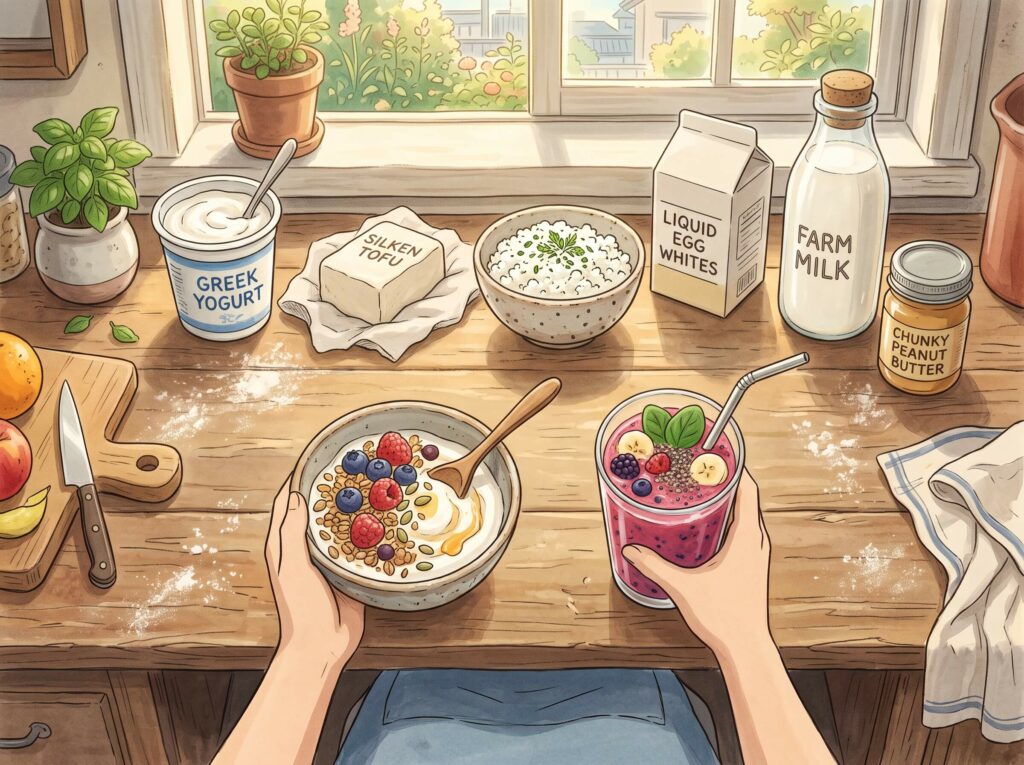
These are the foundational staples that will do the heavy lifting for your protein count:
Greek Yogurt: Thick, incredibly creamy, and packs anywhere from 15g to 20g of protein per cup depending on the brand.
Cottage Cheese: I know it sounds super sketchy to blend cheese, but trust the process. It tastes completely neutral once you mix it with fruit, and it is absolutely loaded—coming in at around 24g of protein per cup.
Silken Tofu: Completely flavorless on its own and blends into a silky-smooth texture. It is the ultimate secret weapon for rich chocolate or coffee-based shakes.
Pasteurized Liquid Egg Whites: This is a classic, old-school bodybuilding move. Just make sure you buy the carton version from the store to eliminate any food safety issues.
Dairy Milk or High-Protein Plant Milk: Using soy or ultra-filtered dairy milk adds a clean 8g to 13g of protein right out of the gate before you even add your solid ingredients.
Texture Fixers and Thickeners
Your choice of liquid changes the entire vibe of your drink. Water keeps things light but dilutes the flavor. Whole milk adds rich texture and easy calories.
If you want that thick, milkshake-style consistency without watering down your protein count, skip the extra ice cubes. Instead, use a frozen banana, rolled oats, or a tablespoon of nut butter. They add incredible staying power and prevent your drink from separating into a watery mess.
These five options span across totally different flavor profiles so you never get bored. No vague “health halo” marketing talk here—just real, transparent numbers.
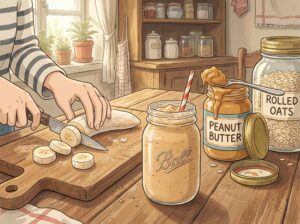
1. Peanut Butter Banana Oat Shake
The Vibe: Tastes like a liquid peanut butter cup and doubles as a legit breakfast when you are sprinting out the door.
1 cup milk (dairy or soy)
1 frozen banana
2 tbsp peanut butter
1/2 cup rolled oats
A handful of ice
How to make it: Toss everything into the blender, starting with the liquid. Blend on high for 60 seconds until the oats are completely pulverized.
Protein Total: ~20g
2. Greek Yogurt Berry Blast
The Vibe: Tart, refreshing, and bright. The natural acidity of the berries cuts right through the thickness of the yogurt.
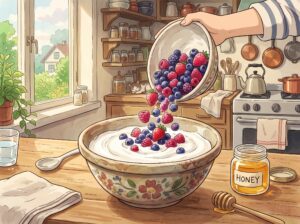
1 cup plain Greek yogurt
1 cup frozen mixed berries
1/2 cup milk
1 tbsp honey or maple syrup (optional for sweetness)
How to make it: Layer the yogurt at the bottom near the blades, dump the frozen berries on top, pour in your liquid, and blend until smooth.
Protein Total: ~25g
3. Cottage Cheese Chocolate Shake
The Vibe: Straight-up dessert masquerading as a fitness drink. It feels like a total cheat meal but it’s pure fuel.
1 cup cottage cheese
1 cup milk
1 tbsp unsweetened cocoa powder
1 frozen banana
A tiny pinch of cinnamon
How to make it: Blend this one about 30 seconds longer than you think you need to. Cottage cheese curds are incredibly stubborn, but once they fully break down, the texture becomes miraculously velvety.
Protein Total: ~28g
4. Silken Tofu Mocha Shake
The Vibe: Feels like an expensive, fancy coffee shop order, not a post-workout drink.
1/2 block silken tofu
1 cup cold brew coffee
1 tbsp cocoa powder
1 tbsp maple syrup
A handful of ice
How to make it: Blend the tofu, coffee, and cocoa powder first until perfectly unified, then drop in your ice and sweetener to finish it off.
Protein Total: ~15g (Pro-tip: Stack this with a half-cup of Greek yogurt if you want to push it past 25g).
5. Old-School Egg White Vanilla Shake
The Vibe: Clean, lean, and ultra-smooth. It gives you maximum protein with virtually zero added fat.
1 cup pasteurized liquid egg whites (from a carton)
1 cup milk
1/2 tsp vanilla extract
1 frozen banana
How to make it: Pour your liquid egg whites and milk in first, add the vanilla extract, drop in the banana, and blend.
Crucial Safety Note: Only use pasteurized carton egg whites for this. Never, ever crack regular raw eggs into a blender—it’s a major food safety risk and the texture is slimy. Carton egg whites are heat-treated and completely safe to drink raw.
Protein Total: ~22g
| Recipe Name | Est. Calories | Protein Count | Best Time to Drink |
| PB Banana Oat | ~480 kcal | 20g | Pre-workout / Breakfast |
| Greek Yogurt Berry | ~310 kcal | 25g | Post-workout / Mid-day |
| Chocolate Cottage Cheese | ~390 kcal | 28g | Nighttime snack (Casein rich) |
| Silken Tofu Mocha | ~220 kcal | 15g | Morning pick-me-up |
| Vanilla Egg White | ~290 kcal | 22g | Lean cutting phases |
If you are tracking macros closely and your coach wants you hitting a flat 30 grams per meal, don’t sweat it. You don’t have to play guessing games or choke down massive amounts of a single food.
The secret weapon here is protein stacking. Instead of trying to get all your protein from one massive pile of yogurt, combine two different whole-food sources together.
Here are three simple, bulletproof formulas that clear the 30g threshold effortlessly:
The Dairy Double Down: 1 cup of Greek yogurt (18g) + 1 cup of dairy milk (8g) + 1 tablespoon of peanut butter (4g) = 30g Protein
The Powerhouse Blend: 1 cup of cottage cheese (24g) + 1/2 cup of milk (4g) + 1 tablespoon of almond butter (4g) = 32g Protein
The Plant & Dairy Stack: 1 cup of silken tofu (10g) + 1 cup of Greek yogurt (18g) + a splash of soy milk (3g) = 31g Protein
By blending these sources, you keep the flavors perfectly balanced and ensure the texture stays smooth and drinkable, rather than thick and chalky.
Let’s look at the trade-offs objectively so you can decide what actually works for your lifestyle.
Where Real Food Wins
Whole food shakes completely dominate when it comes to digestion comfort, nutrient density, and clean ingredients. You get to skip out on the artificial sweeteners (like sucralose or acesulfame potassium), gums, thickeners, and weird chemical fillers that budget-friendly supplement companies sneak into their powders to save a buck.
Where Powder Wins
Protein powder still holds the crown for pure, unmatched convenience. It takes exactly ten seconds to drop a scoop into a shaker bottle. It’s highly portable for travel, gives you an incredibly precise macro count without any kitchen math, and requires zero prep work when you are utterly exhausted after a brutal training session.
Most people find their sweet spot right in the middle: drinking whole-food shakes on the days they have time to use the blender, and keeping a tub of powder in the pantry as a reliable backup plan for chaotic work weeks.
If your morning routine is a frantic rush, using a blender every single day might sound exhausting. Use these batch-prepping hacks to keep your system from falling apart by Wednesday:
Pre-Freeze Your Bananas: Don’t let your bananas go brown on the counter. Peel them, chop them into coins, and store them in a massive freezer bag. You’ll always have an instant thickening agent ready to go.
Dry-Ingredient Baggies: On Sunday night, portion out your dry ingredients (like oats, chia seeds, cocoa powder, and cinnamon) into tiny reusable bags. In the morning, all you have to do is dump a baggie into the blender, add your wet base, and hit start.
The 24 Hour Rule: You can absolutely blend your shake the night before. Keep it in a tightly sealed mason jar in the fridge. Natural separation is completely normal—just give it a vigorous shake before drinking.
Don’t Freeze Blended Dairy: Never freeze a fully blended shake that contains yogurt or cottage cheese. When it thaws out, the proteins will separate, leaving you with a grainy, unappealing texture. Freeze the fruit, blend it fresh.
Let’s talk about money, because no one else will. A premium tub of whey protein will set you back anywhere from $40 to $70, but it easily lasts you a month if you’re taking one scoop a day.
If you run the grocery store math on high-quality Greek yogurt, organic cottage cheese, and cartons of egg whites, you will likely end up spending a very similar amount per serving. Sometimes you can even score a cheaper deal if you buy bulk tubs at places like Costco or Sam’s Club.
The real “cost” isn’t your money it’s your time and your fridge real estate.
Powder sits quietly in your pantry for months without spoiling. Real foods require constant grocery store runs because dairy and eggs have strict expiration dates. If your schedule is already stretched thin, that’s a very real lifestyle trade-off you need to consider.
Can you really build muscle with shakes that don’t use powder? Absolutely. Your muscles do not care if their amino acids come from an expensive tub of whey isolate or a regular tub of Greek yogurt. Protein is protein. As long as you hit your total daily target and train hard, the source doesn’t matter.
Are these shakes good for fat loss? Yes, particularly the options built on cottage cheese or Greek yogurt. Both ingredients are incredibly high in volume and slow-digesting proteins, meaning they keep you full for hours. Just be careful with how much peanut butter and honey you pour in—those healthy fats and sugars add up fast if you’re trying to stay in a calorie deficit.
What’s the absolute best substitute for whey? If you want something that matches the high-protein, low-calorie profile of whey, Greek yogurt and cottage cheese are your best bets. If you need a dairy-free or vegan option, silken tofu is unmatched because it completely vanishes into the background flavor of whatever you blend it with.
Do egg white shakes taste like breakfast? Not even close. As long as you pair the pasteurized liquid egg whites with strong flavors like vanilla extract, cocoa powder, or a frozen banana, the eggs completely disappear. They add a fluffy, airy texture to the shake but zero egg flavor.
Skipping out on the supplement store doesn’t mean you have to compromise on your physical progress. It just means you have to be a little smarter with your grocery cart and learn how to stack natural, high-yield ingredients.
Pick one of these five recipes to try out this week, find your favorite, and go crush your next workout!
Be sure to follow us on Facebook and TikTok