10 Beginner Pilates Exercises to Tone Your Body at Home

Pilates is one of the most effective low-impact exercise methods for building core strength, improving posture, and toning the entire body, and you don’t need a studio or special equipment to get started, just like with 30 CrossFit Workouts at Home (Beginner to Advanced). In this guide, we walk you through 10 beginner-friendly Pilates exercises you can do at home, explain the proper form for each, and show you how to build a complete routine from scratch.
What Is Pilates and Why Is It So Effective?
 Developed by Joseph Pilates in the 1920s, the method was originally called “Contrology” — the art of controlled movement. Unlike high-impact workouts, Pilates focuses on quality of movement over quantity: every repetition is performed slowly, with intention, activating deep stabilizer muscles that most conventional exercises miss. Key benefits of Pilates backed by research:
- Core strength: Pilates targets the deep core muscles (transverse abdominis, multifidus, and pelvic floor) that support the spine and reduce back pain.
- Improved posture: A systematic review published in Medicine found significant improvements in posture after 8 weeks of regular Pilates practice.
- Flexibility and mobility: Pilates lengthens muscles through their full range of motion, improving flexibility without overstretching.
- Mind-body connection: The focus on breath and precise movement improves body awareness and reduces stress.
- Weight management: A 50-minute Pilates session burns approximately 175–375 calories depending on intensity and body weight.
Before You Start: The Pilates Fundamentals
Before diving into the exercises, understand these three foundational principles: Neutral spine: Most Pilates exercises are performed with a neutral spine — the natural S-curve of your back maintained, not flattened or arched excessively. Imagine a glass of water balanced on your lower back; don’t let it spill. Engaging the core: Before every movement, gently draw your navel toward your spine. This activates the deep stabilizers without holding your breath or gripping your abs tightly. Think of it as a 30% contraction, not 100%. Breathing: In Pilates, you inhale through the nose to prepare and exhale through the mouth on the effort (the hardest part of the movement). Never hold your breath.
The 10 Exercises
1. The Hundred
The Hundred is the classic Pilates warm-up exercise. It builds core endurance and gets blood and oxygen flowing. How to do it:
- Lie on your back with knees bent and feet flat on the floor.
- Lift your head, neck, and shoulders off the mat — keep your chin gently tucked, not straining your neck.
- Extend your arms long beside your body, hovering a few inches off the floor.
- Pump your arms up and down in small, controlled movements while breathing: inhale for 5 pumps, exhale for 5 pumps.
- Repeat for 10 full breath cycles (100 pumps total). Rest and repeat if needed.
Beginner modification: Keep your feet on the floor if lifting your head causes neck strain.
2. Roll-Up
The roll-up replaces hundreds of crunches with one deliberate movement that works the entire abdominal wall. How to do it:
- Lie flat on your back with arms extended overhead and legs straight.
- Inhale as you float your arms toward the ceiling.
- Exhale as you slowly peel your spine off the mat, vertebra by vertebra, reaching forward over your legs.
- Inhale at the top, then exhale as you slowly roll back down, placing each vertebra down one at a time.
- Perform 5–8 repetitions.
Beginner modification: Bend your knees slightly if you cannot maintain a flat lower back.
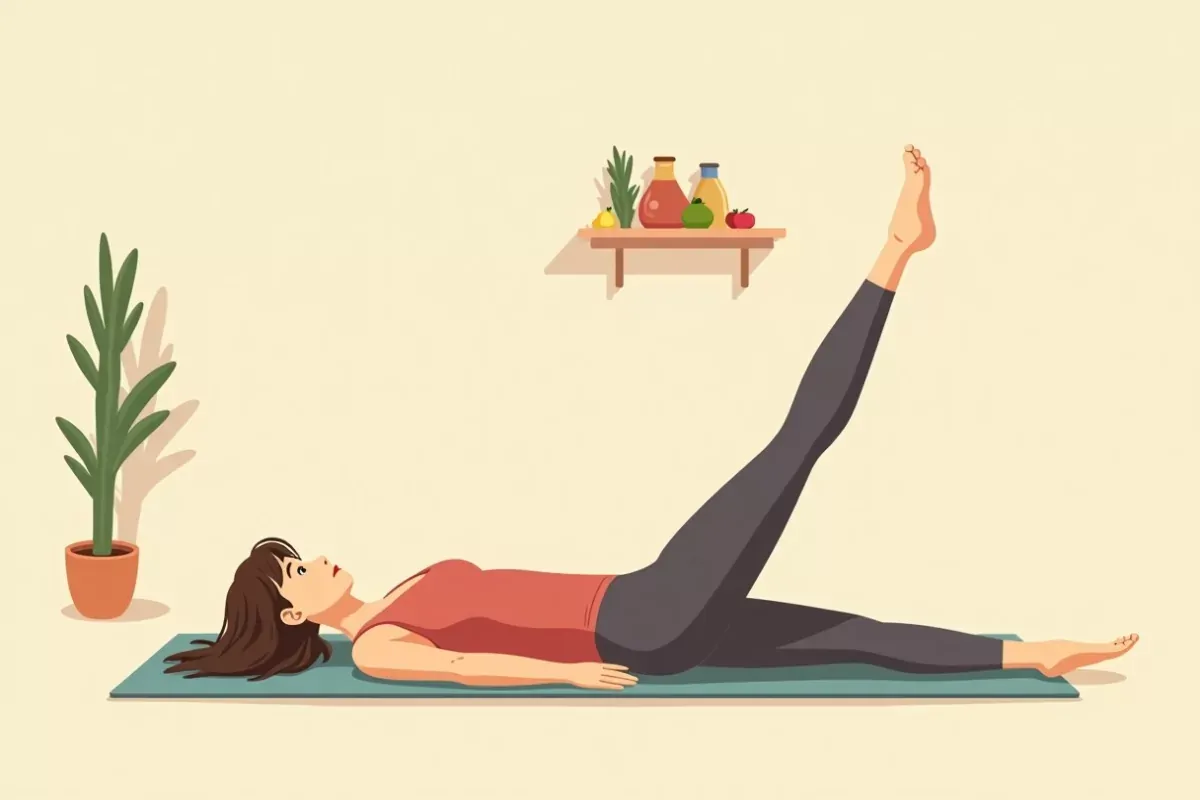
3. Single Leg Circles
This exercise mobilizes the hip joint and strengthens the core stabilizers. How to do it:
- Lie on your back with one leg extended toward the ceiling, the other flat on the floor.
- Draw small circles with the raised leg — 5 circles in each direction.
- Keep your hips still and pressed into the mat throughout. The movement comes from the hip, not the lower back.
- Switch legs and repeat.
4. Rolling Like a Ball
This massage exercise improves spinal flexibility and challenges core control. How to do it:
- Sit near the front of your mat. Draw your knees to your chest and hold your shins. Lift your feet slightly off the floor.
- Round your back into a C-curve, balancing just behind your sit bones.
- Inhale as you roll back to your shoulder blades (not your neck).
- Exhale as you roll back up to balance. Control the movement — don’t use momentum.
- Perform 8–10 repetitions.
5. Single Leg Stretch
The single leg stretch is a core and hip flexor exercise that also improves coordination. How to do it:
- Lie on your back. Lift your head and shoulders off the mat.
- Draw your right knee toward your chest, placing your right hand on your ankle and left hand on your knee.
- Extend your left leg to a 45-degree angle.
- Switch legs in a controlled, alternating motion — right, left, right, left.
- Breathe: inhale for 2 switches, exhale for 2 switches. Perform 10 sets.
6. Double Leg Stretch
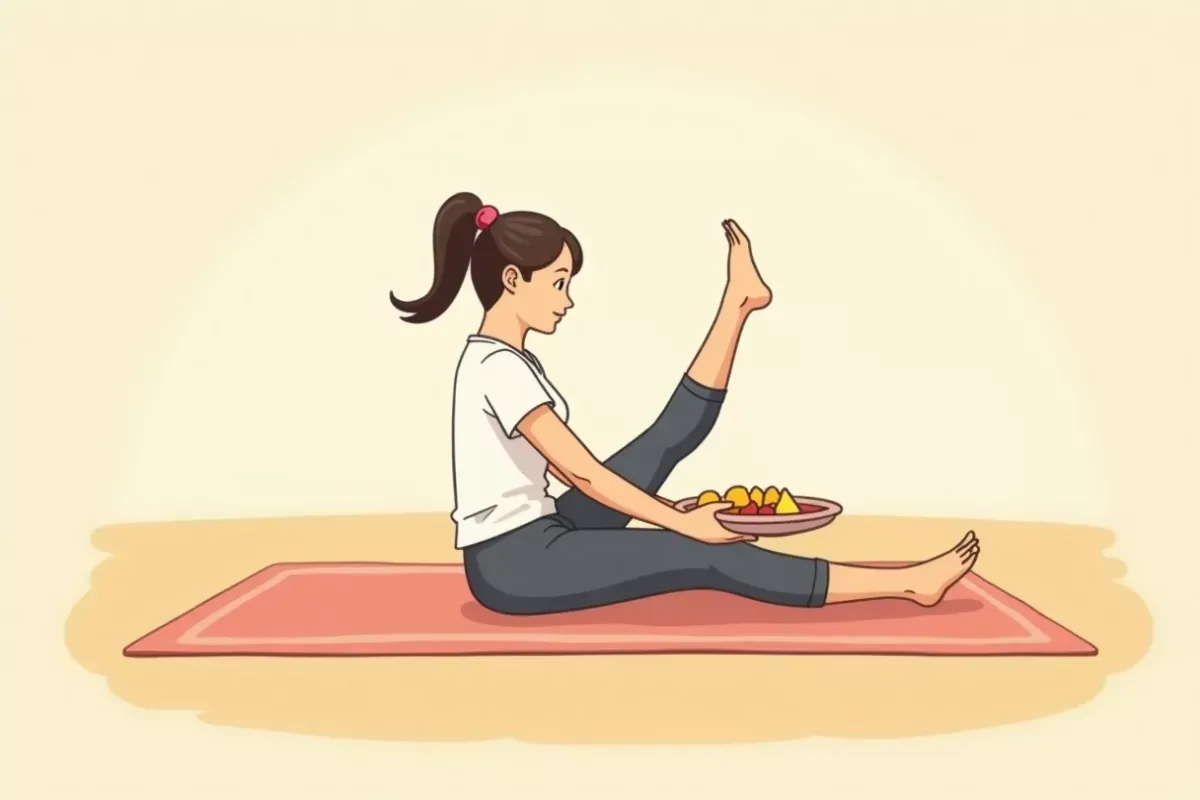 How to do it:
- Lie on your back with knees drawn to your chest. Lift head and shoulders.
- Inhale as you extend both arms overhead and both legs to a 45-degree angle simultaneously.
- Exhale as you sweep your arms around and hug your knees back to your chest.
- Perform 8–10 repetitions. The lower your legs, the harder the exercise — only go as low as you can without your lower back arching.
7. Spine Stretch Forward
This seated stretch decompresses the spine and stretches the hamstrings. How to do it:
- Sit tall with legs extended in front of you, slightly wider than hip-width. Flex your feet.
- Inhale to sit tall, lifting from the crown of your head.
- Exhale as you round forward, reaching your arms between your legs. Imagine rounding your spine around a large beach ball.
- Inhale to hold, then exhale to roll back up to sitting. Perform 5–8 repetitions.
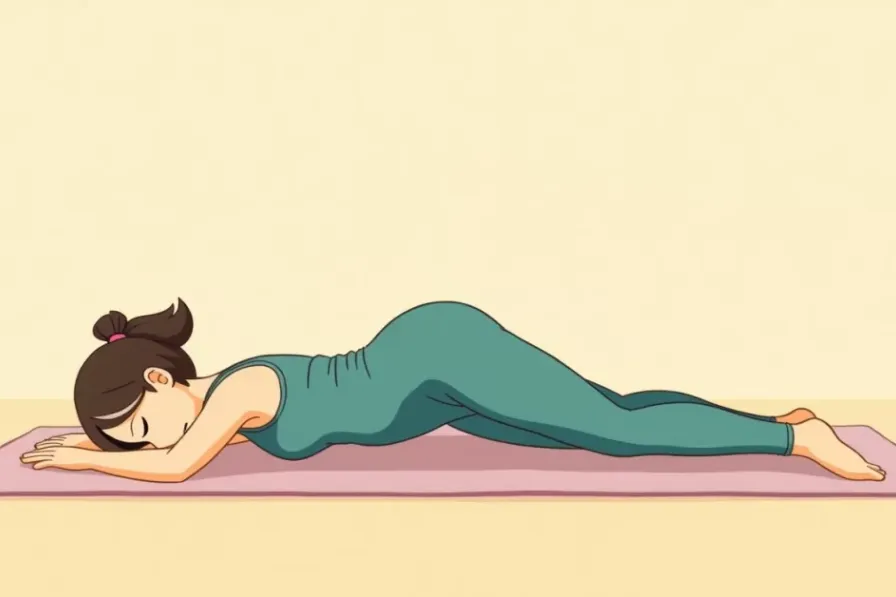
8. Swan Prep
Swan prep strengthens the back extensors (the muscles along your spine) and counters the rounded-shoulder posture from sitting. How to do it:
- Lie face down with hands under your shoulders, elbows close to your body.
- Inhale to prepare.
- Exhale as you press into your hands and lift your chest and upper back off the mat. Keep your hips pressed down.
- Inhale at the top, then exhale as you lower back down with control.
- Perform 8 repetitions. Do not strain your neck — keep it long.
9. Side-Lying Leg Lifts
This exercise targets the outer hip (gluteus medius), which is chronically weak in most people and essential for knee and lower back health. How to do it:
- Lie on your side with your body in a straight line. Support your head with your bottom hand or a pillow.
- Inhale to prepare. Exhale as you lift your top leg to hip height, keeping it straight.
- Inhale as you lower it back down with control. Do not let it drop.
- Perform 10–15 repetitions, then add front and back leg swings and small circles. Switch sides.
10. Plank Hold
The plank is the most foundational core stability exercise and a natural complement to the Pilates repertoire. How to do it:
- Start on hands and knees, then extend both legs back into a push-up position.
- Your body should form a straight line from head to heels. Engage your core, squeeze your glutes, and press the floor away with your hands.
- Hold for 20–30 seconds as a beginner, building to 60 seconds over time.
- Breathe steadily throughout — never hold your breath.
Beginner modification: Perform with knees on the floor to reduce the load.
Sample Beginner Pilates Routine (30 Minutes)
Warm-up (5 minutes): Deep breathing in neutral spine, gentle knee rocks side to side, cat-cow stretches on hands and knees. Main workout (20 minutes):
- The Hundred — 1 set (100 pumps)
- Roll-Up — 6 reps
- Single Leg Circles — 5 circles each direction, each leg
- Rolling Like a Ball — 8 reps
- Single Leg Stretch — 10 sets
- Double Leg Stretch — 8 reps
- Spine Stretch Forward — 6 reps
- Swan Prep — 8 reps
- Side-Lying Leg Lifts — 12 each side
- Plank Hold — 3 × 20 seconds
Cool-down (5 minutes): Child’s pose, spinal twist lying on your back, and a full-body stretch.
How Often Should You Do Pilates?
For beginners specifically, 3 sessions spread evenly across the week tends to be the ideal, most sustainable starting point.
This gives your body enough recovery time between sessions while still building the muscle memory and core strength you need to keep progressing steadily. After 4–6 weeks, you can increase to 4–5 sessions per week or add longer and more challenging workouts.
Pay attention to how your body responds rather than following a fixed schedule blindly; some weeks call for an extra rest day, and that’s a normal part of progressing rather than a setback.
Conclusion
Give yourself a few full weeks before judging whether this routine is working for you.
Pilates genuinely is one of the most accessible, adaptable, and consistently effective exercise systems available today — and these 10 exercises together give you a genuinely complete starting point that requires nothing more than a simple mat and some floor space. Focus closely on the quality of each individual movement, breathe intentionally throughout, and be patient with the overall process as it unfolds. The results — a stronger core, better posture, and a more toned body — will follow, usually showing up first as everyday improvements like easier bending, standing, and lifting before they show up as any visible change.
Always consult your doctor before beginning a new exercise program, particularly if you have any back pain, injuries, or health conditions.
Frequently Asked Questions
Do I need any equipment to do beginner Pilates at home? Nope, you can start with just a mat and some floor space. A small pillow or towel can help if your neck or lower back needs a little extra support.
How often should I do Pilates to see results? A solid starting point is 3 to 4 times a week. If you stay consistent, you’ll usually start feeling stronger and more aware of your posture pretty quickly.
Can Pilates help tone my body and flatten my stomach? Pilates can absolutely help build a tighter, stronger look by working your core and full body. It is not magic for spot fat loss, but it can make a big difference in muscle tone and posture.
Is Pilates good for beginners who are not very flexible? Yes, that is actually one of the best parts about it. Most moves can be modified, so you can start where you are and build flexibility over time without feeling wrecked.
References
For context on how much of this you actually need, the federal activity guideline for adults is 150 to 300 minutes of moderate aerobic activity per week, plus strength work on 2 or more days.
- U.S. Department of Health and Human Services. Physical Activity Guidelines for Americans, 2nd edition — 150–300 minutes of moderate-intensity aerobic activity per week and muscle-strengthening on at least 2 days. health.gov
Evandro
Evandro is the founder of The Fitness Road. He believes that without physical activity there is no real health, and without health, there is no lasting discipline in any other area of life.
Leave a Reply
Your email address will not be published. Required fields are marked *